On this page
Along with the growth of social media, the job of an IB (introducing broker) — the person who introduces clients to a broker — has drawn the interest of a great many people, young people in particular.
IB commission varies enormously from one person to the next, because it is worked out on the trading volume of the clients they introduce; this site has no published figures to say what share of IBs earn much or little. It is also worth knowing that forex brokers abroad are not licensed in Vietnam, so introducing clients to these brokers has no legal basis within the country. IBFX is itself an IB of a number of brokers and states this openly on the articles that carry a referral link. So what is an IB? And is this job as easy as people usually think it is?
What is an IB in forex?
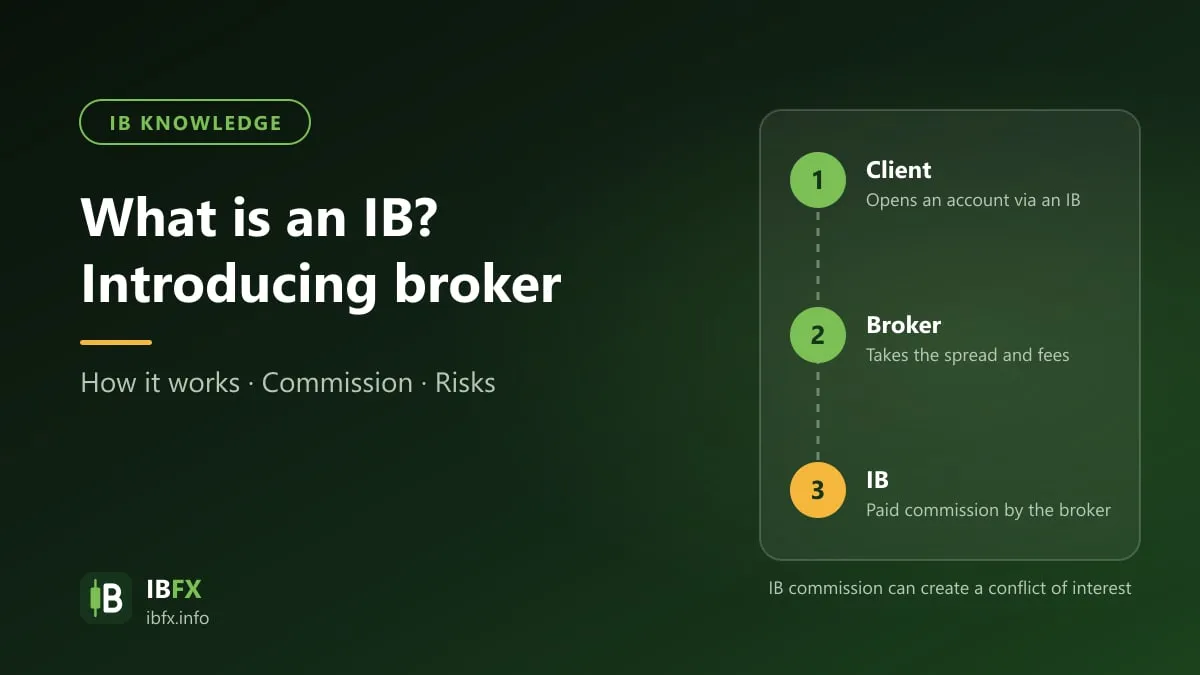
An IB – Introducing Broker is a person (or a company) who introduces clients to Brokers, that is, to forex brokers, and is paid commission. An IB is not a broker: an IB does not hold client money and does not execute orders for clients.
Once a trader has completed the registration to become an IB of a broker, the job is to find and introduce investors to that broker and then receive commission from the trades those clients make.
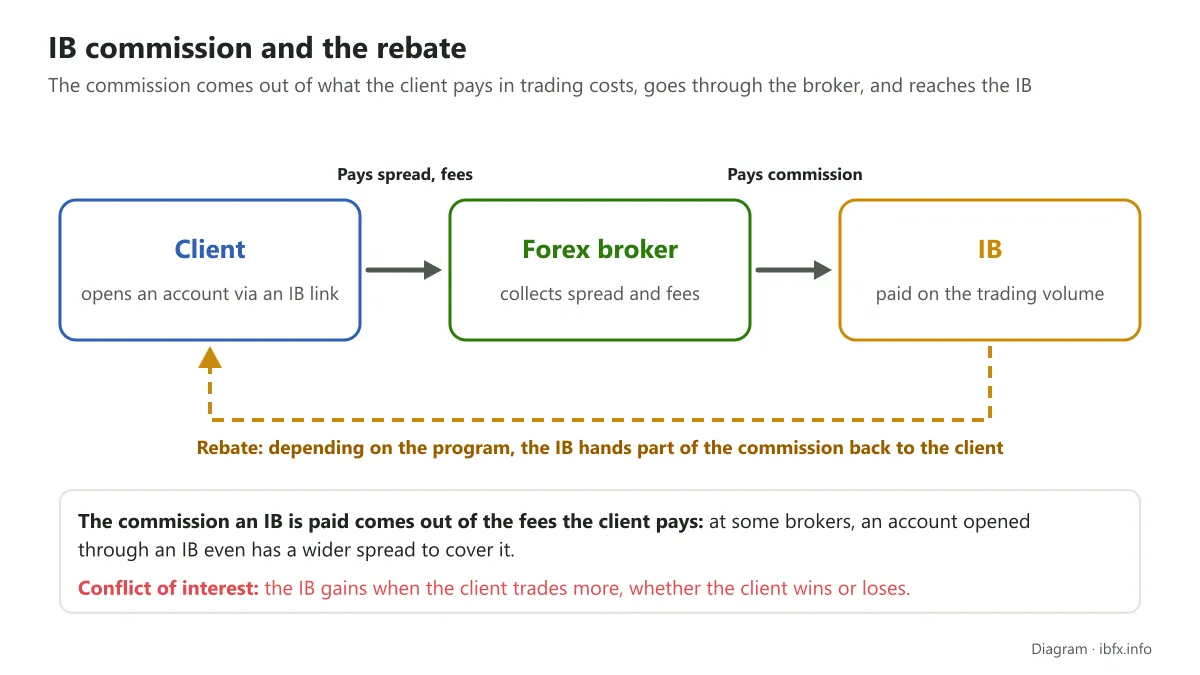
When a client introduced by an IB opens an account and trades, the broker pays the IB for the work, usually worked out from the trading volume.
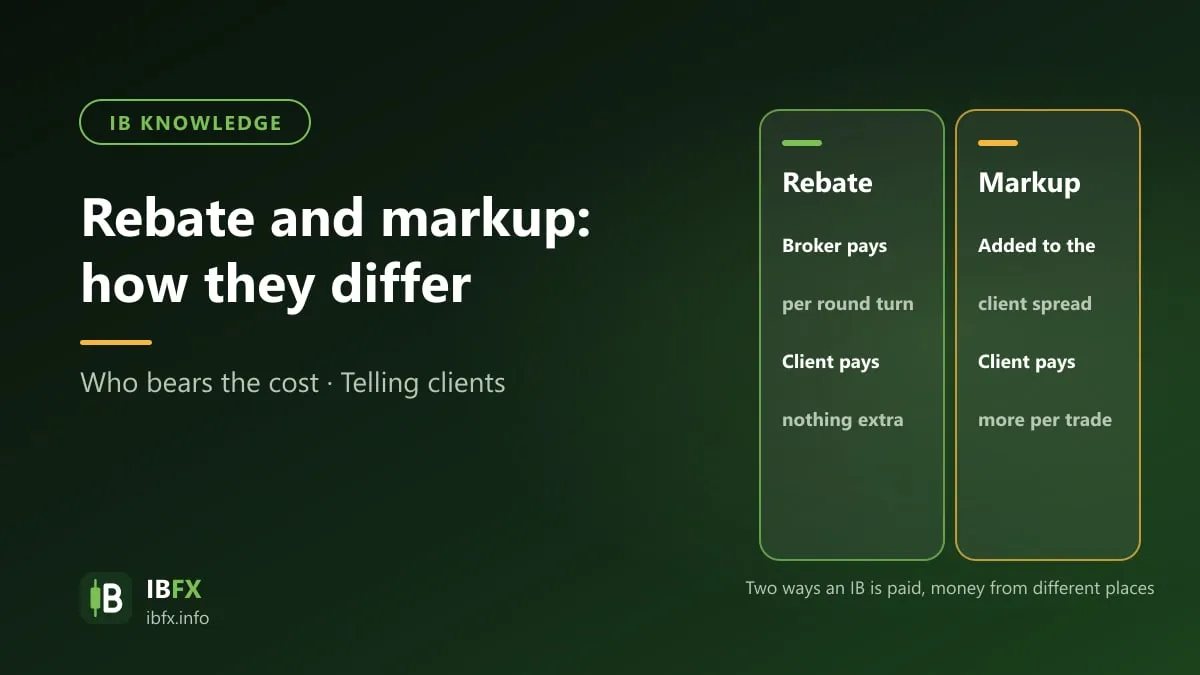
The client pays no extra fee directly to the IB, but the commission the IB receives is taken out of the spread and the commission that the client themselves pays to the broker. At some brokers, an account opened through an IB even carries a wider spread in order to pay for that commission.
Some traders work as an IB – Introducing Broker – alongside their own trading.
Forex brokers are businesses that supply a trading service through their own software.
Their main revenue is the spread — the difference between the bid and the ask price — commission, swap — the overnight fee — and, for a broker that takes the other side of its clients’ trades, the losses of those clients.
They reach clients through many channels, the most important of which is through the people who introduce the broker — the IBs.
Ideally an IB should be a trader who has actually used the broker and introduces it to others only because they found it good. In practice, quite a few IBs pick which broker to introduce because the commission is high rather than because of the quality of the broker.
Usually the broker pays the IBs a commission taken out of the spread and the fees the client pays when trading; this is also what the broker spends on finding clients.
The IB model is not bad in itself, but there is always a conflict of interest: an IB gains when a client trades a lot, whether the client wins or loses.
How an IB works
The way an IB works is very simple.
Once a trader opens an IB account with any broker, that trader is given a referral link meant for IBs.
By promoting that broker’s service to potential clients and finally drawing them in to open an account and trade with the broker, you receive commission each month according to the trading volume of the clients.
After that you start receiving the IB commission due to you from the clients.
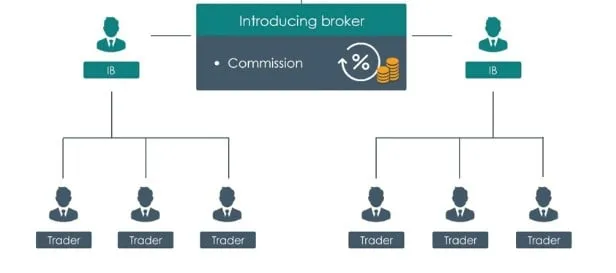
What does a broker usually give an IB?
IB programs usually have the following features (it varies by broker):
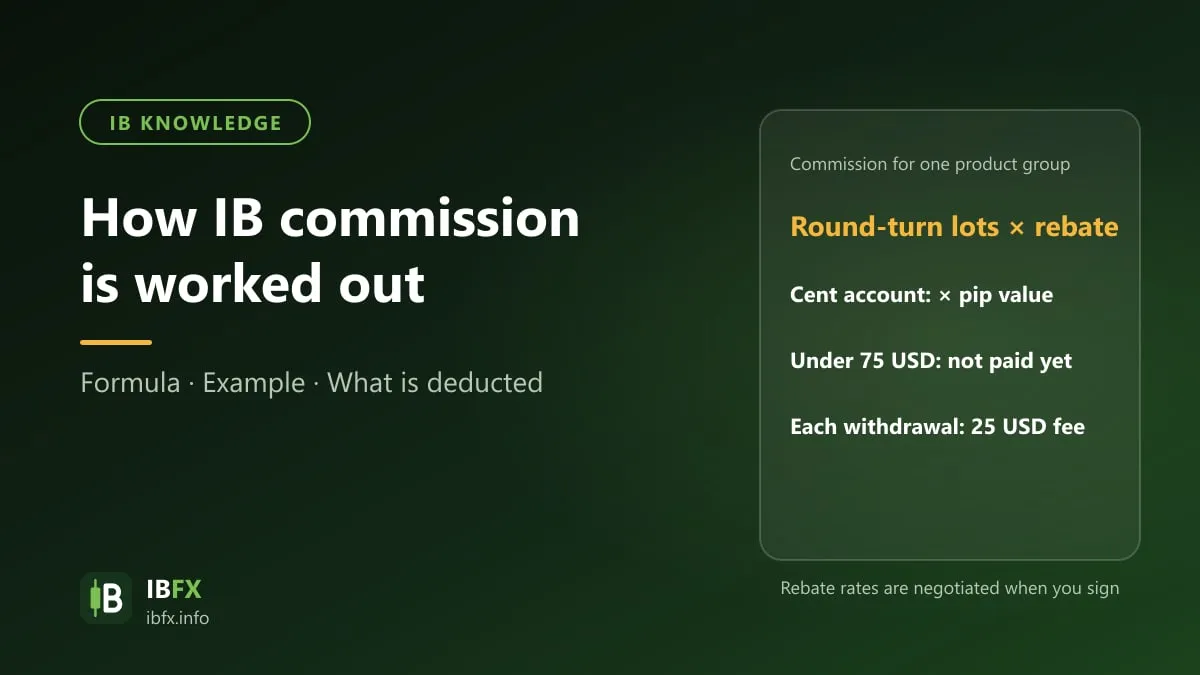
+ Commission is worked out on the trading volume of the clients you introduce, usually with several rebate rates by product group and by account type.
+ The commission statement and the payment period are published in the partner area, so you can check the figures yourself.
+ Several gateways for withdrawing commission, e-wallets among them, each with its own fees and limits.
+ Promotional material and an interface in several languages, which you may reuse, but which the broker has to approve before you publish it.
+ A partner support desk, with hours that depend on the broker.
Read the IB agreement carefully before you take the work on: the minimum payment threshold for each period, the fee on each withdrawal, and the prohibitions — among them a ban on promising a client they will be kept from losses, and a ban on letting a client trade excessively merely to generate commission.
+ Safe and fast access to your own data, to the trading results of your clients, and to updates on commission and profit.
+ Brokers usually provide promotional tools. If you have a website, a Facebook channel, a YouTube channel,…
You can market your IB link through: banners, widgets, booklets, email templates, Facebook cover images and many other social channels, to help you promote your business.
What is easy and what is hard about being an IB
Unlike an ordinary employee, an IB sets their own hours and their own work and reports to no one. In return, an IB has no fixed salary: the income depends entirely on the trading volume of the clients, so the pressure to find clients and keep them is still very high.
There is a chance to deal with many different brokers and to gain experience of them. And it is a perfect setting for learning and for talking to people.
You may also get the chance to meet a great many good traders and learn from them and share experience with them, which builds up your analysis and trading skills.
Broadly, the simplest work of an IB is to introduce the broker, walk clients through opening an account and walk them through deposits and withdrawals — that is all there is to it.
If you stop at that level, though, it will be very hard to grow and to keep clients, and your income will be very small; that is also the drawback of working as an IB.
To keep clients over the long run, an IB has to bring real value: knowledge, technical support, open information about the broker. But advising on strategy or urging clients into trades goes beyond the role of an IB and easily turns into a conflict of interest.
The risks and the responsibilities of an IB
- The law: forex brokers abroad are not licensed in Vietnam, so introducing clients to these brokers has no legal basis within the country. Taking a client’s money to deposit on their behalf, or trading on their behalf (managed accounts), can break the law as well.
- Conflict of interest: commission is worked out from the trading volume of the client, so say this plainly to the person you introduce.
- Reputation: if the broker you introduced runs into trouble or will not let clients withdraw, the client will hold you responsible. Check the legal entity and the license of the broker carefully before you introduce it.
- Never: promise a client a rate of profit in advance, show off profit screenshots that cannot be verified, or take a client’s money into your own personal account.
Like any other job in the financial industry, being an IB calls for seriousness, and above all your own interest must not be put ahead of the client’s.