On this page
- What is forex?
- Forex trading: what are you buying and selling?
- Liquidity: the stock market is only a minnow next to the foreign exchange market
- The big banks are a major influence on exchange rates in Forex
- Forex, the market that never sleeps – the forex trading sessions
- Why does forex attract individual investors?
- The most traded currency pairs in Forex
- Some terms you definitely have to know to trade forex
- What steps does forex trading involve?
- Should you trade forex or invest in securities?
- Closing
Thick advertising that treats Forex trading as a money-printing machine, or as making money with a single click of the mouse, has drawn a great many people to forex and left it badly misunderstood.
Financial markets in the age of Industry 4.0 offer many different places to invest: securities, real estate, gold, shares… Forex is usually named alongside them. But precisely because it has been advertised as a “gold mine”, Forex has been exploited by plenty of bad actors, leaving investors with a distorted picture of it. So what is Forex? Is Forex trading gambling or investing?
What is forex?
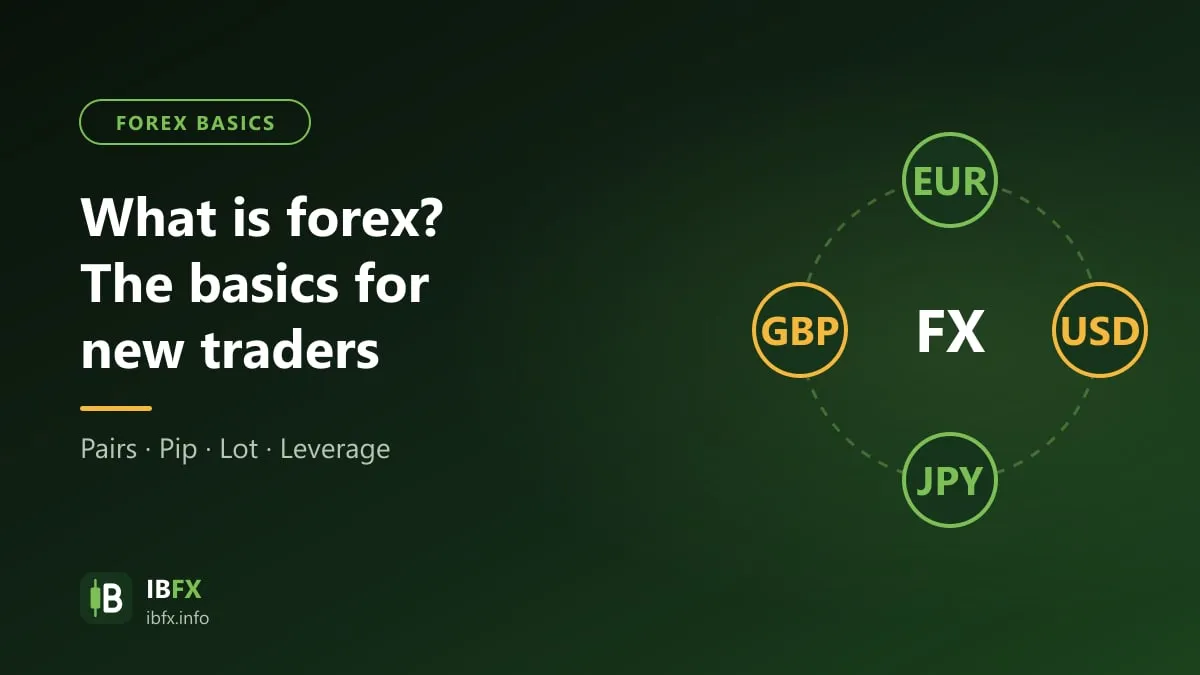
Forex is short for Foreign Exchange, the international exchange of currencies. The forex market (the foreign exchange market) is where the currencies of different countries are traded through the banking system and credit institutions.
In fact forex trading is a familiar activity, one that every person takes part in, if not directly then indirectly.
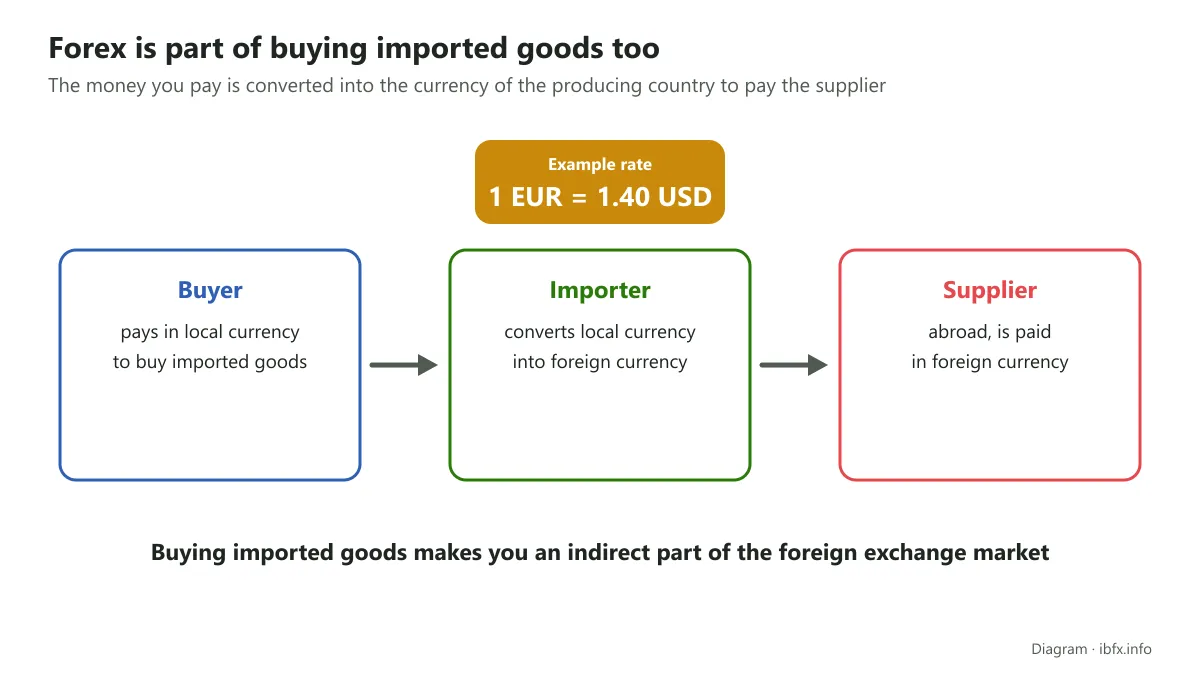
Because trade is global, the goods we use may have been imported from some other country — Japan, South Korea, the United States, a European country… The buyer pays only in local currency, the currency of the country they live in, to buy those products.
But that very act of buying imported goods shows you are taking part in forex trading, because the company importing the product has to change local currency into the currency of that country to buy it. And when the company sells the product to anyone, the money it takes goes round again so the supplier can keep importing the product and selling it to its own customers. So forex, “strange” as it sounds, is in truth very “familiar”.
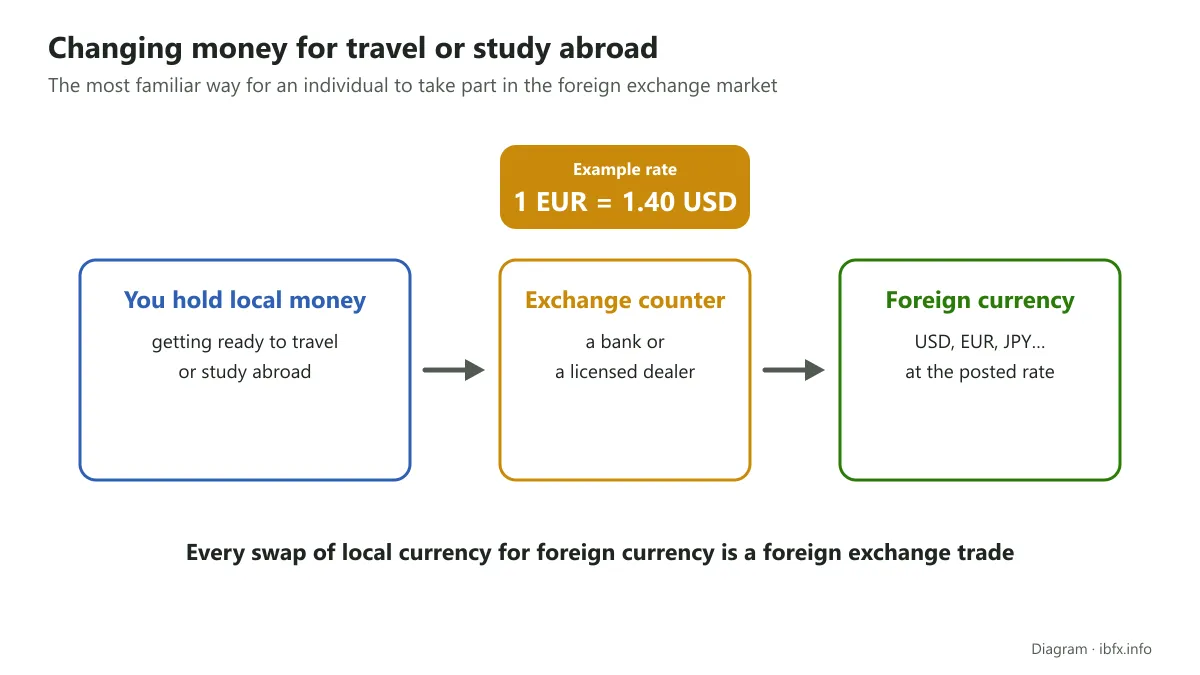
Or things like traveling abroad and studying abroad, where local currency is swapped for foreign currency, are the clearest proof of an individual taking part in forex.
Forex trading: what are you buying and selling?
Forex brokers now offer traders hundreds of different CFD products — commodities, precious metals, securities, cryptocurrencies, bonds, indices… — but among them forex currency pairs still make up the great majority and are what most traders trade today.
Whether you Buy or Sell gold, oil, corn or soybeans, all you trade with is the margin in your account: forex brokers use contracts for difference (CFDs), profit or loss is figured from the price difference, and you never own or have to store any goods.
Liquidity: the stock market is only a minnow next to the foreign exchange market
The foreign exchange market runs 24/5, from Monday to Friday every week. Unlike traditional markets, the forex market has no particular trading floor; it is connected through terminals. So all a trader needs is an internet connection to trade forex.
According to the three-yearly survey by the Bank for International Settlements (BIS), average daily foreign exchange turnover rose from about 4,000 billion USD in 2010 to about 9,600 billion USD in April 2025.
This is possible because Forex is traded over the counter, without a central exchange: brokers and the other parties deal directly with each other, with no exchange or “marketplace” in between, over the “counter” of the dealers (as a small retail trader does, trading with a broker through the MT4 platform rather than having to travel to some location or office before being able to trade).
According to 2016 figures from the Bank for International Settlements (BIS), average daily forex turnover topped 5,000 billion US dollars.
That figure had risen to 6,595 billion USD of average daily turnover by 2019, again according to BIS.
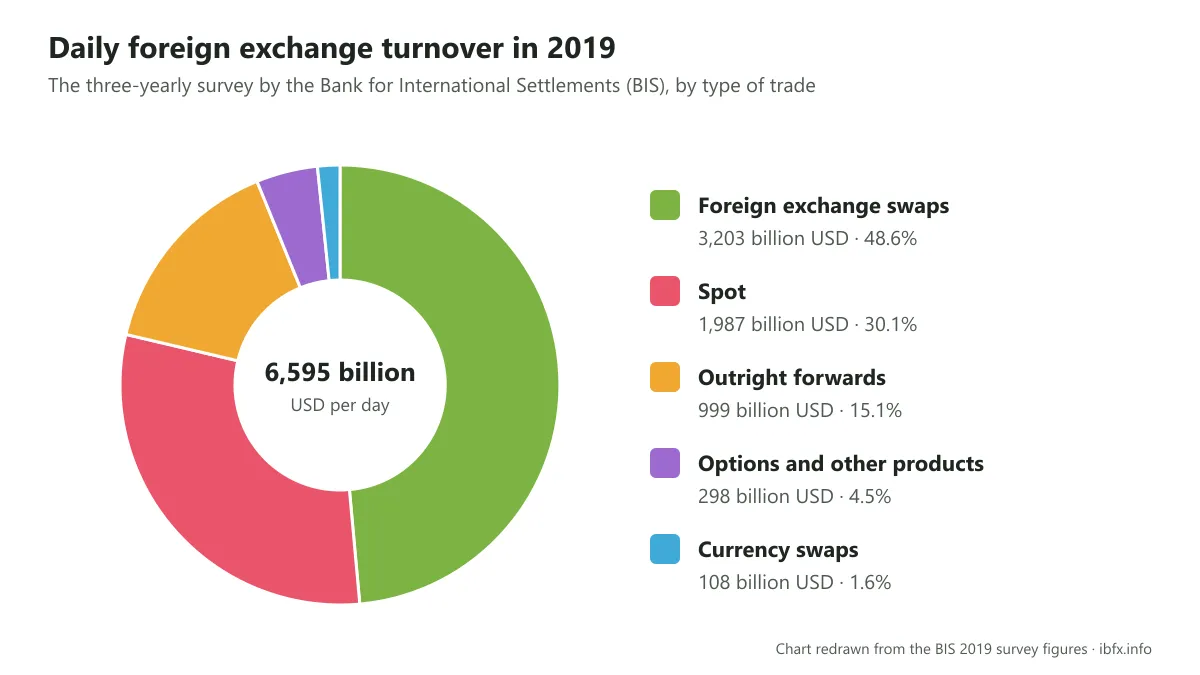
The BIS 2022 survey recorded about 7,500 billion USD a day, and the April 2025 survey about 9,600 billion USD. Note that most of this turnover is trading between banks and financial institutions; individual investors are only a small share of it, and deep liquidity does not mean money is simple to make.
The big banks are a major influence on exchange rates in Forex
In reality a great many different parties trade every day. The largest of them are the Tier 1 price providers, which include the big commercial and investment banks and account for a large share of trading on the foreign exchange market. Their clients are the smaller banks, large multinational corporations, large hedge funds, and forex brokers or retail market makers. Central banks also take part in forex, to keep their own country’s currency stable.
The individual trader stands at the end of this chain: the price that reaches the trader has passed through several layers of intermediaries, and the trader also pays the broker’s charges, such as the spread, commission and swap (if a trade is held overnight).
Central banks
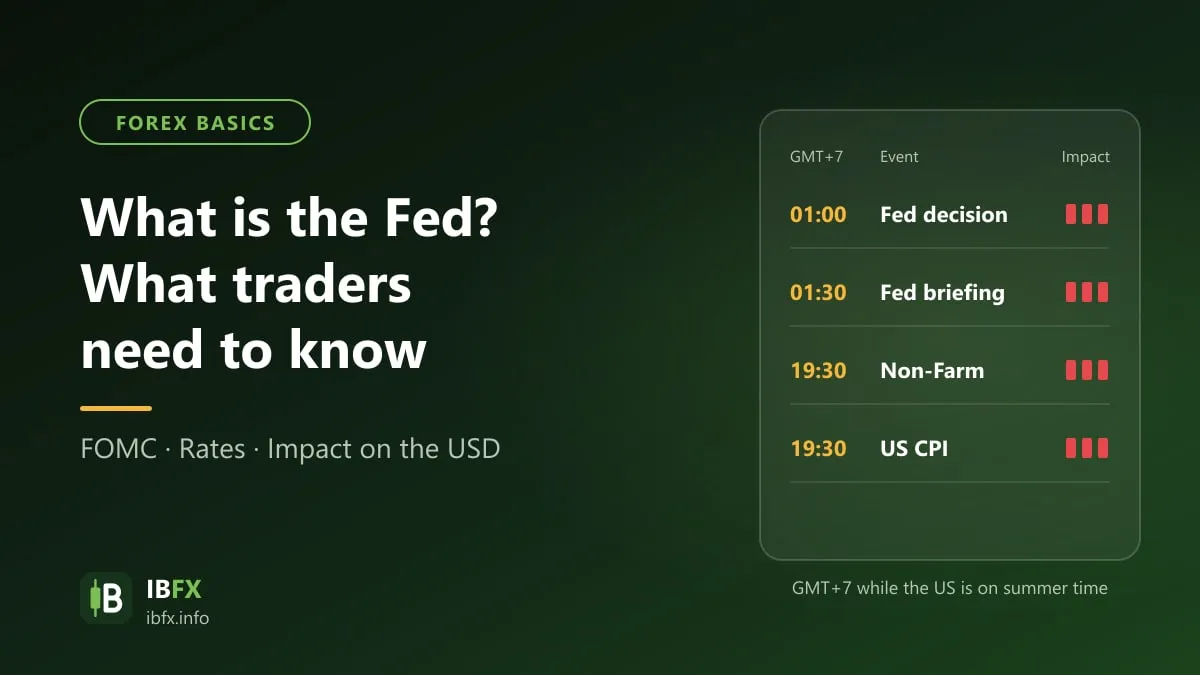
A central bank acts as the coordinator of market activity, affecting the market directly or indirectly depending on the stage the economy is at. Its main tool is monetary policy: adjusting interest rates, injecting or draining money through open market operations, and sometimes intervening directly by buying or selling foreign currency. (Fiscal policy, that is taxation and public spending, is the government’s business.) The central banks that affect the market most are the US Federal Reserve (Fed), the Bank of England (BOE), the Bank of Japan (BOJ), the European Central Bank (ECB), the Bank of Canada (BOC), the Reserve Bank of Australia (RBA) and the Reserve Bank of New Zealand (RBNZ).
The International Monetary Fund
The International Monetary Fund (IMF) lends to the governments of member countries in balance of payments trouble, usually on condition of economic reform. The World Bank Group, which includes the International Finance Corporation (IFC), funds development projects such as infrastructure; the IFC itself lends to and invests in the private sector.
These institutions rarely trade for profit, but a rescue package or a large loan can move the borrowing country’s exchange rate sharply.
Commercial companies
An important part of the forex market comes from the financial activity of trading companies paying for goods and services. Compared with banks or investment and speculative funds, these companies trade forex in smaller volumes and usually do not move exchange rates much in the short term. Trade flows are, however, an important driver of exchange rates in the long run, and some very large transactions by multinational companies (a foreign merger or acquisition, for instance) can move rates.
Commercial banks
The large banks are where prices are made and where most of the market’s liquidity comes from, which is why they are seen as the most important part of the interbank market. Put simply, a commercial bank takes money from those selling it and sells money to those who need it, creating a flow of money that drives economic activity forward.
Investment funds
Investment funds enter the market to invest and make a profit. The sums held by hedge funds, pension funds and international investment funds are very large; besides trading for profit, they also have to exchange currency when they buy and sell assets abroad. Because of the size of those sums and their professional analysis teams, most funds trade with a medium to long-term horizon.
Brokers and forex brokers
A brokerage acts as the bridge that lets individual investors reach the institutions and take part in the market. In an earlier era, when the forex market was a playing field only for people with money, you usually needed capital of 100,000 USD or more before you could trade forex at all.
The arrival of forex brokers, though, means a trader can now take part with very modest capital, just a few tens of USD. At some forex brokers you can even buy and sell with $1.
As said, a forex broker is essentially the middleman connecting retail traders with liquidity providers. Its job is to find price providers and use those prices to serve its traders. Because there are many liquidity providers, prices can differ slightly depending on the partner the forex broker has chosen.
Since the broker is a middleman distributor, the price passed on to the trader has to go through it. That gives two main kinds of forex broker: the dealing desk broker (Market Maker) and the no dealing desk broker (ECN broker).
A dealing desk broker (Market Maker, also called B-Book) takes the other side of the client’s order: it makes money from the spread and possibly from the trader’s own losses, which puts it in a conflict of interest with its clients. A no dealing desk broker (STP, ECN) passes orders on to liquidity providers and makes money from commission or from a markup added to the spread.
In practice many brokers combine the two, and the word “ECN” in an advertisement is no guarantee that your order really goes out to the market.
Traders do have to go through a foreign exchange broker, though, because we are only minnows buying or selling amounts far too small to have much effect on the market.
That is also why there are now plenty of fraudulent forex brokers looking to keep traders’ money. So to avoid a mistake, choose a reputable forex broker to trade with.
Traders, or individual investors
You and I, the people reading this article, are all small retail traders, and the ones with the least voice among everyone taking part in forex. We do not get the best prices, and in the unlucky cases where people trade at a disreputable forex broker, all their money is kept and they lose everything they put in. Every line of work has its downside and its own pros and cons. And to take part in this market, always be a clear-headed, sensible forex trader, whatever the situation.
Forex, the market that never sleeps – the forex trading sessions
The forex market is open 24 hours a day, 5 days a week thanks to 4 main trading sessions in 4 different regions, usually called the Australian session (Sydney), the Asian session (Tokyo), the European session (London) and the US session (New York).
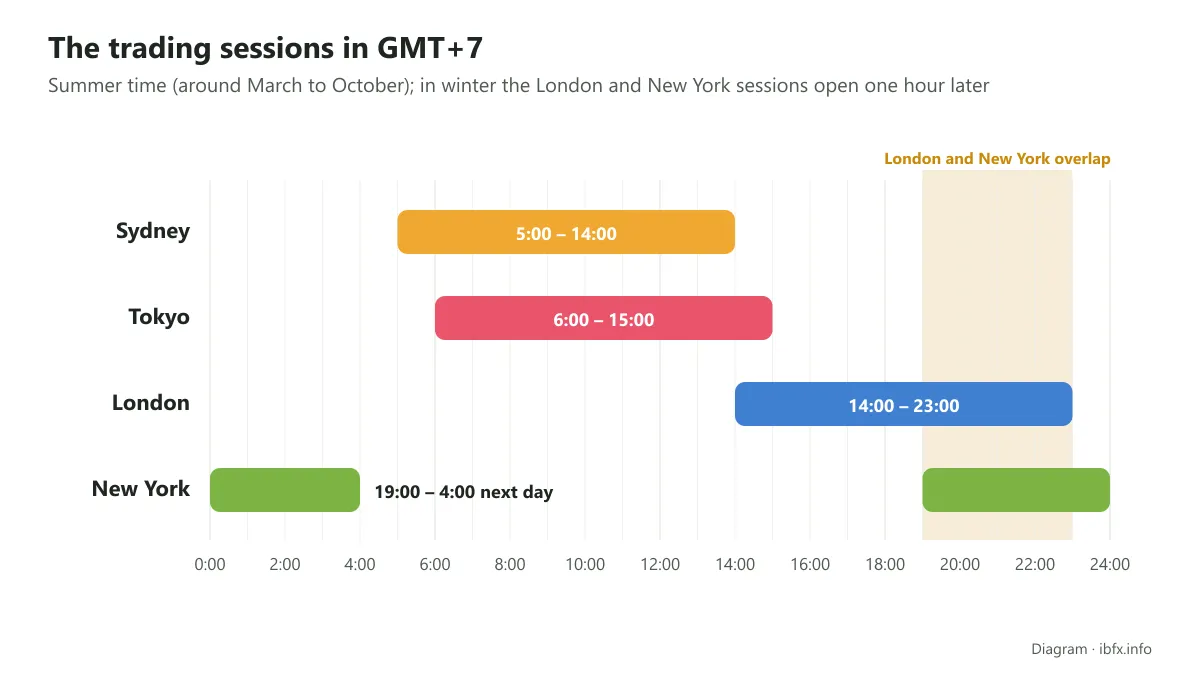
The sessions run one after another without a break, as the hours in the picture above show. In GMT+7, the Asian session (Tokyo) runs in the morning, the European session (London) starts in the early afternoon, and the US session (New York) starts in the evening and carries on past midnight. The exact opening times shift with summer time in Europe and the United States; see the forex trading session hours.
The forex market makes no distinction as to who you are, where you live or what your finances look like: as long as there is internet where you are, you already have somewhere “to trade and to work”.
Why does forex attract individual investors?
High liquidity
Liquidity is how fast goods or assets turn into money; the faster that conversion, the higher the liquidity. Anyone who has invested in Vietnamese securities knows that shares bought today only reach the account on T+2, so they cannot be sold the same day. On the forex market, though, that time is counted in an instant, and orders are usually filled in under a second.
A two-way market
A two-way market lets you look for a profit both when the market rises and when it falls. If technical analysis, some other source, or your own belief tells you a pair is in an uptrend, you choose to buy, or Buy. If instead you think the market is falling, you choose to sell, or Sell.
So compared with cash equities in Vietnam (where short selling is not yet allowed), a forex investor has 2 choices and can place orders in both directions. But having an opportunity in both directions also means you can be wrong in both directions.
You can also trade anywhere there is internet. That is convenient, but it also makes it tempting for a new trader to sit glued to the phone and trade far too much.
High leverage
Leverage lets you trade a large position size with small capital. That is what makes forex attractive, and it is also why many people lose money fast: the loss is magnified exactly as much as the gain.
So before the internet, before brokers and liquidity providers built the forex “game” with leverage in its rules, forex really was the stage only for the “heavyweights” of the banking market and for investment funds. Or for a handful of exceptional individuals such as George Soros.
In December 1971 the Smithsonian Agreement of the Group of Ten (G10) widened the band for exchange rates against the USD from 1% (under the Bretton Woods system) to 2.25%. By 1973 the major countries had moved over to floating rates altogether. Even floating, the major currency pairs usually move less than 1% a day, very little compared with shares or cryptocurrencies, which is why retail forex trading almost always uses leverage.
That is why making a profit requires you to have a really large sum of money to buy and sell with. Without enough money to do that, plainly you cannot take part in forex trading.
“Leverage”, however, lets a participant with only a small amount of capital still trade a larger position size for profit.
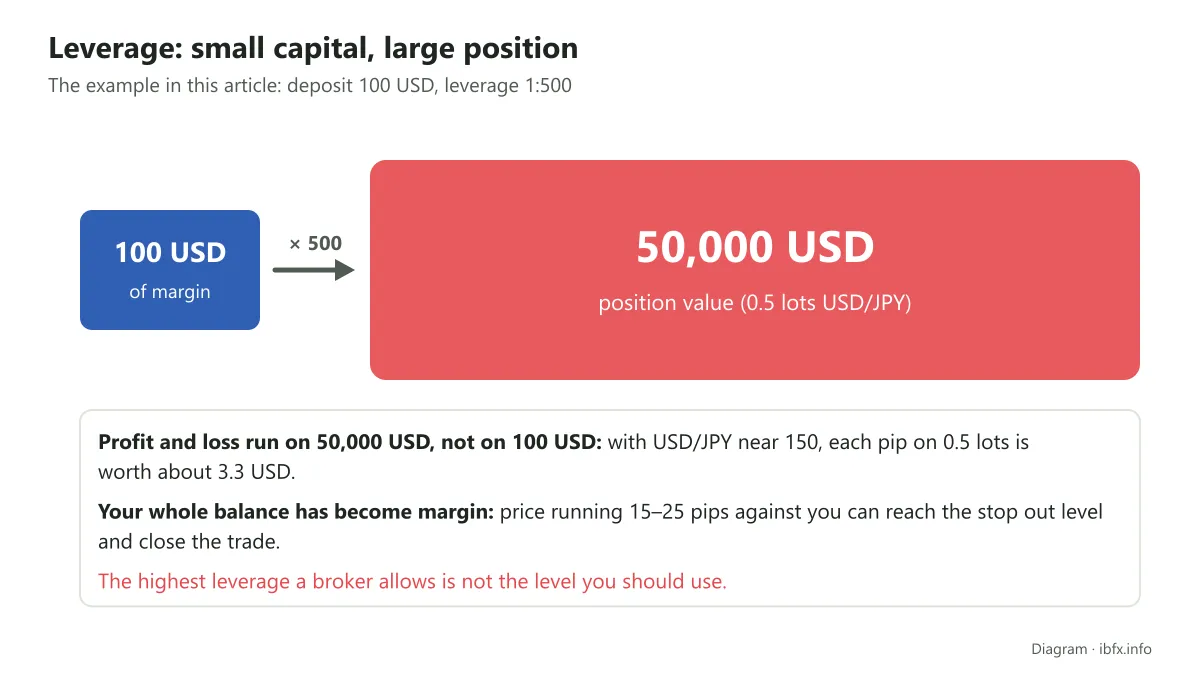
Suppose you deposit 100 USD with leverage of 1:500. In theory you can open a 0.5 lot USD/JPY position (50,000 USD), because the margin needed is 50,000 / 500 = 100 USD. But at that point your whole balance has become margin; with USD/JPY around 150, each pip on 0.5 lots is worth about 3.3 USD, so price running about 15-25 pips against you takes the account to the stop out level used by many brokers and the trade is closed. The maximum leverage is not the level you should use.
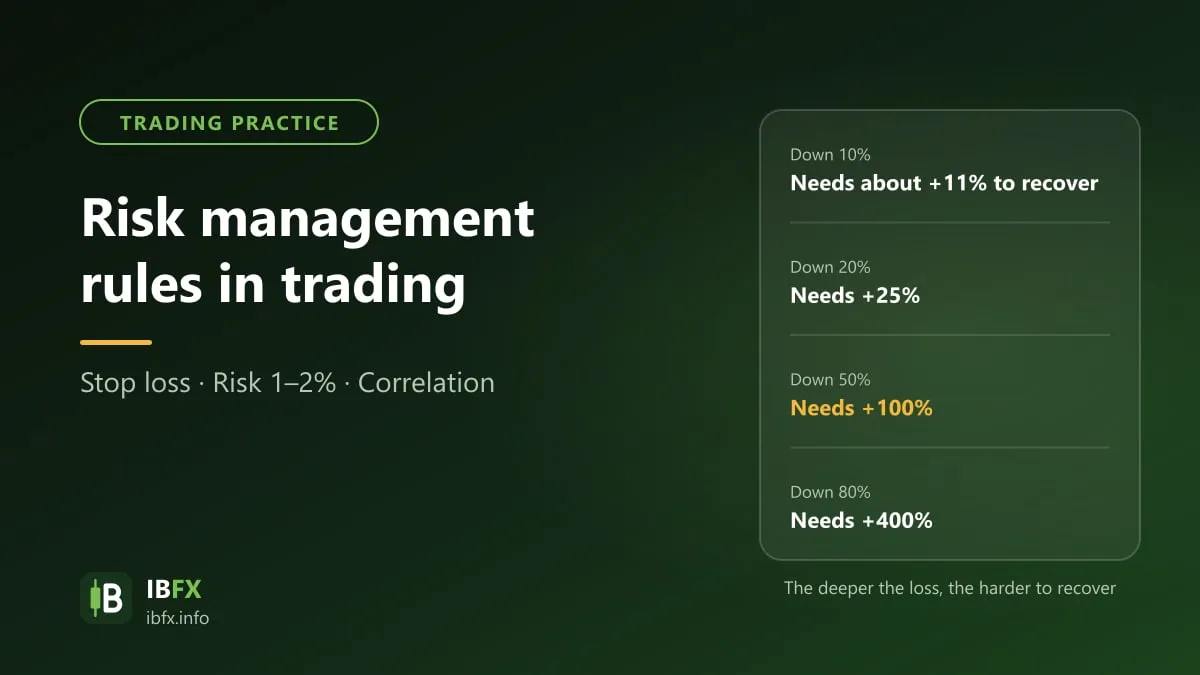
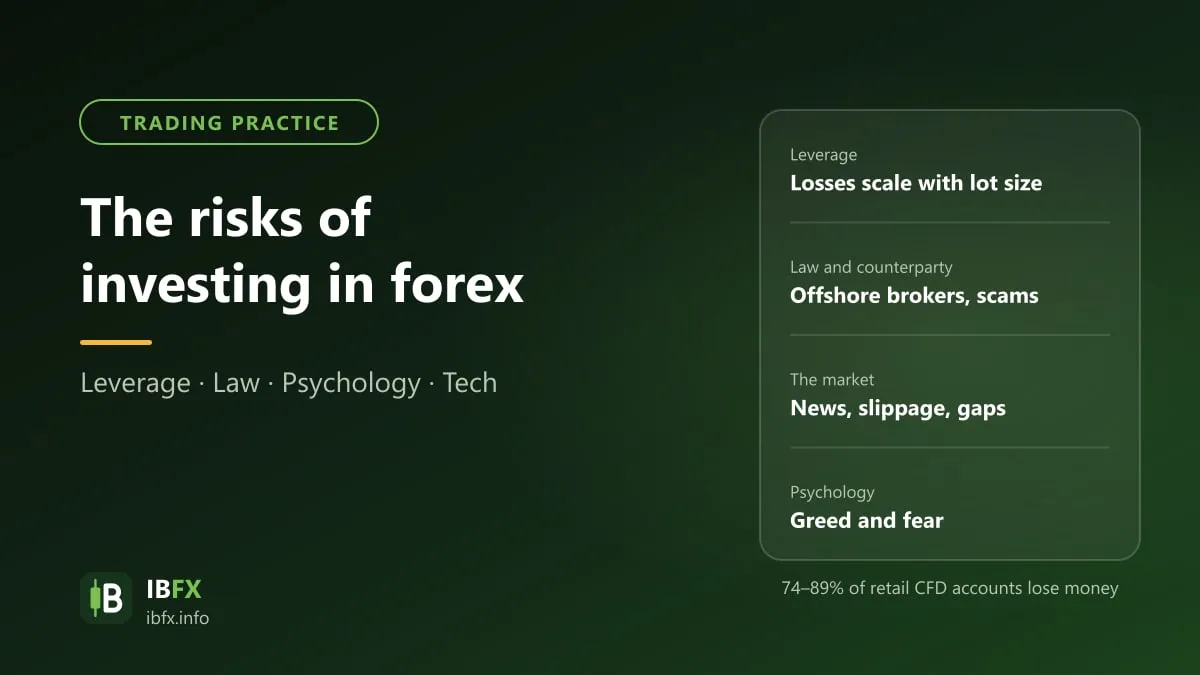
Everything has two sides, and it is not for nothing that many people call leverage a double-edged sword. It lets a trader make money from forex on very little capital, but that same leverage will burn an account to the ground if you get too carried away or do not know how to manage your money.
Transparent information
Major economic figures such as interest rates, inflation and employment are released on a public schedule, and everyone receives them at the same time through the economic calendar, so they can plan their trading. Even so, transparent does not mean perfectly fair: large institutions still have advantages in speed, costs and order flow information, and the price each broker gives an individual trader can differ.
The most traded currency pairs in Forex
Forex can be bought and sold in both directions precisely because it is always traded in pairs. When you buy one currency, you are at the same time selling the other.
Forex has 3 kinds of currency pair to trade: major pairs (Forex majors), cross pairs (Cross pairs) and exotic pairs (Exotic Pair).
- Major pairs (majors): USD paired with the other large currencies, such as EUR/USD, USD/JPY, GBP/USD, USD/CHF, AUD/USD, USD/CAD, NZD/USD.
- Cross pairs (crosses): no USD in them, for example EUR/GBP, EUR/JPY, GBP/JPY.
- Exotic pairs (exotics): a large currency paired with the currency of an emerging economy, for example USD/TRY, USD/ZAR; the spread is usually high and they move sharply.
According to the BIS survey of April 2025, the pairs with the largest shares of total global foreign exchange turnover are:
| Currency pair | Type | Share of turnover |
|---|---|---|
| EUR/USD | Major pair | 21.2% |
| USD/JPY | Major pair | 14.3% |
| USD/CNY | Has the renminbi in it, offered by few retail brokers | 8.1% |
| GBP/USD | Major pair | 7.6% |
| USD/CAD | Major pair | 5.3% |
| AUD/USD | Major pair | 4.9% |
These are figures for the whole market (mostly banks and financial institutions), not for retail forex brokers alone.
Some terms you definitely have to know to trade forex
Every line of work has highly technical terms you need to understand before you can take part. This matters most when traders talk among themselves: if you do not understand, you will not know what they are saying. Things like “just took 10 pips on gold today”, “just stopped out of 2 lots of EURUSD”, “why on earth is the spread at this broker so wide” or “is the commission at this forex broker high?”…
And of course nobody has time to sit and explain every idea to you — what a pip is, what a lot is, what commission is. If you want to take part in forex, learn these basic ideas first.
You can look at some of the forex terms worth knowing that we list below to understand the forex market better.
- What is a pip?
- What is a lot?
- What is a spread?
- What is leverage?
- What is the overnight fee (swap)?
- How to check a forex broker before you open an account
What steps does forex trading involve?
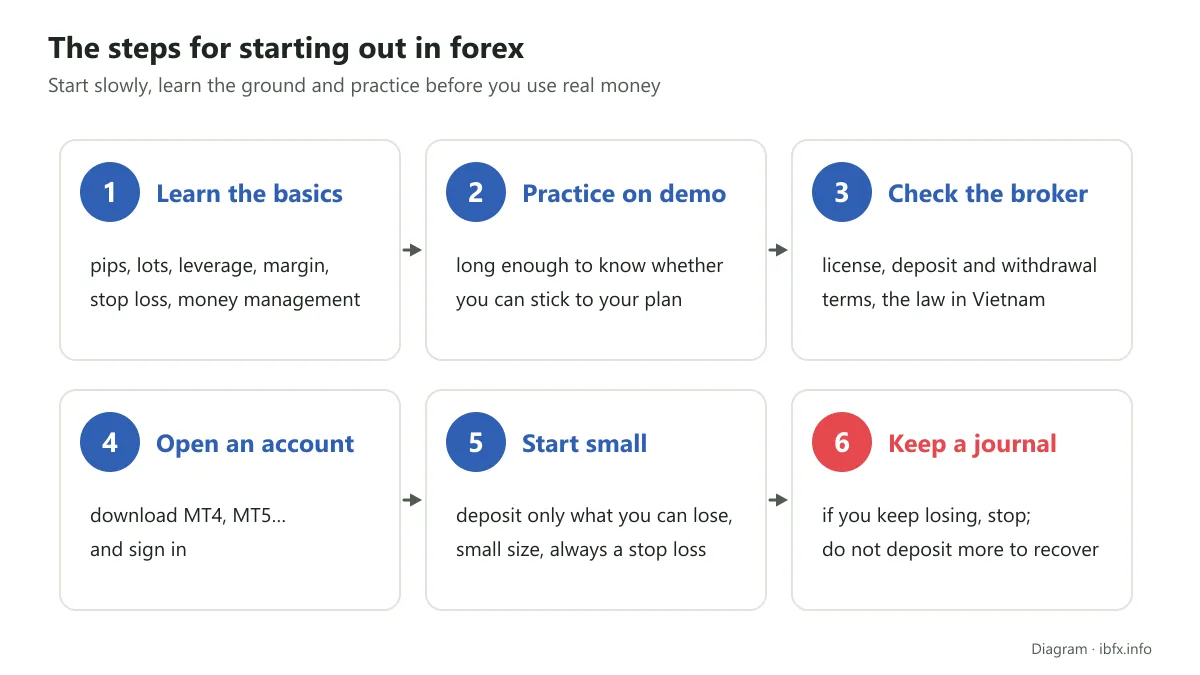
Marketing has also convinced a great many people that forex really is an attractive line of work. But no road is strewn with roses. To reach the summit, everyone has to go through many thorny stages along the way. Forex is no exception.
So take your time and enter this market slowly. Arm yourself with all the knowledge you need, starting from the simplest things, and get used to every concept and term there is in forex, before you think about making money from it.
There are many ways to reach this knowledge; if you are new, start with the most basic. You can read our guide for beginners to see the whole process.
You can also look at the short, basic process below to see what steps taking part in forex trading involves.
Step 1: Learn the basics: pips, lots, leverage, margin, stop losses and money management.
Step 2: Practice on a demo account long enough to know whether you can stick to your plan.
Step 3: Research the forex broker carefully: which company signs the contract with you, where it is licensed, what the deposit and withdrawal terms are; and understand the legal position in Vietnam.
Step 4: Open an account, download the trading platform (MT4, MT5…) and sign in.
Step 5: Deposit a small sum you can afford to lose; place orders with a small position size and always with a stop loss.
Step 6: Keep a trading journal and try withdrawing part of the money. If you keep losing or blow up the account, stop and look again at how you trade; do not deposit more to win it back.
Should you trade forex or invest in securities?
Above I said the liquidity of securities is many times smaller than that of the foreign exchange market. Some forex brokers even advertise share CFDs as “just like the real thing” (with dividend adjustments and low fees). But a CFD gives you no ownership of the share, usually carries an overnight fee, and comes with leverage risk.
The table below compares the two:
| Forex (through a broker abroad) | Vietnamese securities | |
| What you trade | CFDs on currencies, metals, energy, indices, shares… | Shares, fund units, listed bonds |
| Trading hours | Almost round the clock, closed at the weekend | About 9:00–15:00 on business days, with a lunch break |
| Leverage | Depends on the broker: up to 1:30 on major pairs for retail clients in the UK, the EU and Australia; many brokers abroad allow 1:500 or more | About 1:2 at most (a 50% margin ratio) |
| Costs | Spread, commission (depending on the account), overnight fee | Brokerage fee, 0.1% tax on the sale value |
| Where it is traded | Over the counter (OTC); the other side is the broker or a liquidity provider | A central exchange (HOSE, HNX, UPCoM) |
| Settlement | Profit and loss update on the account straight away | Shares bought reach the account on T+2 |
| Short selling | Allowed, with a Sell order | Not yet allowed for cash equities |
| Legal position in Vietnam | Brokers abroad are not licensed; you have no legal protection in a dispute | Securities companies are licensed and supervised by the State Securities Commission |
Closing
So you can see that forex really is a trading market of the financial industry whose participants are all “heavyweights”, rather than small individuals.
And yet advertising usually paints forex as a comfortable job with enormous returns: open the laptop in the morning, take a few trades, one click brings in 1,000 USD, no working from dawn to dusk. Put that way, anyone would want it.
The reality is different: the market does not pay a steady wage, and only a few people win over the long run.
But — there is that word again — a great many people have had to give forex up, most of those who ever took part. Forex may be open to many people, but not everyone holds on and survives in this very harsh market.
You need to start slowly. What matters most is a serious investment plan, a grounding in technical analysis and knowing how to manage your money effectively, so you can go up against the teacher called the Market. And always remember: trade only with money you can afford to lose.