On this page
The Fed is probably the most powerful financial institution in the world. It is the body that issues the US dollar, and the monetary policy it sets affects not only the United States but a great many other countries as well. As a trader you have surely told yourself to be careful whenever there is news on interest rates or a Fed meeting, because prices can move very sharply. So what is the Fed? Why does news from the Fed hit the market so hard? In its role as the central bank of the United States, how do the policies the Fed sets affect the US economy in general and the world economy in particular? Let’s find out.
What is the Fed?
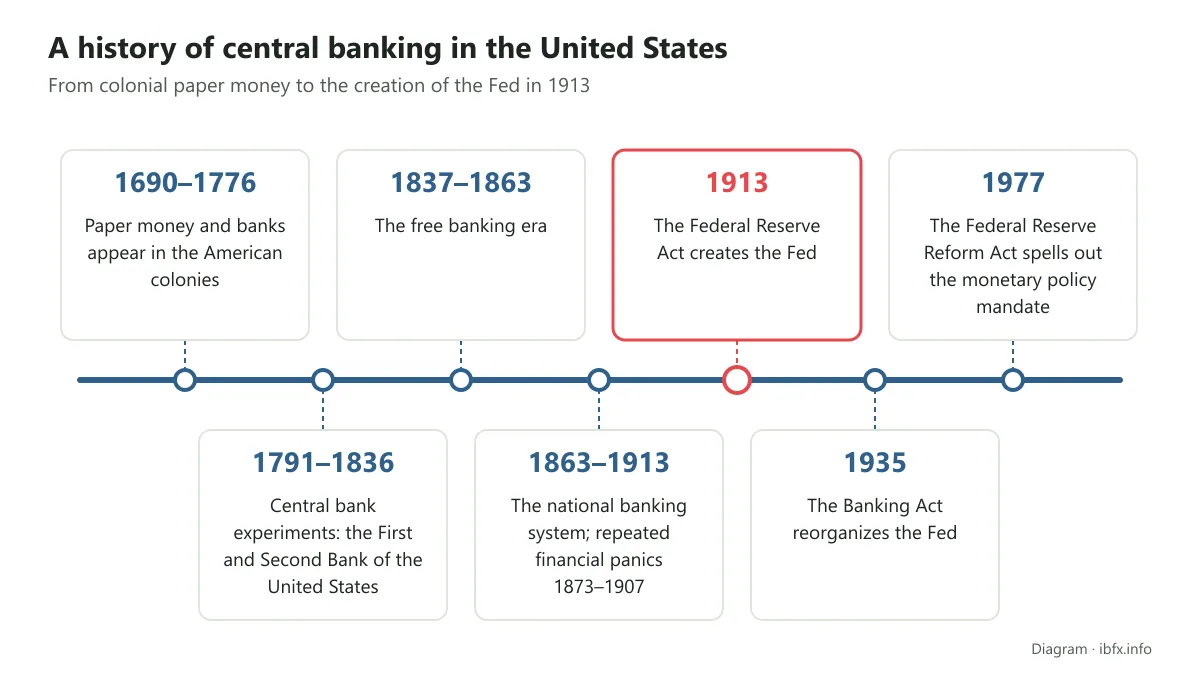
The Fed, or the Federal Reserve (Federal Reserve System – Fed), is the central bank of the United States. It was created on Dec 23, 1913 under the act known as the “Federal Reserve Act”, signed by President Woodrow Wilson, with the aim of keeping monetary policy in the United States flexible, safe and stable.
How the Fed came about
By 1910, worry about financial and economic crises had convinced the American elite that the national banking system had to change. The Republicans and the Democrats disagreed with each other in plenty of areas, but on this one both parties agreed that the monetary system of the day was not flexible enough and could not meet the needs of a growing national economy.
The Republicans, led by Senator Nelson Aldrich, came out in favor of a central bank sponsored by a private bank and based in Washington, D.C., so that the amount of money in circulation could be expanded or contracted easily when needed. The Democrats, on the other hand, did not trust the bosses of Wall Street and backed a banking system controlled by the government. That system would of course bring every side together, including private bank directors, who had long experience of monetary policy, and officials with authority, who would protect citizens from the indifference of the bankers.
After a great deal of fiery debate between the parties, Congress finally passed the “Federal Reserve Act” in December 1913, building on the ideas of the Aldrich Plan. Paul Warburg and a number of other experts were appointed to run the young system. In November 1914 the 12 Federal Reserve Banks opened for business, and they played a central part in financing the war effort of the United States and its allies in the First World War.
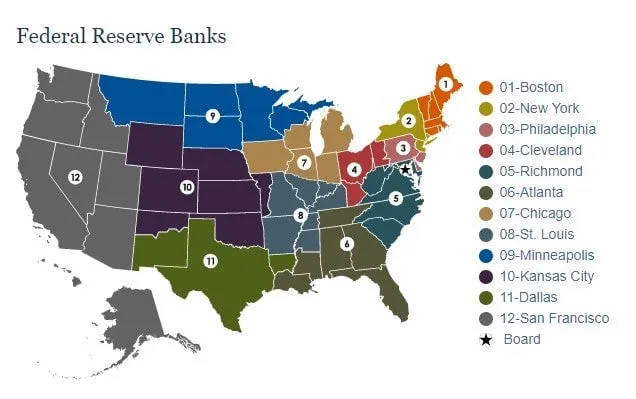
The Federal Reserve is independent when it makes monetary policy decisions: its decisions do not need the approval of the President or of the government, but the Fed is overseen by Congress. That keeps monetary policy less exposed to short-term political interest. On top of that, to avoid concentrating too much power in the bank in New York, and to give more weight to the interior of the country, the system is made up of 12 Federal Reserve Banks placed in 12 districts across the United States.
How the Federal Reserve is put together
The Fed is made up of:
- The Board of Governors, with 7 members
- The Federal Open Market Committee (FOMC).
- The Federal Reserve Banks (12 of them), located in major cities
- The member banks
In detail:
The Board of Governors: 7 members, based in Washington, D.C., nominated by the President and confirmed by the Senate. Every member of the Board of Governors also sits on the Federal Open Market Committee. Each governor serves a 14-year term; the Chair and the Vice Chair are appointed to those posts for 4-year terms.
Its job: to make the important decisions on monetary policy.
The Federal Open Market Committee (FOMC): the 7 members of the Board of Governors plus 5 Reserve Bank presidents, 12 members in all.
Its job: to decide monetary policy through open market operations, most visibly by setting the target for the federal funds rate. The president of the Federal Reserve Bank of New York always holds a vote; the other 4 seats rotate among the regional banks.
The Federal Reserve Banks: placed in 12 districts (12 branches) such as Boston, New York, Philadelphia, Cleveland, Richmond, Atlanta, Chicago, St. Louis, Minneapolis, Kansas City, Dallas and San Francisco, and they carry out the rest of the work.
What the Federal Reserve does
The Fed’s monetary policy role is spelled out in the Federal Reserve Reform Act of 1977, with these main duties:
- Conducting the nation’s monetary policy so as to promote maximum employment, stable prices and moderate long-term interest rates.
- Keeping the economy stable and containing the systemic risk that can build up in financial markets. Holding the prices of goods and services steady to encourage economic growth.
- Supervising banking institutions to keep the financial system safe and sound and to protect the credit rights of consumers.
- Providing financial services to institutions that hold assets of value, to foreign official institutions and to the US government, and playing a central part in running the nation’s payments system.
Why can the Fed affect the world economy?
The US dollar is the world’s key currency, and the Fed is the only body with the power to decide whether the interest rate on that currency goes up or down. That bears directly on the strength of the dollar and reaches the trading partners of the United States. When the Fed raises the interest rate on the dollar to hold inflation back, it also strengthens the dollar on the international currency market and draws capital into dollar assets, while making US exports more expensive and imports cheaper.
What is more, because the dollar holds such an important place in the international monetary system, key commodities such as oil and gold are priced in dollars. The Fed’s interest rate policy has a strong effect on the value of the dollar, so it indirectly affects the price of those commodities worldwide. That is why every decision the Fed makes reaches the world economy. And of course no trader who does not want to blow up an account dares ignore what the Fed is doing.
The tools the Fed uses on monetary policy
Changing interest rates: the Fed adjusts the target for the federal funds rate and the rate it pays on bank reserves. Because the dollar is the world’s key currency, a change in rates has a very large effect on economic activity, on businesses and on exchange rates.
Buying and selling government bonds: when the Fed buys government bonds it increases the amount of money in circulation, which brings interest rates down and encourages spending and bank borrowing.
In the other direction, when the Fed sells bonds there is less money in circulation, so interest rates rise and spending and bank borrowing are held back.
Reserve requirements: the Fed can set the share of deposits that a commercial bank has to hold back; the higher that share, the less money the bank has to lend. Since March 2020, though, the Fed has cut the requirement to 0% and has steered policy since then mainly through interest rates.
Which Fed events move the market directly?
In practice the Fed only has to “breathe” for the market to feel it, but the 2 events people pore over most are these:
The Fed Chair speaks
As the head of the Federal Reserve, whatever the Fed Chair says carries great weight for the dollar. Traders sit up straight in front of the laptop and comb through every sentence, every word, looking for a clue about how monetary policy will be set in the future.
Beyond the speeches, the Fed Chair’s testimony before Congress (the House and the Senate) is another piece of news that traders follow closely.
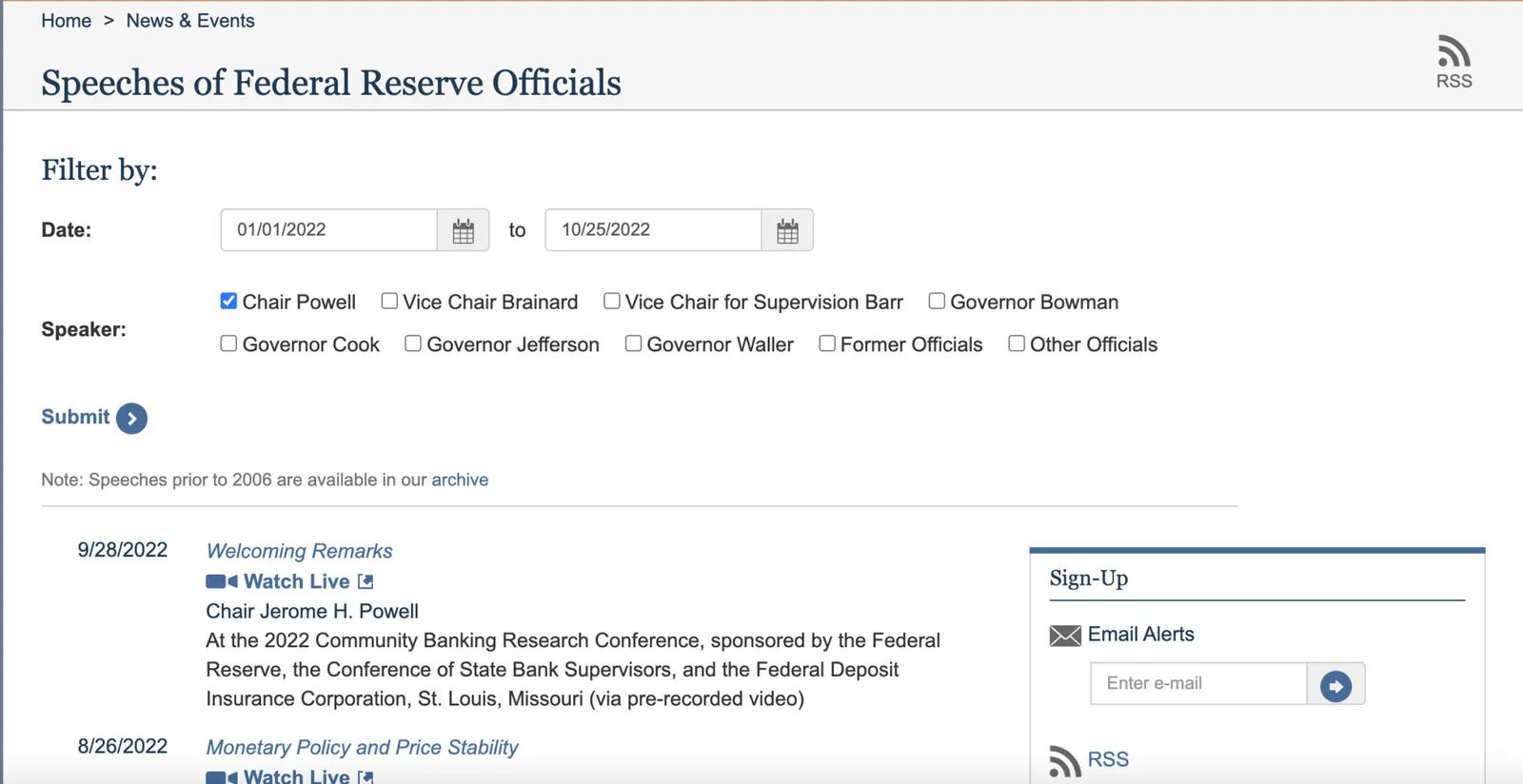
News about the FOMC or a speech by the Fed Chair can be read straight from the Fed’s own website or from an economic calendar.
The FOMC meets
- Regular schedule: 8 times a year
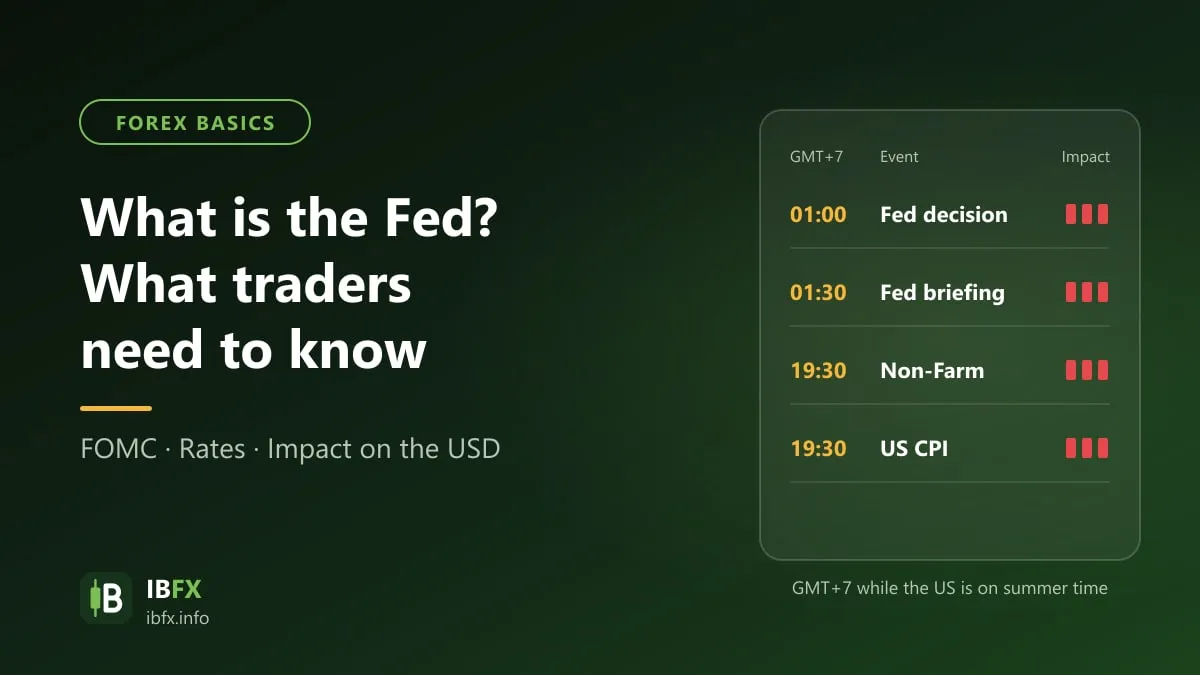
- Each meeting runs 2 days; the policy statement (which carries the interest rate decision) is released at 14:00 New York time on the second day of the meeting, that is 18:00 UTC in summer or 19:00 UTC in winter, which is 1:00 or 2:00 the next morning in GMT+7
- The Fed Chair’s press conference starts 30 minutes after the statement and runs about an hour
- The minutes of the meeting are published about 3 weeks later and count as a separate release
- The press conference has 2 main parts:
Part 1: the Fed Chair reads out a prepared statement.
Part 2: questions from the press. This is the moment that shakes the market hardest. Because the answers are not prepared in advance, one slip of the tongue from the Fed Chair can send the market moving very sharply within a few minutes.
Why do traders care about the FOMC meeting?
Because it is one of the few occasions on which the press can meet the Fed Chair and put questions about monetary policy directly. Every FOMC meeting bears on interest rates one way or another, and it comes with answers from the Fed Chair about the state of the economy and the outlook for growth. That is what gives traders the clues they use to work out where Fed monetary policy is heading.
In short, anything to do with the Fed moves the market sharply, as every trader already knows. Now let us compare the market when the Fed Chair speaks with the market on the FOMC meeting release, and see which of the two moves it more.
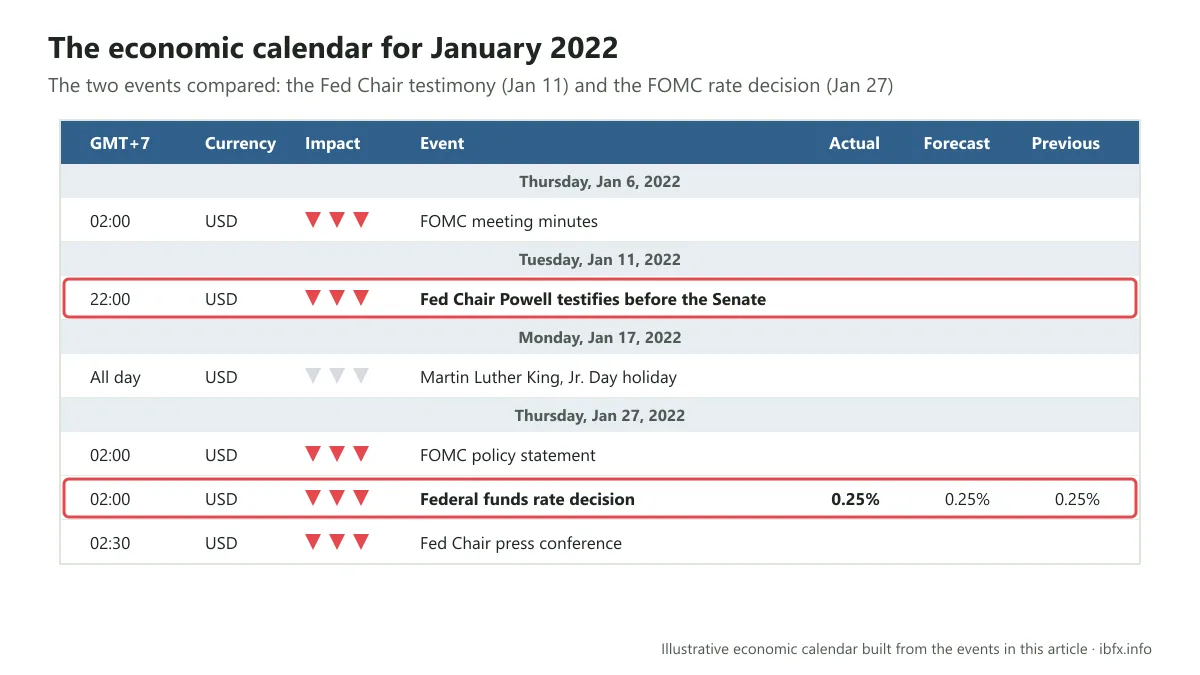
First take a look at the economic calendar. In the same month there were 2 events:
- The Fed Chair speaking at a hearing before the Senate (Jan 11, 2022).
- The interest rate release from the FOMC meeting (Jan 27, 2022 in GMT+7, which is 14:00 on Jan 26 in New York).
So how did the market move?
On the M30 gold chart for those two days, the interest rate release moved price more than the Fed Chair’s speech did. A speech usually only moves the market sharply when the Fed Chair says something the market was not expecting. At the January 2022 meeting the Fed had not yet raised rates and only signaled that a rise was coming (the first rise, of 0.25 percentage points, came in March 2022), and yet price still ran a hundred pips. That is why many traders stay out or cut their position size around the release.