On this page
More and more people are looking into forex, and there is no shortage of brokers advertising to them; most are foreign companies, and plenty of them are only registered in places with loose supervision. Picking a broker you can trust is therefore not easy, and you need to spend a fair amount of time on research before you deposit any money.
What is a forex broker?
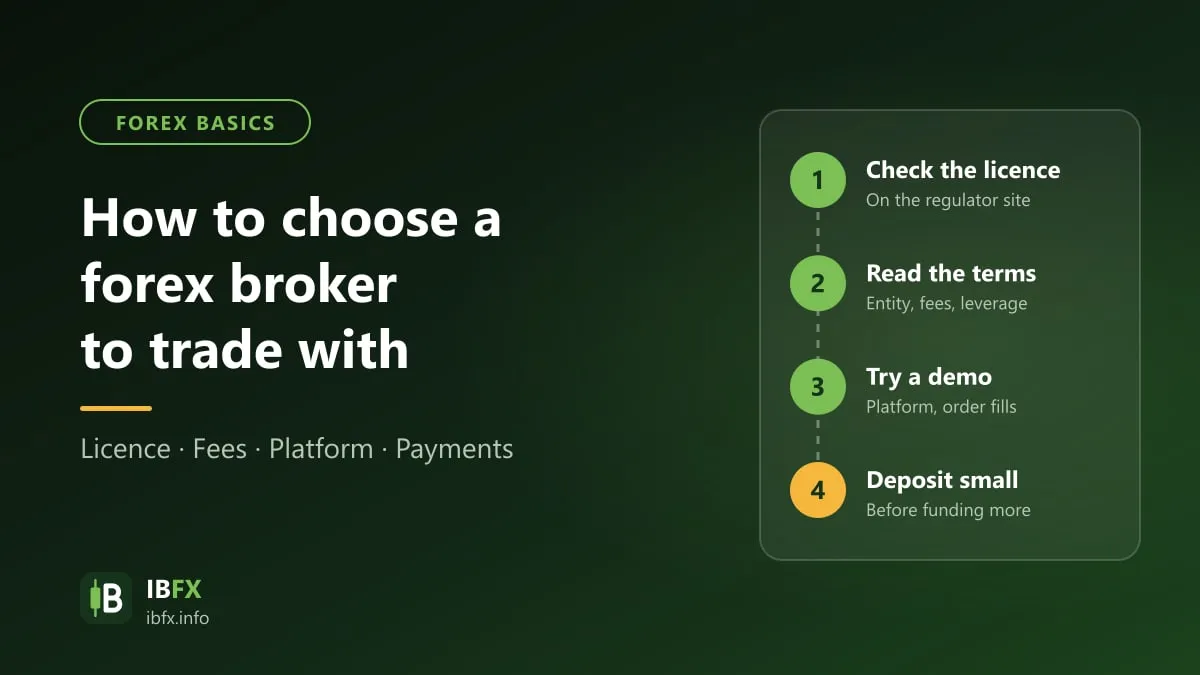
Before you choose a broker, you need to understand what a forex broker is and what services it provides (see What is a broker?), and then be clear about what you need: the spread and the commission you are willing to pay; the deposit and withdrawal methods and how long they take; leverage and the stop out level; which company will sign the agreement with you and where that company is licensed. Without a firm grip on all of this, it is easy to be led along by a broker or an agent who is not straight with you, or to pass over a broker with better conditions. The criteria below are a place to start.

Traders have to go through a forex broker to trade currencies.
First, once you are ready to trade currency pairs, you need a forex broker you can trust: the place that gives you the service of buying and selling currency pairs and lets you use leverage so that you can trade a larger position size. Through a forex broker, traders can reach the currency market 24 hours a day, five days a week.
Most forex brokers today serve the retail trader market. Retail traders account for only a very small share of total foreign exchange volume, but they are still the largest group of a broker’s accounts by number.
Forex brokers make their money mainly from the difference between the buy and the sell price (the spread), from commission, from swap, and — at brokers that take the other side of the trade — from their clients’ losses. Most brokers let you try a free demo account, so read up on several brokers and try them out before you settle on the one that suits you.
Customer service
Forex trading runs 24 hours a day, so when you are weighing up which broker is the most reliable, one thing you can judge a broker by is its customer service: send a few quick questions and see how long the reply takes. Look for brokers that answer at any hour, and whose support answers come from real people rather than pre-programmed automatic replies.
Trading platform
The idea: the trading platform is where you interact with the financial market, which is why you need to make sure the platform of the broker you choose is always available and easy to read, and that it has fundamental and technical analysis data built in.

A forex broker has to have a good trading platform.
On top of that, it has to make entering and exiting a trade easy when you need to, which matters a great deal when you are choosing a broker to trade with; a good platform usually has a clear design and makes it easy to place buy and sell orders. A complicated interface gets in the way of your trading — it leads to avoidable mistakes, such as entering an order wrongly or closing a position when you did not mean to, and those mistakes eat into your profit and leave you frustrated.
Make sure you end up with a good trading platform: you can pick MetaTrader 4 (MT4) or MetaTrader 5 (MT5), the two most common platforms at forex brokers. These days almost every broker offers a free demo account so that clients can try its platform, so take your time over the decision — there is no need to rush.
The broker’s license
The first basic thing to know is that a broker you can trust must first of all hold a brokerage license from a respected financial regulator (such as the FCA in the UK or ASIC in Australia), issued to the very company that signs the agreement with you. It is like going to see a doctor: you would not want to be examined and prescribed medicine by someone with no license to practice.
The license is an important part of a forex broker.
Many brokers only hold a license somewhere lightly supervised, such as Belize (the IFSC, now the FSC), or are only registered as a company in Saint Vincent and the Grenadines, where the financial authority does not license forex brokers at all. To be clear: no foreign license has any legal force in Vietnam, and no foreign forex broker has been licensed by the State Bank of Vietnam to provide margin foreign exchange trading to individuals in Vietnam. A broker advertising that it “has an office in Vietnam” is a reason to be more careful, not a reason to feel safer. Besides the license, you have to dig into the broker you are about to join and make sure it has not been caught out on anything: data security, liquidity for its clients, and transparency in everything to do with money — no trader wants to work with the nagging worry that the broker will disappear with the money they deposited.
A reasonable spread
First you have to work out what “reasonable” means. Some brokers advertise a spread of almost zero but charge a high commission, a high swap, or let the spread widen sharply around news (sometimes by a few hundred points). So add up the total cost instead of looking only at the advertised spread figure.
Here is an example: you Sell USD/JPY and set your TP (take profit) at 114.20. A Sell position is closed at the Ask price, while the chart is drawn from the Bid price. If the Bid falls to 114.20 at a moment when the spread has widened to 3 pips, the Ask is still 114.23, so the position is not closed at your take profit; and if price turns around right afterwards, you miss your take profit even though on the chart price touched TP.
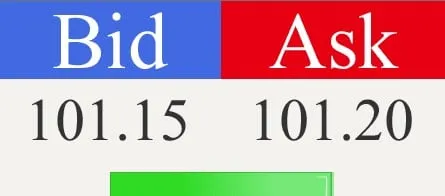
A broker’s spread is something traders watch closely.
We will go into this topic in detail in later guides, but you have to get familiar with everything about your broker so that you are sure nobody is leading you by the nose. You already know that a forex broker earns from the difference between the buy and the sell price, but before you join any broker you have to look at every cost that comes with it: commission, transfer fees, withdrawal fees, and above all swap if you intend to hold a position into the next day. You should also remember that you get what you pay for: do not let a low spread at one broker make you give up better trading conditions at another, because the other one may quote a higher price and still fill you more smoothly, especially on trades placed in the busiest hours, when liquidity is high.
Check before you deposit
- Legal status in Vietnam: no foreign forex broker is licensed to provide this service to individuals in Vietnam, and if a dispute arises you have no protection under Vietnamese law. See Is forex trading legal in Vietnam?
- Try a withdrawal: deposit a small amount, place a few trades and then withdraw part of it, so that you learn the real timing and the real paperwork.
- Bonuses: read the conditions carefully; many programs require you to trade a certain volume before you can withdraw.
- Deposit channels: only deposit through the official channels in the broker’s client area, and never transfer money to an individual who claims to be staff or to be “helping with deposits”.
- Signs of a scam: see How to spot forex scams.