On this page
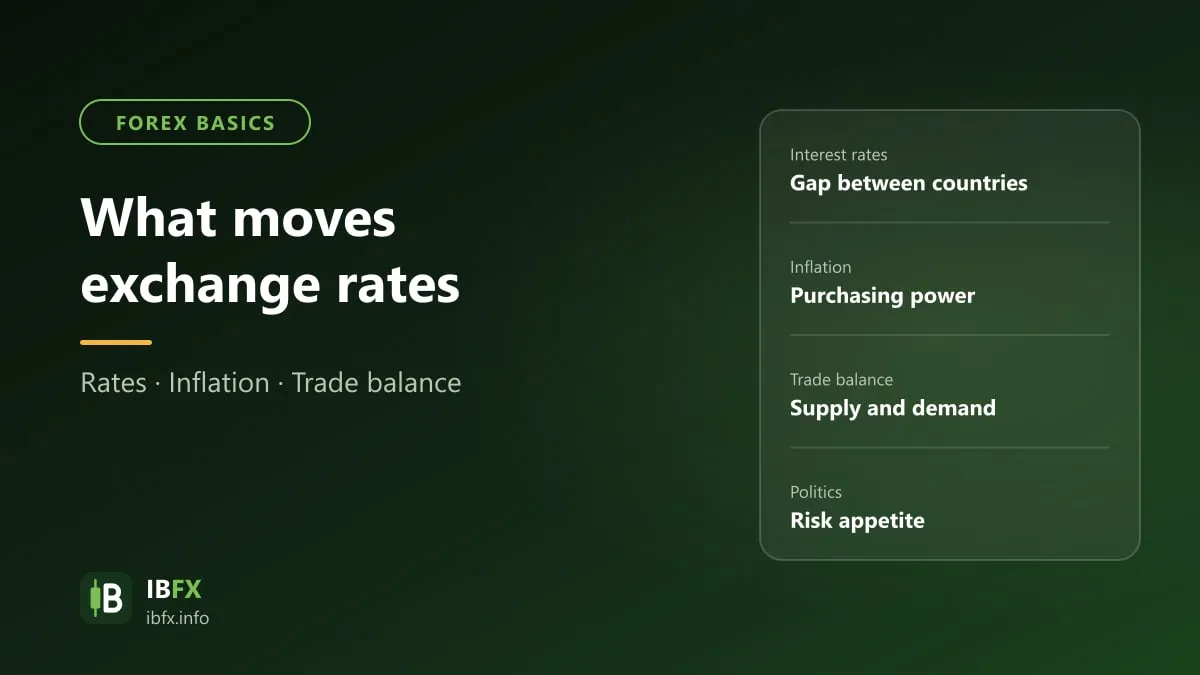
The exchange rate is one of the decisive factors affecting the health of an economy. Alongside factors such as interest rates and inflation, the exchange rate is also one of the economic indicators that people watch and analyze, because it has a direct effect on the return on any investment as well as on a country’s trade balance.
It sounds weighty, but an exchange rate is simply the value of one currency against another, the thing you usually see in forex trading. On top of that, because it is volatile by nature, an exchange rate is always moving up and down unevenly and is very sensitive to any piece of news. Still, since a currency is tied to and built out of many different things, understanding the factors that affect a currency’s exchange rate will make forex trading somewhat easier for you.
Interest rates and inflation
Inflation is a sustained rise in the price of goods and services over time, and at the same time the loss of value of a currency. When the general price level rises, one unit of currency buys fewer goods and services than it did before, so inflation reflects a decline in purchasing power per unit of currency.
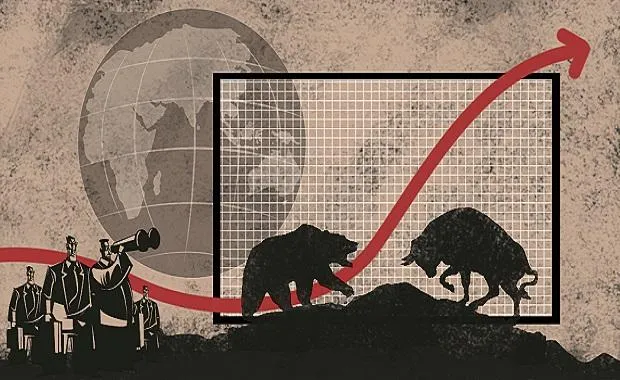
An interest rate is the percentage that comes out of a lending transaction between two parties. Interest rates and inflation are correlated with each other, because in practice people tend to borrow and spend more when interest rates are low, and that is what leads inflation to rise.
These rates are a direct indicator of a country’s current and future economic performance, and they affect the decisions of investors and forex traders worldwide. A rate rise usually pulls up the value of the domestic currency, because assets in that currency yield more. Rises usually happen when an economy is growing too fast and central banks are trying to hold inflation back. In the other direction, prolonged high inflation that interest rates do not keep up with usually makes a currency lose value.
Note that the market reacts to the difference from what it expected: a rate rise that was forecast well in advance may not lift the currency at all, and the currency can even fall if the central bank signals that it will stop raising.
Current account deficits
The current account records a country’s transactions with the rest of the world, and its largest part is the trade balance: the difference between the value of exported and imported goods and services. If a country buys more than it sells, the trade balance is in deficit. That has a direct effect on the exchange rate, because the country will need more foreign currency, which lowers the value of the domestic currency against foreign ones, or in other words makes the domestic currency weaker. If the deficit is offset by foreign investment capital flowing in, as has been the case for the United States for many years, the currency can still hold its value.
Government debt
This is the total national debt, or the public debt of the central government. Public debt that is large and growing fast can make investors worry about the ability to repay it and about the risk of inflation, if the government prints money to pay the debt. How much debt is dangerous depends on the country, though: Japan has very high public debt, but domestic investors hold most of it.
When investors worry, they sell government bonds and move capital abroad, which increases the amount of the domestic currency being sold on the foreign exchange market and makes the currency weaker.
Terms of trade
Terms of trade is the ratio of a country’s export prices to its import prices. When export prices rise above import prices, the terms of trade improve. That leads to higher revenue, greater demand for the domestic currency, and a rise in the value of that currency. The reverse holds too: when export prices fall relative to import prices, the currency usually weakens. The relationship shows up most clearly in commodity currencies such as the AUD, the CAD and the NZD, but it can still be overwhelmed by interest rate differentials or by safe-haven flows.
Political stability and foreign capital
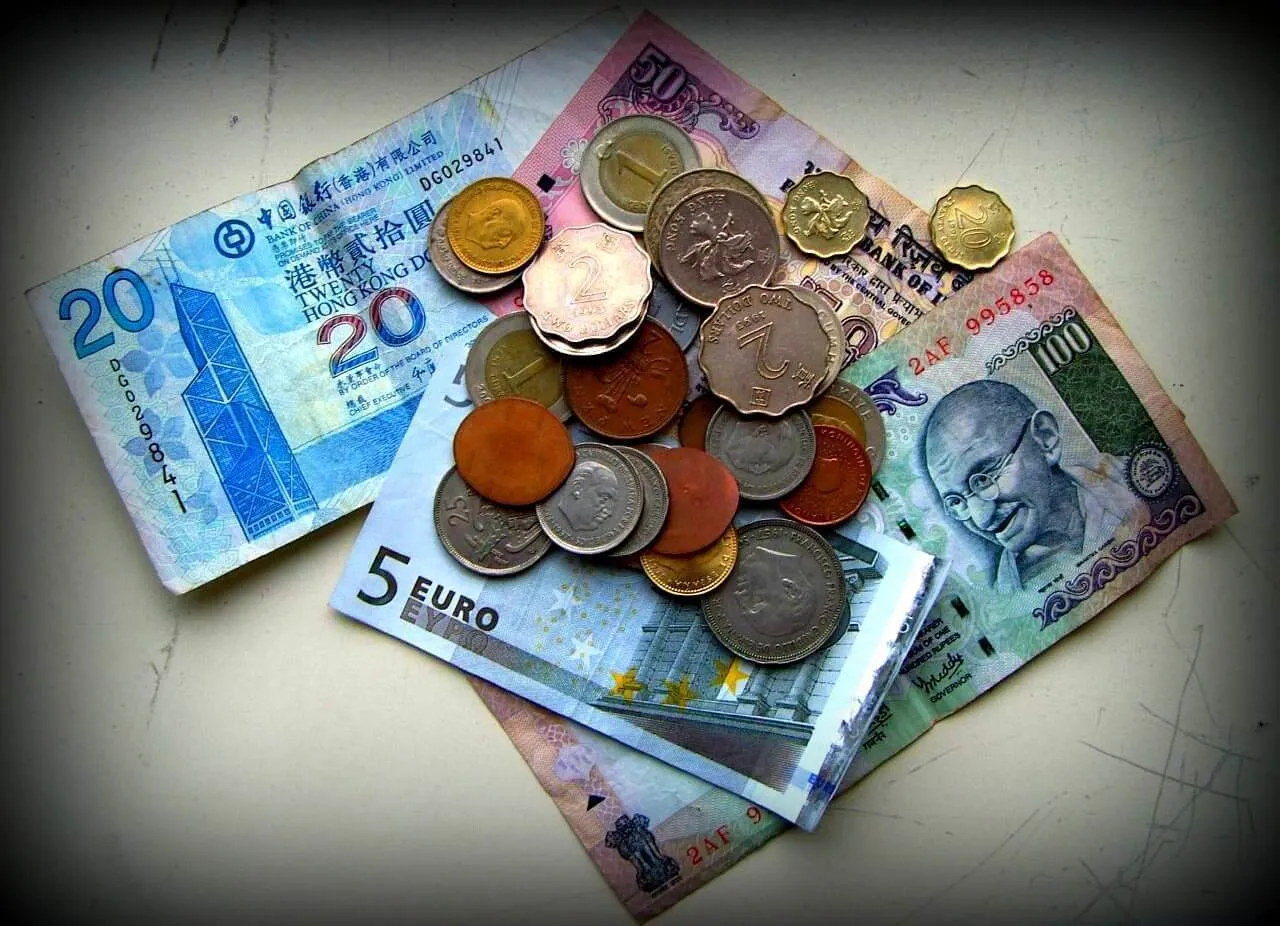
One of the many factors that affect a country’s economic performance is political stability. A country with a stable political environment attracts more foreign investment, and the reverse is also true. When foreign capital increases, the domestic currency is valued more highly as well. Political stability also has a direct effect on fiscal and trade policy, which helps firm up the value of that country’s currency.
Recession
During a recession, a country’s interest rates are likely to fall, which reduces investment opportunity coming from abroad. That weakens the country’s currency and brings its exchange rate down with it. There is one important exception, set out at greater length in the safe-haven section at the end of this article: with the USD, the JPY and the CHF, safe-haven flows during a crisis can push the currency UP even while rates are being cut — in both 2008 and 2020 the USD rose while the Fed was cutting.
Speculation
Investors are always looking for information that helps them predict which currency may rise, in order to make money on it. When many people expect the same currency to rise, demand to buy that currency goes up, and that is exactly what pushes the exchange rate higher, sometimes far beyond what the economic data reflects.
Risk sentiment and safe-haven currencies
When the market is fearful (a financial crisis, a war, an epidemic), money tends to flow into the currencies seen as havens, such as USD, JPY and CHF. Currencies tied to commodities or to emerging economies, such as AUD and NZD, usually fall when investors are wary of risk and rise when they are optimistic.
With this many factors involved, exchange rates change and move constantly, and the factors can pull in opposite directions at the same time. Follow the economic calendar and pay attention to the factors above to understand why a price trend forms, instead of trading on a single piece of news.