On this page
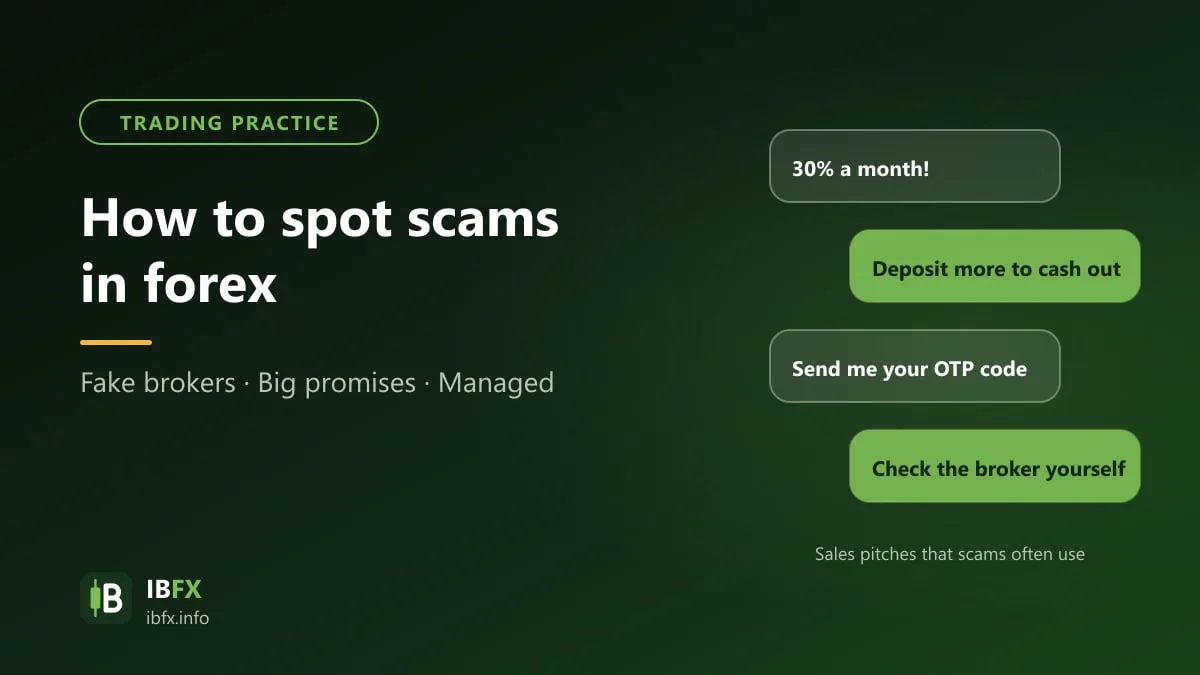
Forex scams will be around for as long as the Forex market is. As the schemes grow more sophisticated, the scammers are always somewhere near you, trying to get the money out of your pocket. So what can we do about it?
Investment fraud comes in many shapes. Some schemes are even named after the person who invented them - the Ponzi scheme, for instance, after the notorious fraudster Charles Ponzi. Forex scammers tend to target traders who are just starting out, or who know little about the Forex market. The best way to avoid being scammed in the Forex market is to have a solid grounding in Forex and to recognize the come-ons used in it.
Once you genuinely understand the Forex market, you know that no target in it is an easy one. Forex scammers often use phrases such as “a chance to invest and make money with no effort” to play on greed and talk you into trusting them. When you lack trading experience, a scammer can work on the fear of losing that sits deep inside you. Greed and fear are the two big holes in human psychology, and scammers deliberately aim straight at them.
How to recognize a scammer
Scammers tend to offer investment opportunities with large returns and very little downside, or none at all. Nothing here is certain 100% of the time. If it were, nobody would ruin their own meal ticket by telling a crowd about it. Offers like that sound attractive above all to somebody who does not know the Forex market yet, or who has only just started trading. But as the saying goes, “the free cheese is in the mousetrap”. The bottom line: what sounds too good is rarely true.
Here are a few rules that keep you from being drawn in by a scammer:
- Be wary of promises of high returns that are described as carrying “zero risk”
- Be wary of software, robots (EAs) or methods advertised as a “secret formula”
- Do not install a trading app or any software from an unfamiliar link; do not let a stranger control your computer or phone remotely (through software such as UltraViewer, TeamViewer or AnyDesk)
- Never give your account password or a bank OTP code to anyone
One trait of scammers is that they rarely register with a regulator. A reputable Forex broker publishes its license number and its legal entity. You can look that license number up on the regulator’s own website to check it. Watch out for the clone firm trick as well: the scammer uses the name and license number of a real company, so compare the website domain, the email address and the phone number against the ones on record with the regulator.
Learning, and keeping risk down
The Forex market is unusually risky and losses are all but unavoidable. Retail traders easily get hooked on Forex as a form of gambling and reach for high leverage in search of a big win. Any trader who lacks knowledge of investing, of money management and of their own psychology is close to gambling with the market. The one thing you can predict about them with a very high hit rate is that they will blow up their account.
To go from an unskilled trader to a professional one you have to learn a trading method that suits you. Studying and practicing trading serves a beginner far better than hunting for a low-risk, high-return method, or for a robot to do the trading for them. A great many retail traders are knocked out of the game too early, partly because the market is harsh and partly because, not knowing better, they listened to a scammer.
Treat the first stretch as a learning phase: practice on a demo account, then trade small amounts, and concentrate on building a trading system that fits you. Nobody can promise you a return, however hard you study.
Warning signs of a trading scam
Trading systems and courses with no evidence
Plenty of scammers sell trading systems and Forex courses. Ask them for any evidence at all of their own trading history and they dodge the question. Others forge trading records, or use nothing but a demo account to show off their gains to you.
Emails and messages asking for personal information
A scammer typically asks for details such as:
- A photo of your ID card and a portrait photo of you
- Your bank account number, your password and an OTP code
- The password to your trading account and to your email
A real broker asks for identity verification (KYC) too, but you should only upload documents on the broker’s own website or official app; never send them by message to an “advisor”, and never hand over a password or an OTP code. When you register an account, the broker always has a set of terms: read them closely, or at least read up on them on broker review sites. Skipping the checks is an easy way to lose money.
No background to show
Do not be quick to trust anyone who refuses to give you their background, whether that is a broker, a trader, a course seller or an investment manager. Always search the internet to see whether that person or company is legitimate.
When the truth came out
At the end of 2014, New York magazine ran the story of a student at Stuyvesant High School who had made 72 million USD trading stocks over his lunch breaks. Days later the student himself admitted the number was invented, and the magazine had to publish a correction. If a major magazine can be taken in, the “overnight riches” stories on social media deserve even more suspicion, because many of them are staged for a single purpose: to make you believe and deposit.
How to avoid Forex scams
The best way to avoid a scam is to spend the time finding out. Do not rush a decision, and make sure you understand what you are doing first. Finding a Forex broker you can trust, or a Forex teacher to learn from, is not easy at all; put your time into the research, and over the long run you will be better off for it.
The first step, whenever you come across a broker, a course seller, a trading system or anything else Forex-related: search their name on Google and look for reviews. If there is nothing to be found about them, or what you find is fake, you can stay away.
For instance, you can:
- Visit Forex forums to see whether there are complaints about a broker’s deposits and withdrawals
- Keep in mind that even reputable brokers have clients who complain; weigh up how many complaints there are, what they say and how the broker handled them, so you do not blame a broker over a handful of grumbles.
Check the information. Doing so can cut your risk considerably.
Too good is rarely true
Money for nothing? Not a chance. Do not believe anyone who tells you that you can make a large return with no effort, along the lines of “20% a month”. That is nonsense, because trading Forex and CFDs takes a great deal of filtering, education, patience and intelligence. Nothing here comes easily. Learning properly helps you trade with discipline and hold your losses down, but nobody can promise you a return.
Your next step to protect yourself
Do compare the regulator’s rules against the terms on the broker’s website, to find the inconsistencies and the oddities in those terms. If that is too hard, or you do not trust your own judgment, you can look for advice from reputable financial advisory websites.
Sometimes scammers use offers, promotions and bonus money as a weapon against your later withdrawal.
Say you deposit at a Forex broker, end up with a gain and want to take it out. The scammer then tells you the terms do not allow it, because you accepted a bonus earlier, and that money came with a condition: more than 50 lots traded before you may withdraw.
The important thing when you pick a Forex broker: trade a small position size for a while and test a withdrawal. Once that goes smoothly, consider depositing more.
The questions to ask
Remember that you are entitled to ask questions. A few well-chosen questions can settle whether you are dealing with a broker you can trust. Make sure you know your rights, research the contact details and check the company’s background. Remember that whatever terms you agree with them have to be put in writing. Never rely on a conversation alone, or on a spoken statement.
You can draw up a list of questions like the one below and look into the broker yourself:
- Are they using a real name
- Do they have a verifiable address
- Are they a registered company
- Do they provide historical performance data?
- Can you reach the broker easily?
- What will you do when you get an attractive offer from them?
- Are you bound by a contract with terms that work against you?
Conclusion
To make sure you are not scammed out of your money, always find out what you are dealing with before you decide. Always use a broker that holds a license and has transparent policies, and check the exact name of the company that will hold your money. Be alert to three common scams as well: closed groups pushing “managed accounts” or “sure-thing calls”, unfamiliar trading apps downloaded from outside the official app stores, and “recovery” services that charge a fee up front to get back money you were scammed out of. Bear in mind too that in a dispute with a foreign broker, getting your money back is very hard; see also is Forex trading legal in Vietnam. The pull of money is everywhere; do not listen to an offer of money for no effort, because that is usually the quickest road to losing what you have. See also: the IBFX guide on whether to trade binary options.