On this page
Besides choosing a trustworthy broker, choosing the right type of account also matters when you take up forex trading. Most forex brokers provide at least two types of account, and some have 4–5 of them, so for a beginner this really is a difficult thing. In this article we will introduce the common account types in forex and how a new trader can choose the type of account that fits.
What is a forex account?
A forex account (trading account), much like a bank account, is where the balance and every transaction between the trader and the broker are recorded. It is also where you place orders to buy and sell currency pairs and the other products the broker provides.
Why does a trader need an account to trade forex?
In the past, the foreign exchange market was almost entirely for large institutions such as banks and investment funds, because it took a very large amount of money to take part. Thanks to the internet, brokers and the mechanism of margin and leverage, individual investors can take part in trading with small capital, although leverage also raises the risk in proportion.
A forex broker is the intermediary connecting the individual trader to the market, while the trading account is the bridge between the trader and the broker. When you place an order, the information about the order type, the product and the position size is sent to the broker’s server. Depending on its operating model, the broker may route the order to liquidity providers, or act as the counterparty to your order itself (the market maker model). The second model does not amount to a scam, but it has a conflict of interest, which is why it matters so much to choose a broker licensed by a trustworthy regulator.
To trade, you choose a broker, open a trading account, verify your identity (KYC) and deposit money before you start placing orders. Note that trading forex through a foreign broker in Vietnam is not currently recognized or protected by the law. See also: Is forex trading legal in Vietnam?
If you do not yet know which broker to choose, read how to check a forex broker before you open an account.
What types of account are there in forex trading?
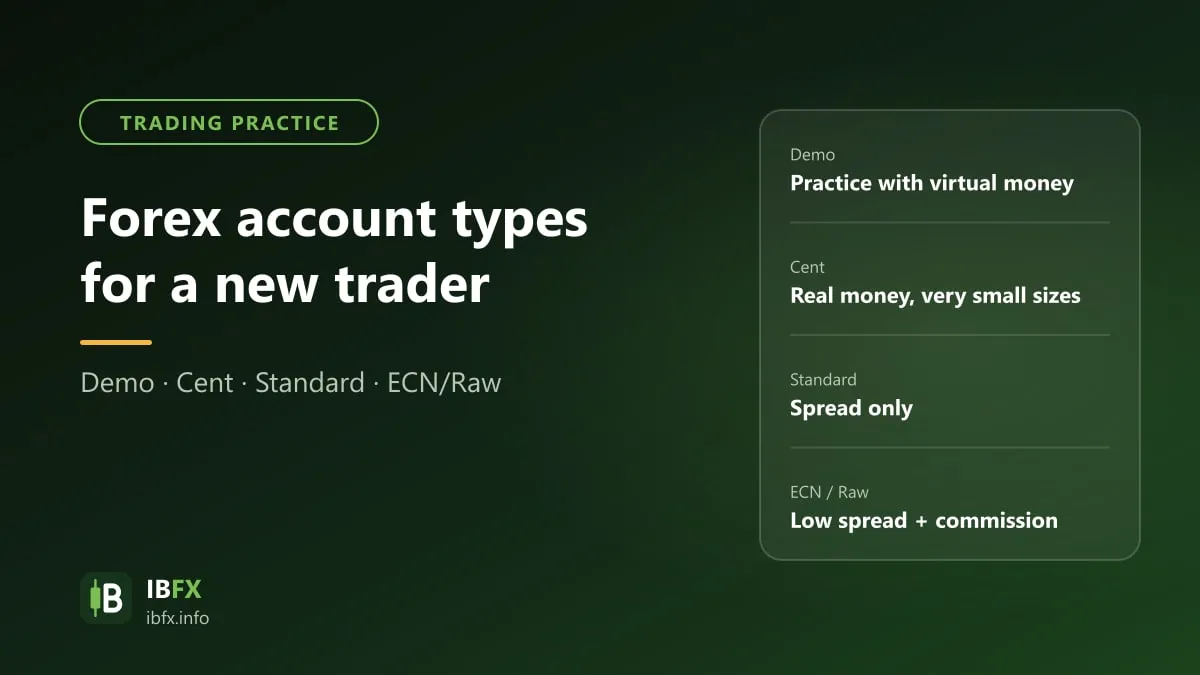
There are several ways to classify trading accounts. To keep it simple, they can be divided in the following 3 ways:
- By nature: live accounts and demo accounts
- By trading conditions: Cent accounts, standard accounts (Standard), ECN/Raw accounts and Pro, VIP accounts
- By how the costs are charged: accounts charged through the spread only, and accounts with a commission
Live accounts and demo accounts
Most forex brokers have these two basic forms of account. Brokers usually encourage beginners to practice on a demo account first, to get used to placing orders, to avoid mix-ups while trading, and to learn money management through different position sizes. So before you trade with real money, you should practice on a demo account for a few months to build up your skills.
A demo account simulates a live account in its interface, in the way orders are placed and in the market prices, but it is not entirely like the real thing: the money is virtual, so it cannot be withdrawn; execution conditions on demo are usually “prettier” (less slippage, fewer requotes); and most importantly there is none of the mental pressure of losing real money. Some brokers also limit how long a demo account can be used.
Once you are fluent at placing orders and can hold your discipline on a demo account, you can move to a live account with small capital. Note that demo results are usually prettier than reality, because there is no mental pressure and the execution conditions can differ.
The Cent account
The Cent account (the penny account) is designed for beginners who want to trade with real money in very small amounts. The balance, the profit and loss and the costs on this account are counted in cents instead of USD: 1 USD = 100 cents, so if you deposit 10 USD the balance shows as 1,000 cents. At many brokers, 1 lot on a Cent account is equivalent to only 0.01 lot on a standard account.
The number on display is larger but the real value is still only 10 USD, so do not let that number fool your sense of scale. The advantage of the Cent account is that it lets you go through the real emotions of a profit and a loss in real money, while the amount lost, if there is one, stays small.
If you play on demo for too long, you can easily pick up bad habits: because the money is virtual you do not mind it, and you will happily sit on a losing trade for a whole week without turning a hair. With real money, though, even a few USD feel completely different: when the account goes up 1–2 USD you feel a rush, and when it falls a few USD you are already worried. So after a stretch of practice on demo, the Cent account is a sensible step across before you trade a standard account.
The trading conditions on a Cent account (the spread, the list of products, the way orders are executed) can differ from those on a standard account, so read the specifications on the broker’s website carefully. Many brokers have a Cent account with a very low minimum deposit, only a few USD.
The standard account (Standard)
This is the type of account many traders choose after a stretch of getting used to forex trading. The balance is counted in USD (or the currency you choose when you open the account), and 1 lot corresponds to 100,000 units of the base currency. A Standard account usually only charges through the spread and does not take a commission, so the cost is easy for a beginner to work out.
The risk of a Standard account lies not in the type of account itself but in the position size you trade: on the same 0.01 lot trade, the risk counted in USD on a Standard account is 100 times larger than 0.01 lot on a Cent account. See also: “What is a lot?”.
The ECN/Raw account
Many brokers call this type of account by different names such as ECN, Raw, Zero, Razor and so on. What they have in common is a very low spread (at times close to 0 pip) but a fixed commission charged on top by the broker, usually around 6–7 USD for each lot traded (counting both the opening and the closing side), depending on the broker. The name ECN does not always mean the order is routed straight onto an electronic trading network, so look carefully at the broker’s description of its execution model.
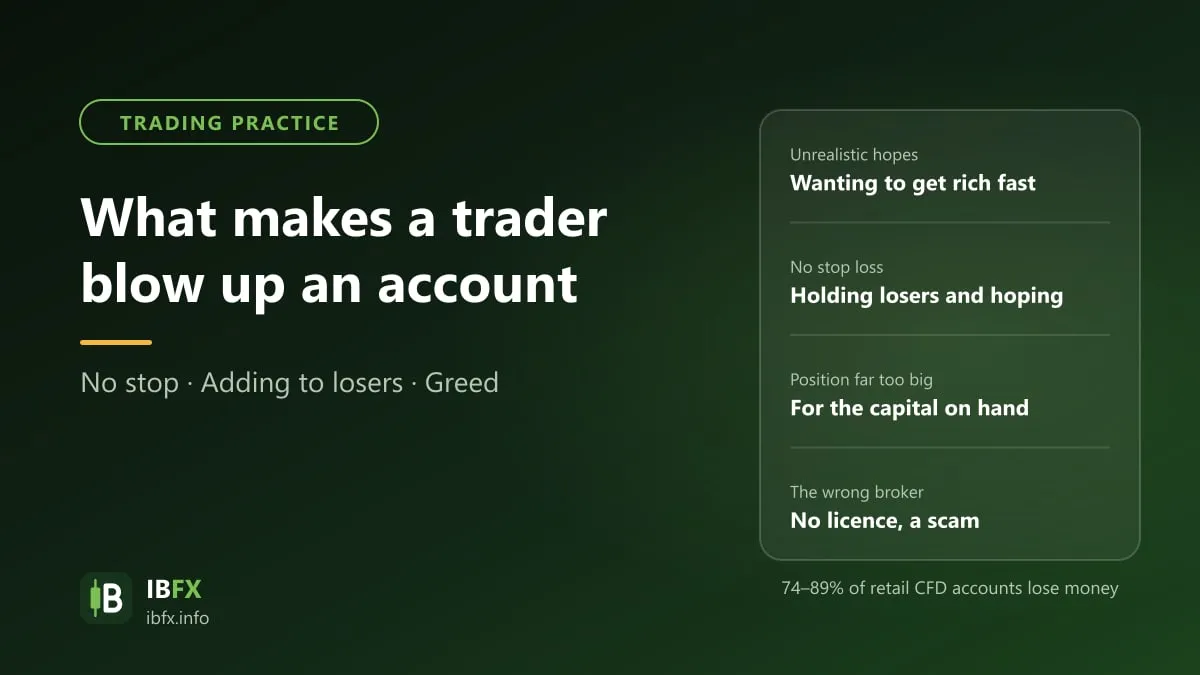
An ECN/Raw account usually suits a trader who trades a great deal, scalps or uses large position sizes, because the part saved on the spread can be larger than the commission. This type of account does not by itself make you any more likely to blow up your account; the risk still depends on your position size, your leverage and the way you manage your money.
An example comparing the cost of 1 lot of EUR/USD: a Standard account with a spread of 1.2 pip costs about 12 USD; a Raw account with a spread of 0.1 pip (about 1 USD) plus a 7 USD commission comes to about 8 USD in total. The figures are only an illustration; every broker and every moment will be different. See also: “What is the spread?”.
Pro and VIP accounts
Some brokers have Pro and VIP accounts for clients who deposit large amounts, coming with a lower spread or commission, a dedicated support specialist and other services. Note that if you register as a “professional client” at brokers in Europe, the UK or Australia, you may be allowed higher leverage but you will lose some of the protections meant for retail clients, such as the leverage cap and negative balance protection.
Managed accounts, PAMM and copy trading
Some brokers have PAMM or MAM accounts or a copy trading service, which let an investor have someone else trade on their behalf or copy trades automatically. Be extremely careful: past results are no assurance of future ones, and in Vietnam there have been a great many scams in the form of “taking forex investments under management with a pledged monthly return”. Never give your account password to anyone. See also: How to spot forex scams
Accounts charged through the spread only and accounts with a commission
This division is based on the way the broker charges for trading. Brokers mainly charge through the spread and through commission; besides those there is also the overnight fee (swap) if you hold a trade into the following day.
- Accounts charged through the spread only (Cent, Standard and so on): no commission, the cost is already inside the wider spread, the minimum deposit is usually low, and it is easy for a beginner to understand.
- Accounts with a commission (ECN, Raw and so on): the raw spread is far lower, plus a fixed commission for each lot; the minimum deposit depends on the broker.
Some brokers also have accounts with no overnight fee (swap-free, also called Islamic accounts), usually with conditions attached or another type of fee in place of it. See also: “What is swap?”.
Which account should a new trader choose to trade?
Choosing an account is like choosing clothes: not too loose, not too tight, but a fit for your circumstances and your trading style.
Every broker has its own strengths: one has a low spread on gold and EUR/USD but a high one on the pairs containing GBP; another has many stock products and a low overnight fee but a high spread on the currency pairs, and so on. So you need to understand which products you want to trade and whether you will trade often, and then compare the real total cost.
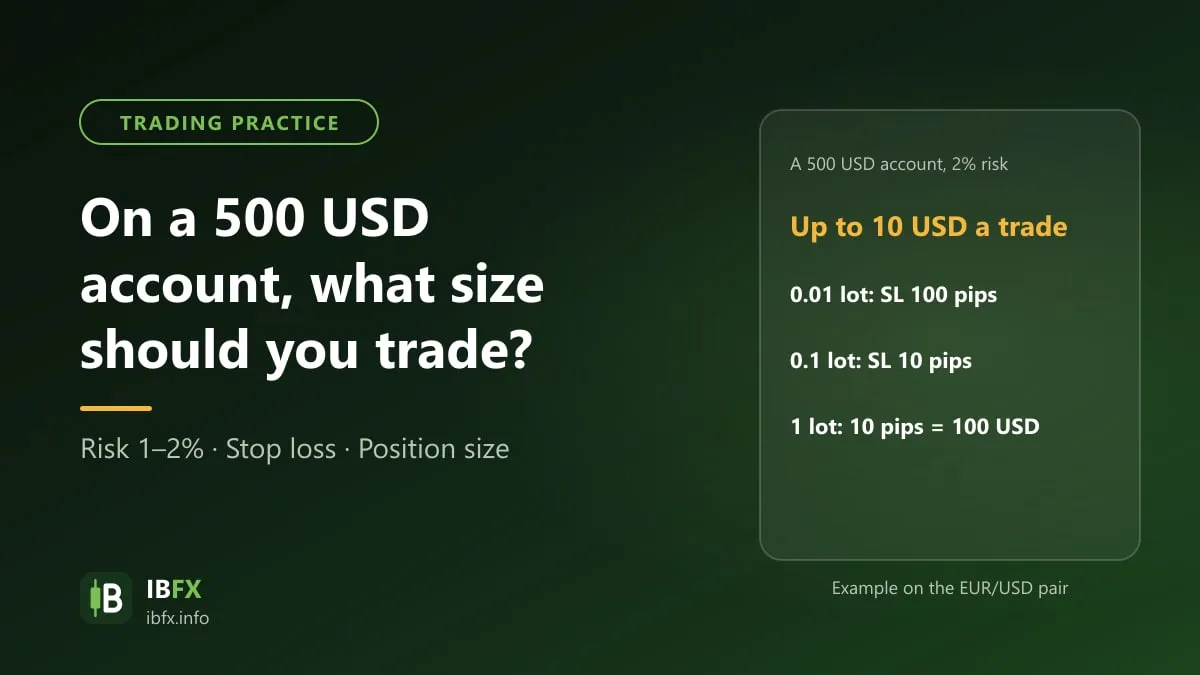
A sensible route for a beginner: practice on a demo account, then trade a Cent account with a small amount of money, and only then move to a Standard account. You should only move to an ECN (Raw) account when you trade enough for the part saved on the spread to be larger than the commission you have to pay. Whichever type of account you choose, use low leverage and risk only about 1–2% of the account on each trade.