On this page
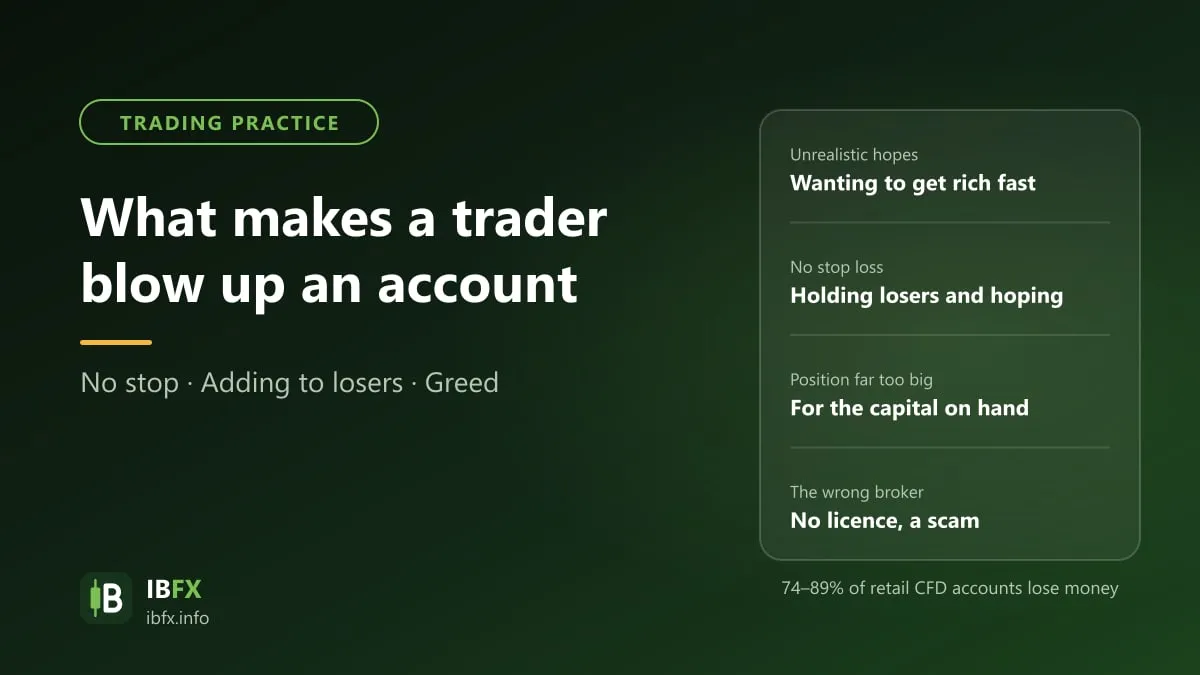
A great many traders step into the forex market with expectations far higher than reality allows. According to the disclosures brokers in Europe are required to publish (under the ESMA rules), about 74–89% of retail CFD accounts lose money. The best way to set sensible expectations is to look at the facts and be honest with yourself about your own trading ability.
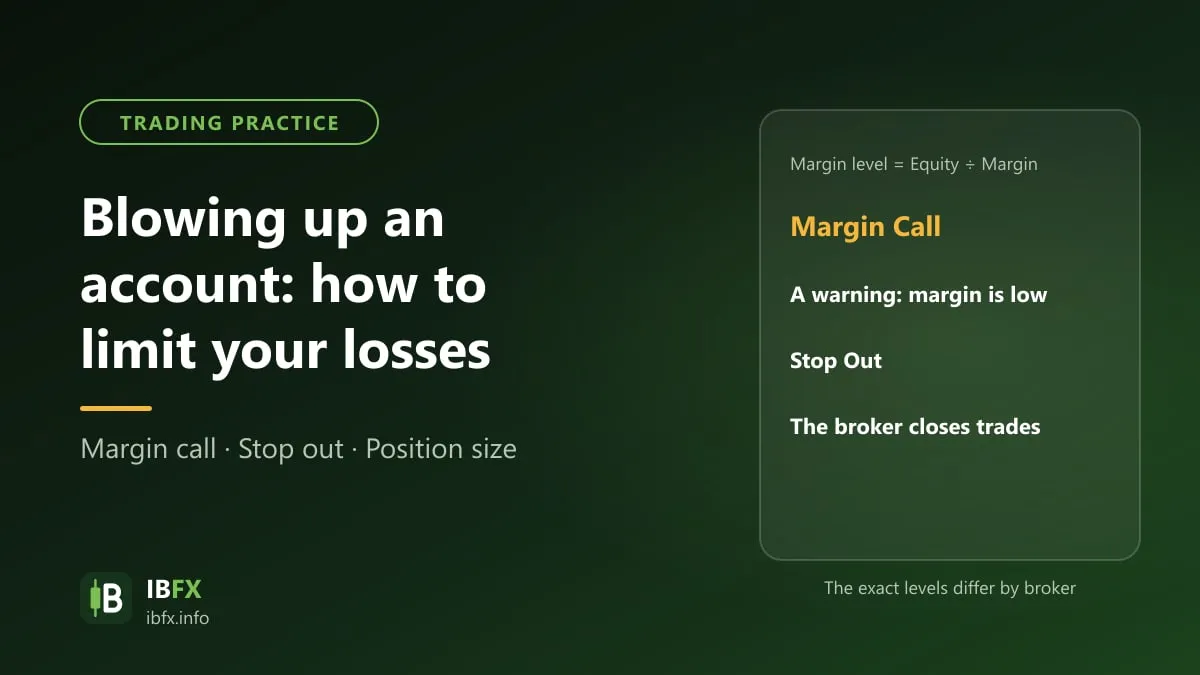
If you trade with no plan and without managing your risk, going on feel alone and hoping to win it all back quickly, then “trading” is no different from gambling, and the money you lose is real money you earned yourself. Below are the common causes that make traders blow up their accounts. See also: What is blowing up an account? How to limit your losses
Unrealistic expectations
Many people believe they can double the account every month, or think forex is a fast road to wealth after watching advertisements and profit screenshots online. Expectations that are too high lead to oversized positions, too many trades and an inability to accept small losses, which makes every mistake below easy to fall into.
Not setting a stop loss
The simplest way to limit your losses is to set a stop loss. This is the price at which, if the market reaches it, your original view is no longer right, and you accept getting out of the trade so as not to lose any more money. On MT4 you can set the stop loss as soon as you enter the trade.
If you can plainly see that you were wrong even though price has not reached the stop loss, you can also get out early to reduce the damage. On the other hand, when you have seen you are wrong and still refuse to cut the loss, you are trusting to luck in the hope that price will turn around.
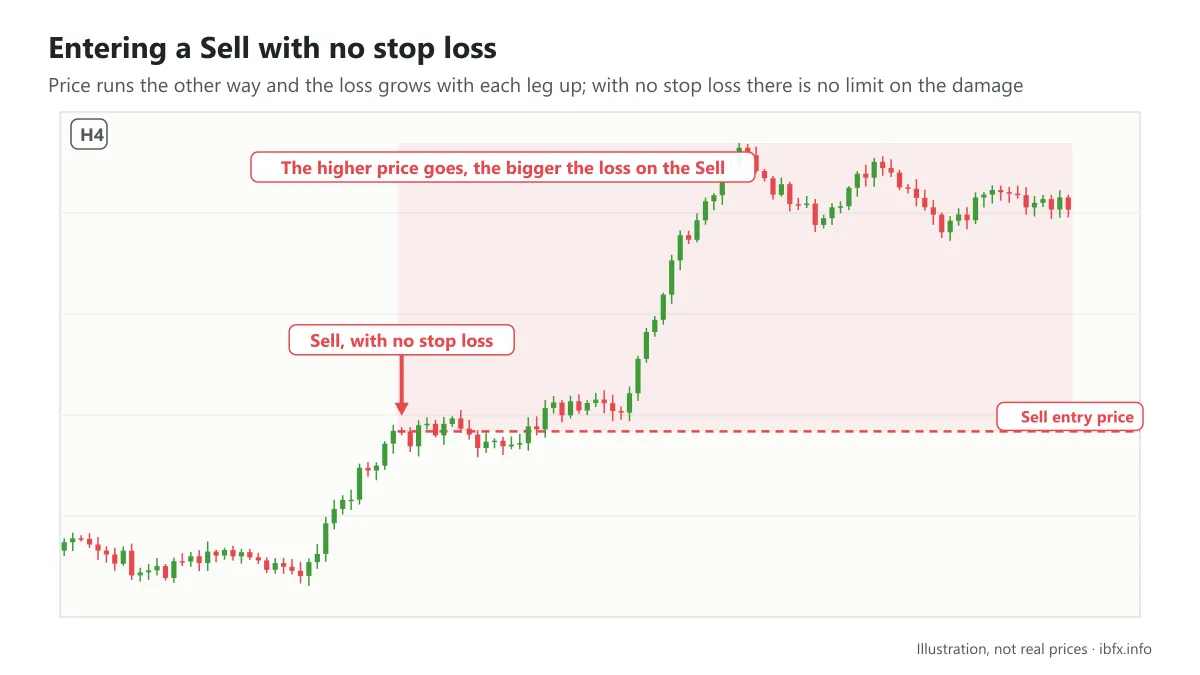
What happens when you enter a Sell with no stop loss, as in the chart.
A great many people trade without a stop loss, and it only takes one occasion when the market runs hard the other way for them to pay dearly for that mistake.
Stacking up trades when price goes against you
In trading, stacking up more trades while you are losing, especially when price is moving against a clear trend, is extremely dangerous. Each extra trade adds to your total position size, so it only takes a short further move for the loss to grow very fast. Many people stack up trades hoping that a small bounce will let them get out, but the market is under no obligation to come back to the price you want. See also: What is DCA?
Forex trading is a long process, and price moves are often sudden and contrary to what you expect. When you are impatient, fed up or bitter, it is very easy to make the wrong decision. At that point what you need to do is stop, and take a break to get your calm back.
Position sizes that are far too large, and high leverage
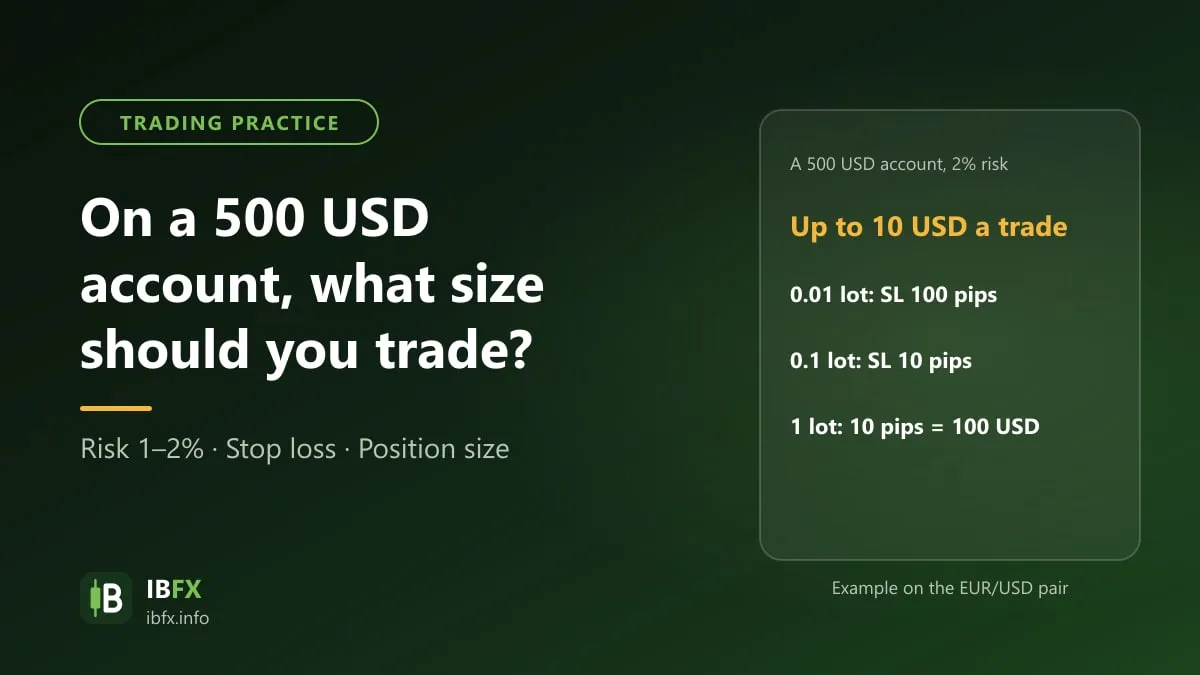
Entering with a position far too large for your capital is the fastest road to blowing up an account. Take a 100 USD account that enters 0.1 lots of EUR/USD: each pip is worth about 1 USD, so price only has to run several dozen pips against you for most of the account to be gone. The high leverage many brokers allow (1:500, 1:1000 and more) makes opening a large position far too easy. See also: What is leverage?
Not knowing how to manage your money
In reality a trader win rate is not as high as many people think; even experienced traders rarely keep a win rate of 60–70%. And even at a 70% win rate you can still lose money if you do not manage your capital sensibly. For example, each winning trade only makes you 10 USD because you take profit too early, while each losing trade costs you 30 USD because you hold the loss: after 10 trades with 7 wins and 3 losses, the result is 70 − 90 = −20 USD.
Money management starts with limiting your losses: risk only about 1–2% of the account on each trade, have a stop loss, and use a sensible reward-to-risk ratio. Not being able to limit your losses means having no money management at all, and it is very easy to lose the whole of your invested capital that way. See also: the 2% money management rule
Alongside that, your mindset matters a great deal. Some traders let negative thinking take over after a few losses; the ones who last understand that risk always comes with trading, and treat each loss as a chance to learn and improve. Think about getting better before you think about succeeding.
Greed
Greed shows up in many forms: sizing up after a few winning trades, not taking profit as planned because you are hoping for more, trading non-stop for fear of missing out, or putting nearly all of your capital into one trade you think is a sure thing.
However carefully you analyze, the market can still go against your view at any moment. If you understand and accept that from the moment you enter, you will size your trades moderately, and a losing trade will not weigh on you so heavily. Protect your capital before you think about building wealth.
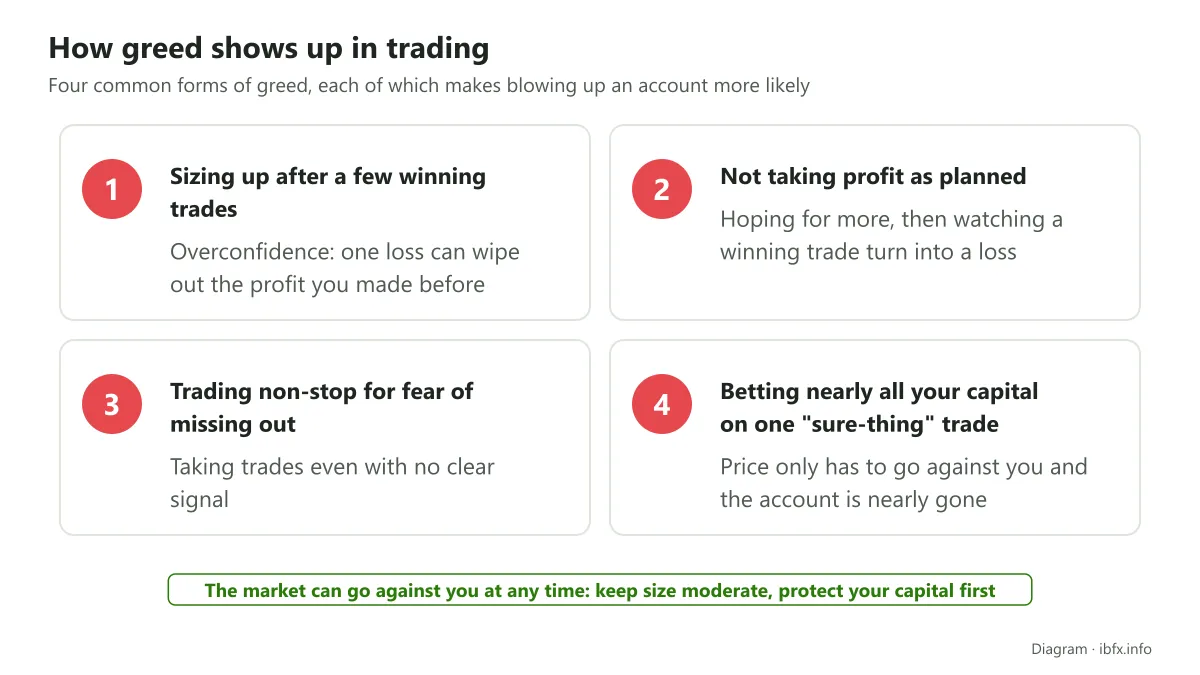
Does greed in trading really bring wealth in a hurry?
Experienced traders usually keep greed in check with specific rules: a risk limit per trade, a limit on the number of trades per day, and taking a trade only when the conditions in their plan are met. When they notice they are frightened or overexcited, they choose to stand aside, because not taking a trade is still better than taking one on emotion. See also: How to manage your psychology when you trade
A lack of knowledge
Learning is never wasted in the forex market, least of all for a new trader. A great many people deposit money and trade before they properly understand the basic terms such as the lot, the pip, margin, leverage, the spread, the swap or the effect of news, so they cannot see in advance how much risk each trade carries.
Knowledge of market analysis is not the only factor, though. Many people know a great many strategies and handle the indicators expertly yet still lose money, because they lack the skill to manage their emotions and the discipline to stick to their rules. Knowledge, money management and psychology have to go together.
Choosing a broker you cannot trust
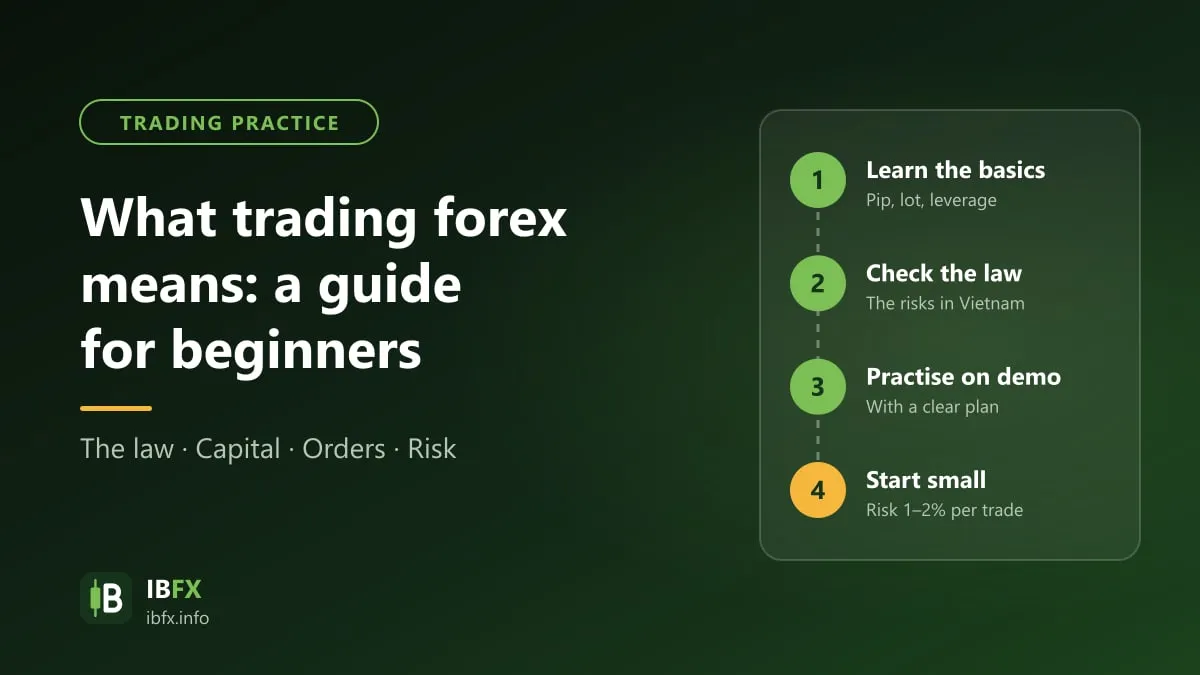
Another cause of losing money lies not in your trading skill but in choosing the wrong broker: a broker with no license, a clone firm, or “specialists” who coax you into depositing more and take on managed accounts with a promise of profit. Check the broker license carefully on the regulator website before you deposit any money. Note that trading forex through a foreign broker in Vietnam is not at present recognized or protected by law. See also: How to spot forex scams, Is forex trading legal in Vietnam?