On this page
If you have ever been a trader, the chances are you have blown up an account. There can be many reasons for it, but the main one is usually that you do not know how to handle money management, and specifically position size.
So what position size do you normally trade? And how much is just enough, the right amount for the way you trade? Plenty of people put on the largest number of lots they can, hoping for a big win. But suppose news comes out, or something else happens, and that large-lot trade of yours hits your stop loss. How would you feel then?
How professional traders think about position size
Professional traders know that settling the position size you enter with matters a great deal to success in this market. In real trading it is often the line that separates success from failure in the market. Professional forex investors are very strict about deciding position size, and they usually use a fixed fractional model, a fixed risk ratio model, or a strictly calculated fixed position size based on the balance of their forex account.
Above all, they have a detailed position sizing strategy that tells them exactly how many lots or contracts to allocate to a trade, with no guesswork and no emotion anywhere in the process. That is how professional forex traders work: they know exactly how much a trade stands to lose and how much it could make on the foreign exchange market.
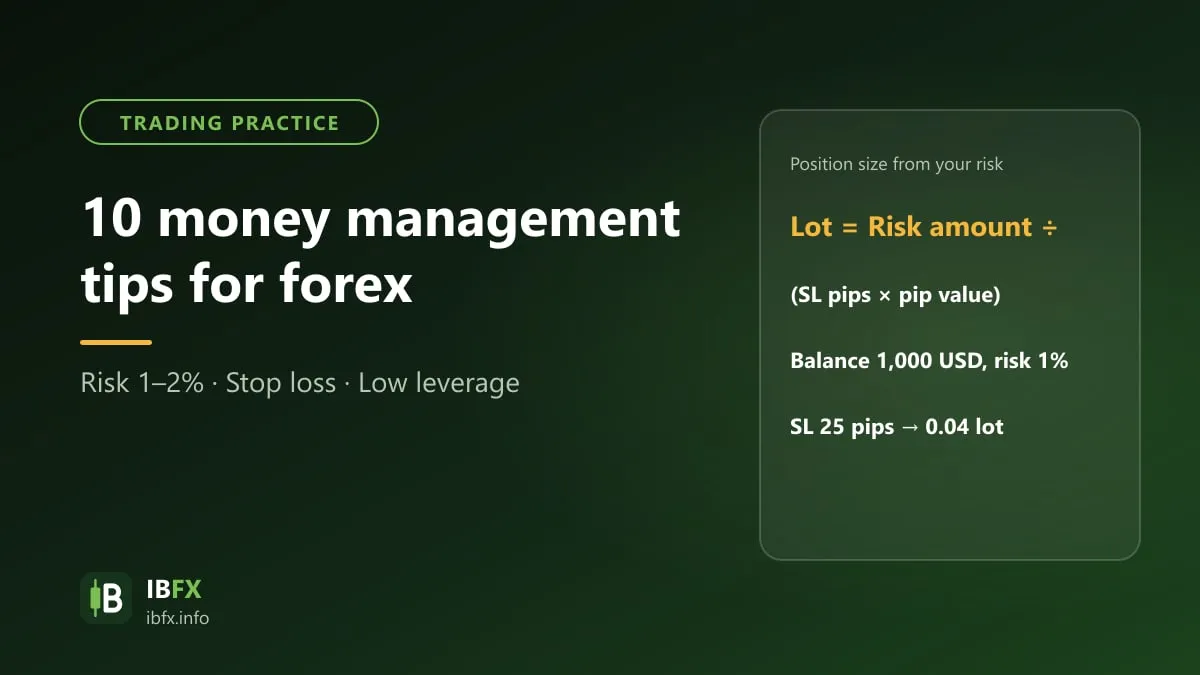
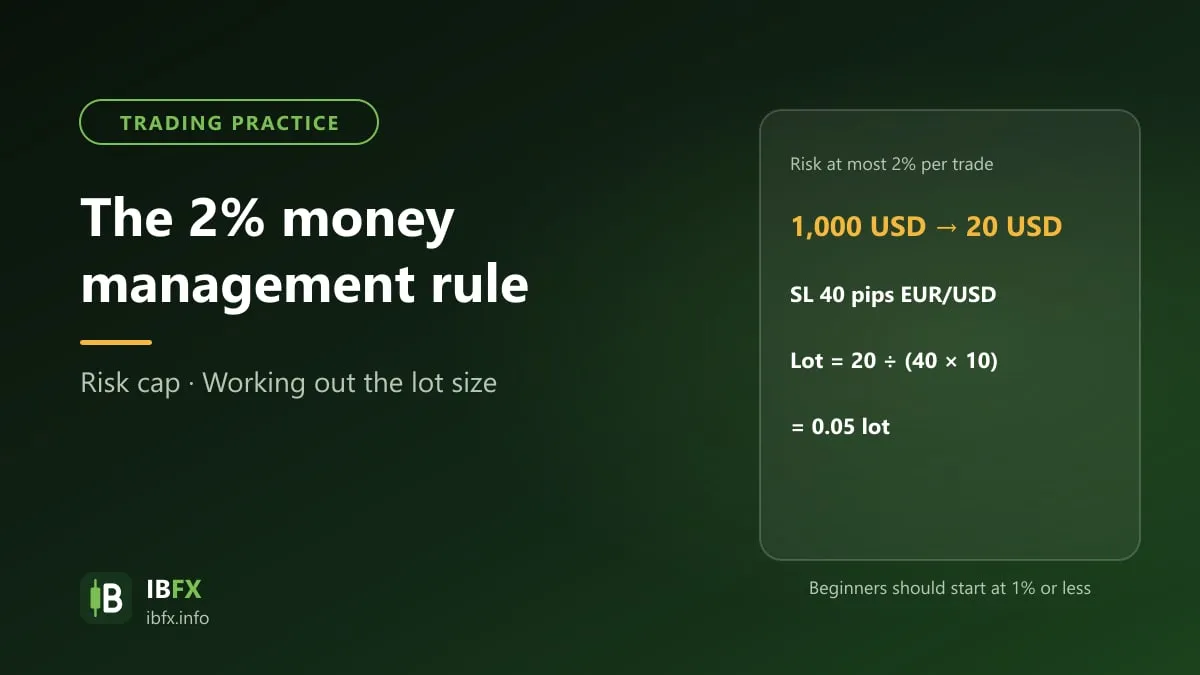
Take a trader who, on their trading plan, allocates 2% of their capital to any one trade. That would be treated as a 2% fixed fractional model. The figure is here only to show how the sum works; a later section explains why traders with experience usually keep to 1-2% and treat 3% as already too much. So if the trader has 10,000 USD in the account, the maximum risk allowed is 200 USD. And if the trader has decided, from the chart analysis, that the most sensible stop is 50 pips from the entry, then the most that can be allocated to that particular trade is 1 lot.
The second group, beginners and amateurs, tend to allocate risk based on how they feel about their recent run of trades rather than on a position sizing model set out in advance. Typically they trade too large after a recent winning streak, and then, as soon as they enter with that larger position size, the market does not go their way, which leads to a big loss. An amateur’s mistakes around position sizing need dealing with quickly if you want steady, durable profits in this market, because a single losing trade of theirs can drag away all the profit they had built up before.
What happens when you know nothing about money management
If we have no effective money management method, the consequences are enormous. Besides losing a pile of money and leaving the account heavily down, you will also find it hard to get back to where your capital started, because losing is easy while earning enough profit to come back to your original break even point is extremely hard.
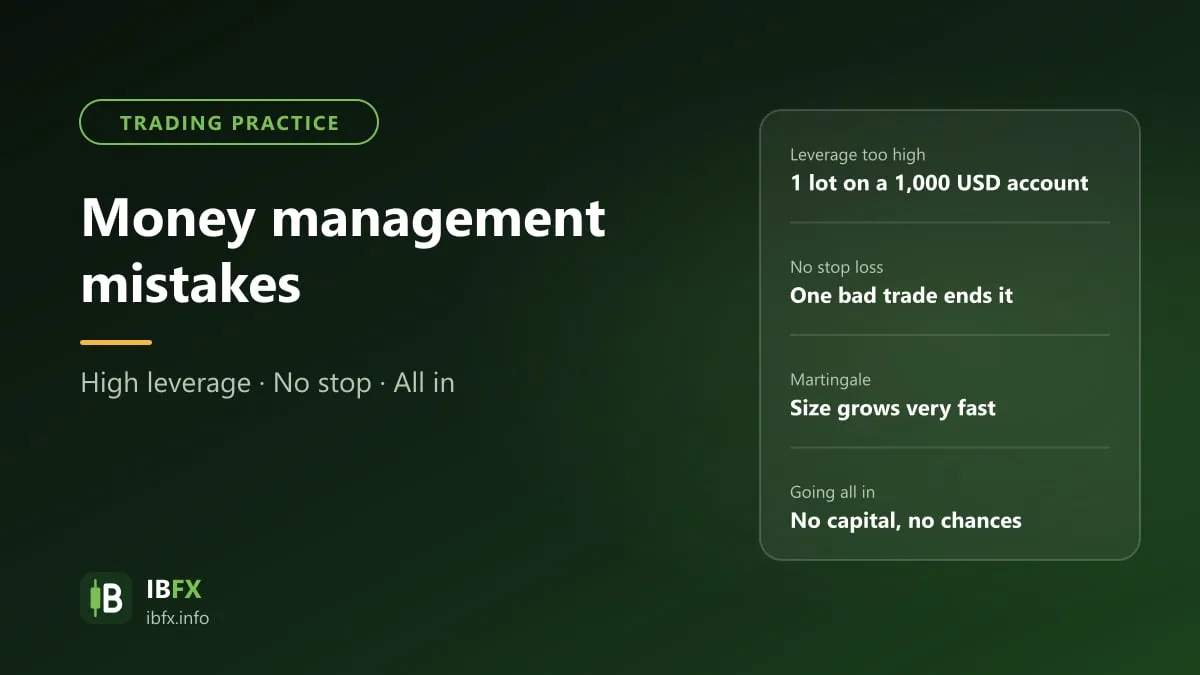
Say you have 1,000 USD in the account and use leverage of 1:400. With margin that low, you can open a position of several lots of EUR/USD. Suppose you enter 2.5 lots (25 USD per pip): price only has to move 20 pips against you for you to lose 500 USD, half the account. In practice it is worse than that — 2.5 lots at a rate around 1.17 needs roughly 730 USD of margin against 1,000 USD of capital, so the margin level is only about 137% the moment you enter, and most brokers would stop you out BEFORE price ever reached your stop loss.
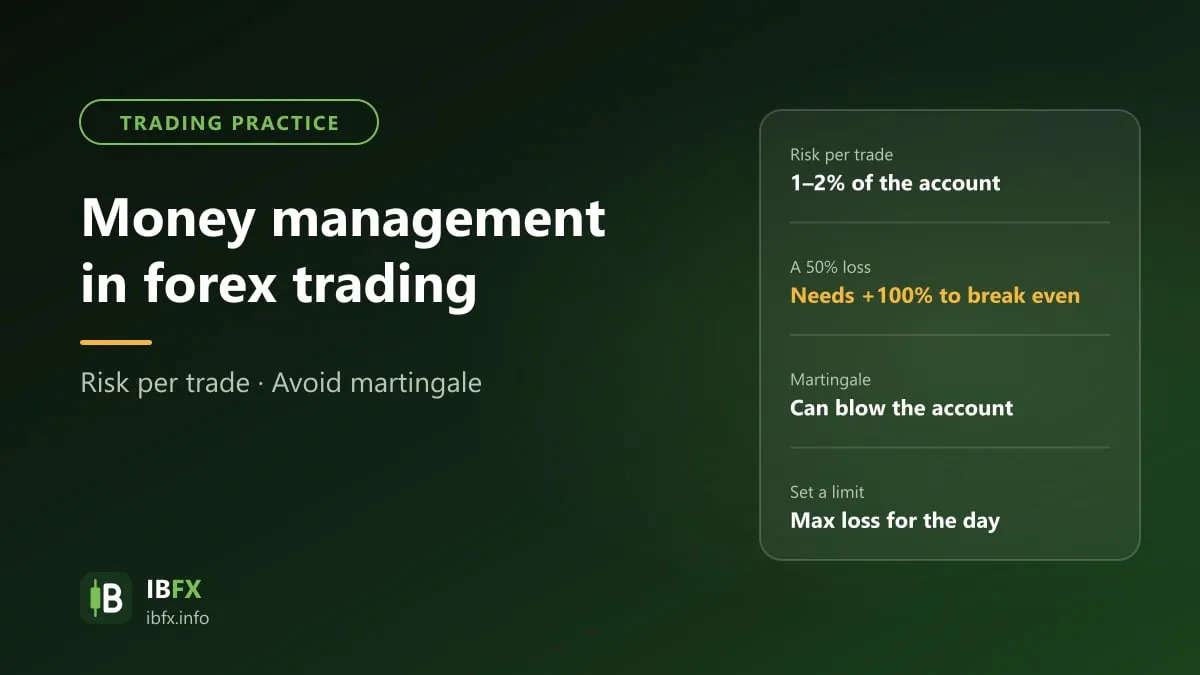
Winning it back is now much harder: lose 50% of the account and you have to make 100% on what is left to get back to the original 1,000 USD. Your capital is smaller, so to keep the same level of risk you can only trade a smaller position size, which means you need more pips of profit. And if you carry on with a large position size, one more losing trade blows up the account.
The next consequence is psychological: after one heavy loss, a trader easily loses confidence, becomes haunted at the point of entry, is no longer as clear headed as before, and emotion starts to override reason.
Profit, or a psychological burden?
Many people think that a few winning trades at a small position size is all it takes before they can raise the position size and make a profit faster. Reality is not that simple. If you are new, you should not let the risk on any one trade go beyond 1-2% of the whole account. That means that with 10,000 USD and risk held at 2% per trade, you will not lose more than 200 USD on a trade (barring heavy slippage), which lets the account absorb a losing streak. See also: the 2% money management rule.
Worse still, many people think they can raise their lot size quickly because of a few wins that came down to luck. That is a big mistake, an outright mistake.
Take the example above again: the position size you trade is a double-edged sword. It can help you make a lot of money quickly, but it can also burn through the whole account and add a psychological burden on top, something most new traders have tasted to some degree when they first step into the forex market, or the crypto market.
Another common mistake is “doubling up” (martingale): after every losing trade, double the position size on the next one to win back the earlier loss and make a profit on top. It only takes a run of 5 to 7 losing trades in a row, which is entirely possible, for the position size to have grown dozens of times over and the account to be blown up. The money you meant to win back is nowhere in sight, and the money you had is gone as well.
Before you think about raising your trading lot size, you need to learn to cut your lot size, and not to raise it when a trade is going the wrong way. If you cannot manage that, you will turn into a trader who is sore at the market, forever wanting to “win back” what has been lost, and usually losing what you still have as well. See also: money management mistakes in trading.
A bitter truth: the more money you lose in the trading account, the harder it is to recover the amount you started with. In forex trading in particular, position size matters. Your position size should always be decided by the size of your account.
Plenty of experienced traders risk only 1-2% of the account per trade and consider 3% already too much. Remember that forex trading is a long road, not a matter of a day or two before you are wealthy. A position size that is small relative to the account helps you survive losing streaks so that you can carry on trading. That is what money management comes down to, so do not be greedy.
Learn to crawl before you learn to run.