Trading forex successfully calls for patience, the right way of thinking, quick adaptation to changes in the market and a whole range of other qualities. As in any line of work, in forex trading you need a specific plan, and effective money management is an extremely important part of that plan. A complete trading plan tells you when to enter, when to exit, which currency pair you are going to trade, and above all how you manage your money. Effective money management is a vital part of the forex picture, and this article will help you learn how to manage your money effectively.
Effective money management in the forex market
The reason most people lose money in the forex market is that a lack of experience leads them to ignore the principles of money management. Because it is highly volatile, the forex market is a risky market. That is why the skill of managing money effectively matters enormously for beginners and experienced traders alike.
This article will advise you on how to manage your money effectively in forex trading, because it is an important factor in surviving in the market and making a profit over the long run. The reason most traders fail is that they want to earn a large amount of profit from just a few trades and lean on luck. The key point is that those traders have no trading method and no effective money management to carry them to a profit over a long period.
To help you a little on the road to becoming a profitable trader, below we set out 10 effective money management tips meant to help you toward a long-term profit in this risky forex market.
10 leading money management tips today
Always decide in advance how much you can lose
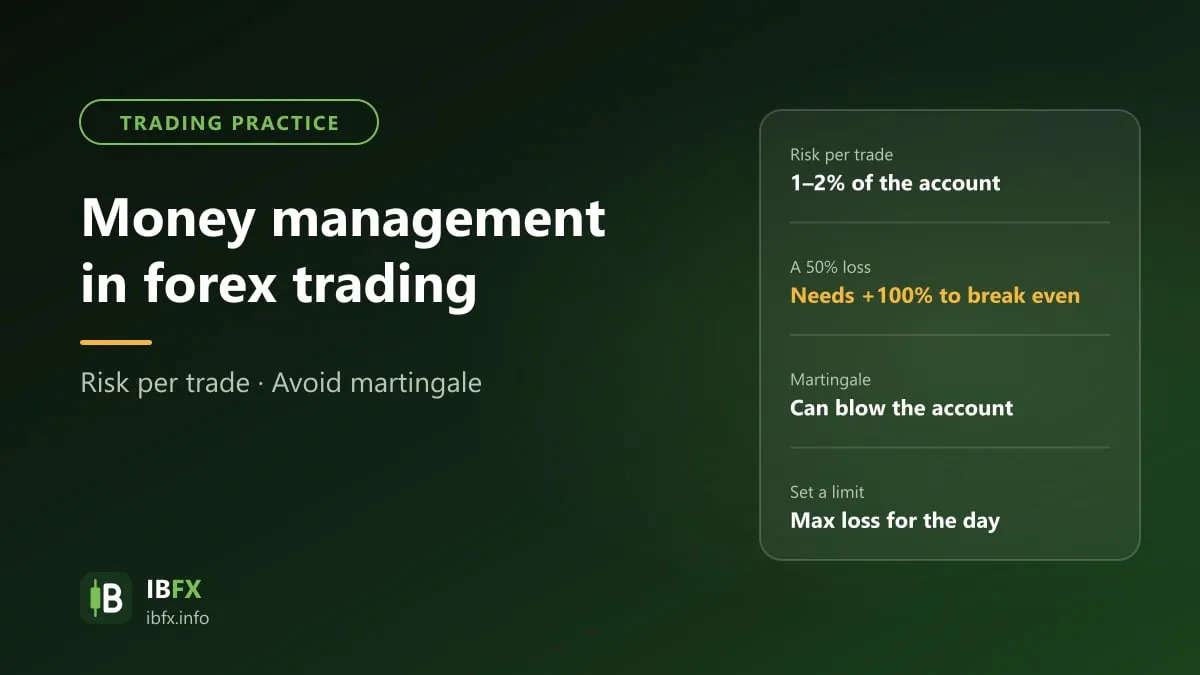
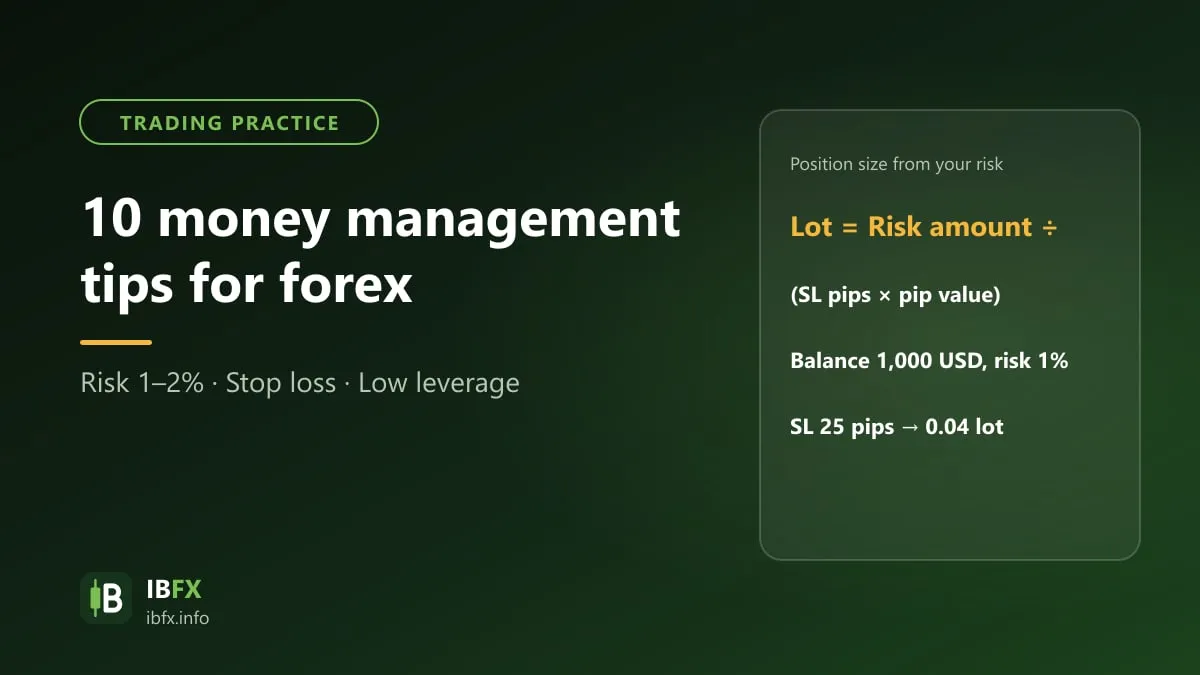
Always work out the risk before you trade. If the risk on a trade is larger than the potential profit, consider skipping it, unless your system has a win rate high enough to make up the difference — and that has to be shown in your trading journal, not assumed. To make the calculation quicker, you can use a position size calculator, available on the websites of many brokers and analysis sites.
For example: the amount of capital you are prepared to put at risk is the limit on the position size you enter with. Suppose you have 100,000 USD and you set yourself a money management rule of no more than 2% of total trading capital. At that moment you see an opportunity to buy USDCHF and plan on a 100 pip stop loss. So with 2% of capital, that is 2,000 USD, and a pip value of roughly 11 USD for 1 lot of USD/CHF (at a rate of about 0.90), you would enter with a position size of about 1.8 lots.
Avoid trading too much
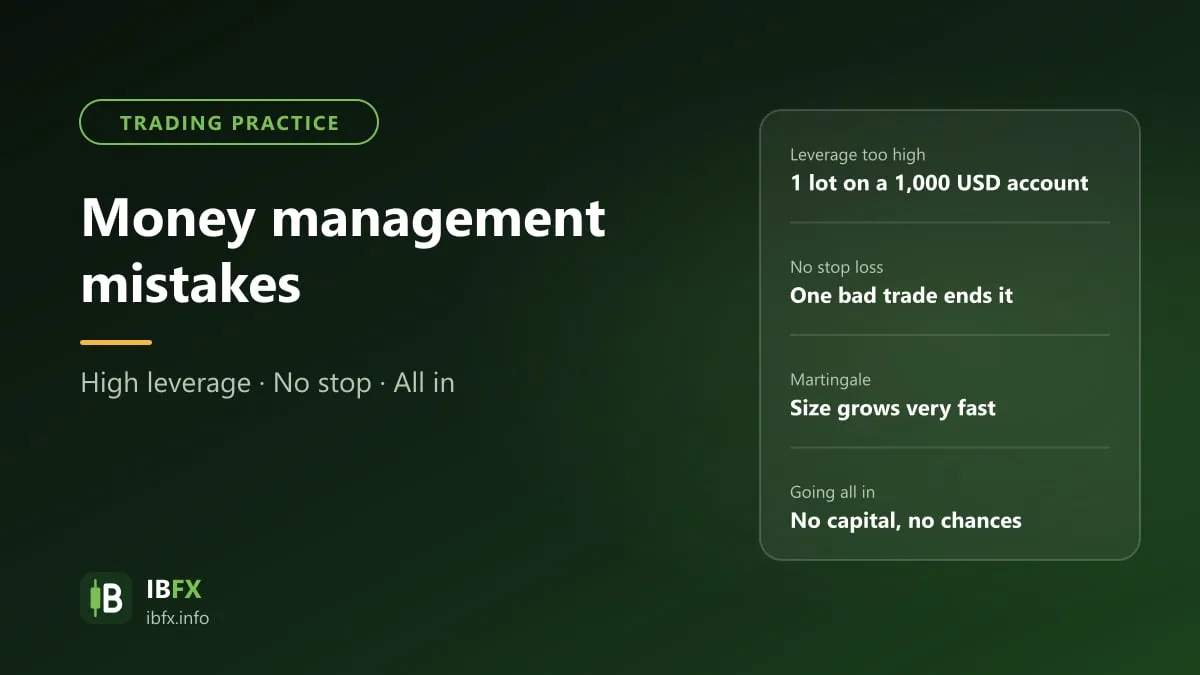
Overtrading is one of the most common mistakes new traders make. Even a run of small losses, if it goes on long enough, can wipe out your capital. There are 2 ways to bring your position back to a safer level here: reduce the number of trades you enter, or reduce the size of each trade.
Be realistic
One of the reasons traders enter too many trades or raise their trade size is that their thinking is not realistic. They think that trading more, in a larger position size, will help them earn more money. Good traders, however, always aim at a steady profit over the long run. Setting a realistic target with a moderate level of profit helps you survive longer in the market and gives you time to build up experience; even so, there is no assurance that you will end up with a profit.
Admit it when you are wrong
The golden rule in forex trading is always to have a stop loss level. Clearly you need to decide on that stop loss in advance, so that if the market goes against your forecast the loss will not be more than the account can bear. The main human tendency is to expect every trade to be profitable, but to succeed in this market you have to admit your mistakes and always place a stop loss. This is why - “You cannot control the market”
Prepare for the worst
We cannot know the future of the market, but we have a great deal of evidence from the past. What happened before may not happen again, but it shows us what can happen in the future. That is why it matters to look at the history of the currency pair you are trading. Think about the steps you need to take to protect yourself if a bad scenario does occur: your trading system no longer works, for instance, or the market takes a shock and jumps straight past your stop loss level.
Do not underrate the probability of market shocks - you should have a trading plan for a scenario like that. On Jan 15, 2015, for example, when the Swiss National Bank removed the floor on the exchange rate, the Swiss franc rose by around 30% against the euro within a few minutes. Many stop loss orders were filled at prices far worse than the level set, and some accounts went into negative balance.
Set your exit points before you enter
Always placing a take profit or a stop loss is a good habit. Keeping that habit up over a long period helps you manage your money effectively and builds the discipline that makes a successful trader.
Use a stop loss
Using a stop loss on every position you trade is an effective money management tip. A stop loss order protects your investment capital from sudden changes in the market. Every trade may turn out to be a losing one, so always place a stop loss that risks no more than 2% of your trading capital. Suppose your account holds 20,000 USD. You enter with a position size of 0.2 lots and your stop loss is 40 pips away, so the amount at risk is only 80 USD, that is 0.4% of the account, far below the 2% maximum (400 USD). See also: the 2% money management rule.
There are many different types of stop loss in forex. The way you place your stop loss will depend on your temperament and your experience. Common types of stop include:
- Equity stop
- Volatility stop
- Chart stop (a stop loss placed from the chart through technical analysis)
- Margin stop: letting the broker close the position by itself when the account no longer has enough margin. This is a dangerous approach; beginners should not rely on it and should place a specific stop loss on each trade instead.
Take a break after a winning or losing streak
At certain points you go through a long run of wins or of losses that pushes your emotions to a high pitch. During a winning streak, your confidence rises and you start thinking the market is a simple place to earn money, so you trade more often and in larger size. After losses, your emotions can drop into a bad state and you want to take revenge on the market: you want to win back what you lost as fast as possible, and so you enter trade after trade recklessly. That is usually the sign of heavier losses to come.
Respect and understand leverage
Leverage lets you open a position far larger than the margin you put up, so it magnifies both profits and losses. A broker may allow very high leverage, but you need to understand this tool properly, because it can multiply your losses many times over.
The higher the leverage, the easier it is to open a position that is too large for your account. If you are a beginner, avoid high leverage and always work out your position size from the amount you are prepared to lose rather than from the margin you still have free. For reference, in the European Union, ESMA has capped leverage at 1:30 on the major currency pairs for retail investors since 2018, precisely because of this risk. Leverage can help you achieve more, but it can also turn against you very quickly. Be careful.
Think long term
Whether a trading system succeeds or fails is judged by how it performs over the long run, across many trades, not by a handful of winning and losing trades. So do not put too much money on the line at any one moment: break the risk into smaller pieces so that you have time to see the weaknesses in your trading system and fix them.