On this page
- Getting Started in Technical Analysis – Jack Schwager
- Technical Analysis Explained – Martin Pring
- Technical Analysis of the Financial Markets – John Murphy
- How to Make Money in Stocks – William J. O’Neil
- Japanese Candlestick Charting Techniques – Steve Nison
- Encyclopedia of Chart Patterns – Thomas Bulkowski
- Technical Analysis Using Multiple Timeframes – Brian Shannon
There are a great many books out there for sharpening your trading skills, from chart patterns and crowd psychology through to how to build a trading system. Because there are so many of them, though, it is hard for a trader to tell which ones are genuinely useful. So here are 7 classic books on technical analysis worth looking at, both to build up what you know and to find the trading strategy that suits you. Note that most of these books were written for the US stock market, but the principles of technical analysis still apply to forex.
Getting Started in Technical Analysis – Jack Schwager
If you have just set foot in forex trading, this is the book to read first, because it covers every technical analysis subject you need to know. As well as introducing chart patterns and technical indicators, the book shows you how to build and develop a trading system, one of the main things a trader needs in order to do well in the forex market.
Technical Analysis Explained – Martin Pring
This one is treated as the “bible” of trading, because it holds all the core material as well as the subjects around it, trading psychology and how the market works, so that a trader understands where things come from instead of stopping at technical analysis. What is interesting is that although the subject is a dry one, the book is very easy to follow, so almost anyone can read it and take in what it says.
Technical Analysis of the Financial Markets – John Murphy
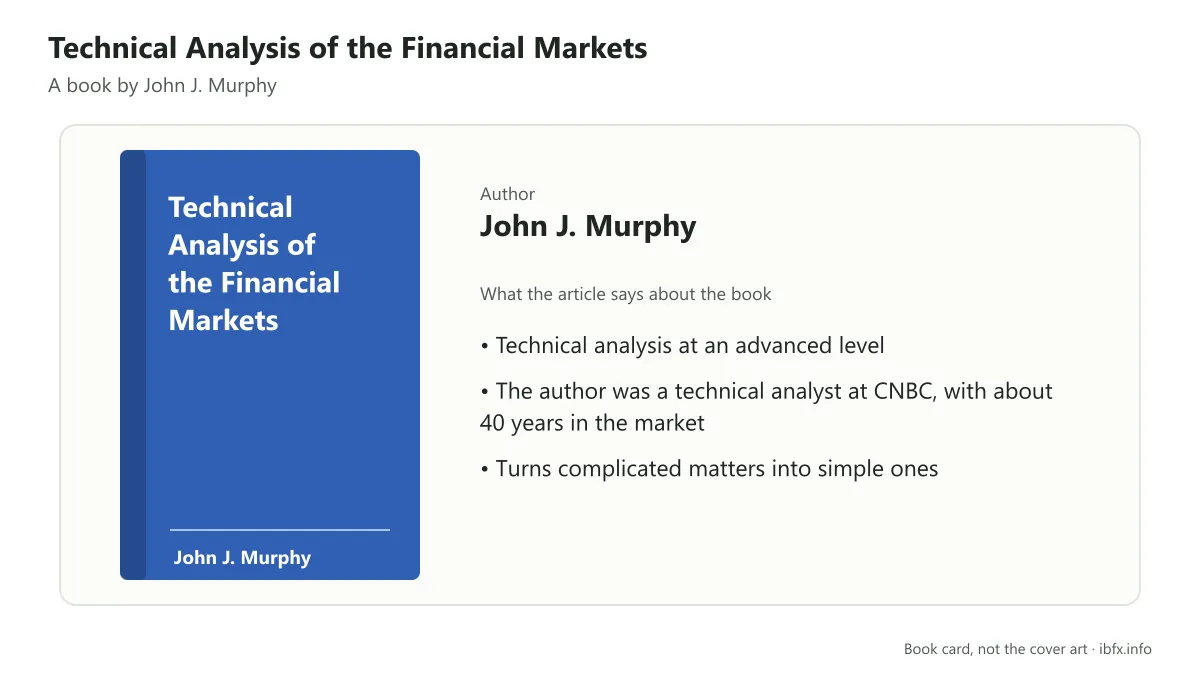
The book covers technical analysis at an advanced level, because John Murphy, its author, was a technical analyst at CNBC, and 40 years in the market made him one of the best-known technical analysts, with a great deal of influence in finance. On top of that, John Murphy has a gift for turning complicated matters into simple ones so that the listener can get at them easily, which makes every book he writes easy to read and easy to follow.
How to Make Money in Stocks – William J. O’Neil
This book is treated as a classic work on investing in stocks, putting together both fundamental analysis and technical analysis, and it was written by the founder of Investor’s Business Daily, one of the best-known investment publications in the world. O’Neil’s CAN SLIM method puts fundamental analysis (earnings growth, new products, leadership in the industry) together with technical analysis (chart patterns, volume, the buy point). He studied the strongest rising stocks over more than 100 years, and everything he drew from that is set out in this book. He also suggests a whole range of other technical strategies, along with advice on cutting risk, on how to look for an entry and on how best to get out of a trade.
Japanese Candlestick Charting Techniques – Steve Nison
This is the classic book on candlestick charts, and every trader ought to read it at some point. Steve Nison is not the father of the candlestick pattern. But he is the man who did the most to bring the candlestick chart to the West, which is how it became the most popular and best-liked of all the technical analysis charts on the market today. The book explains the subject thoroughly, with detailed notes on the candlestick patterns a trader uses in forex.
Encyclopedia of Chart Patterns – Thomas Bulkowski
This book really is an encyclopedia of chart patterns. Bulkowski is a researcher known for running the numbers on tens of thousands of real patterns, so what the book is worth most for is its figures: how often a pattern breaks the right way, the price it usually reaches, and how often it fails. The later editions add event patterns as well, that is, how price reacts around news such as a company’s earnings release.
Technical Analysis Using Multiple Timeframes – Brian Shannon
A lot of technical traders like this book because it gives them strategies they can put to use. It also brings out the value of analyzing several timeframes in order to have a fuller picture before entering a trade. The book covers a number of other useful subjects too, such as how to sell short, how to place a stop loss and how to set a profit target. Read more: Using multiple timeframes in trading.
Reading gives you a solid foundation, but practice what you read on a demo account before you trade with real money.