On this page
One of the things a trader needs in order to pursue Forex trading over the long term is settling on a style and building an effective trading strategy.
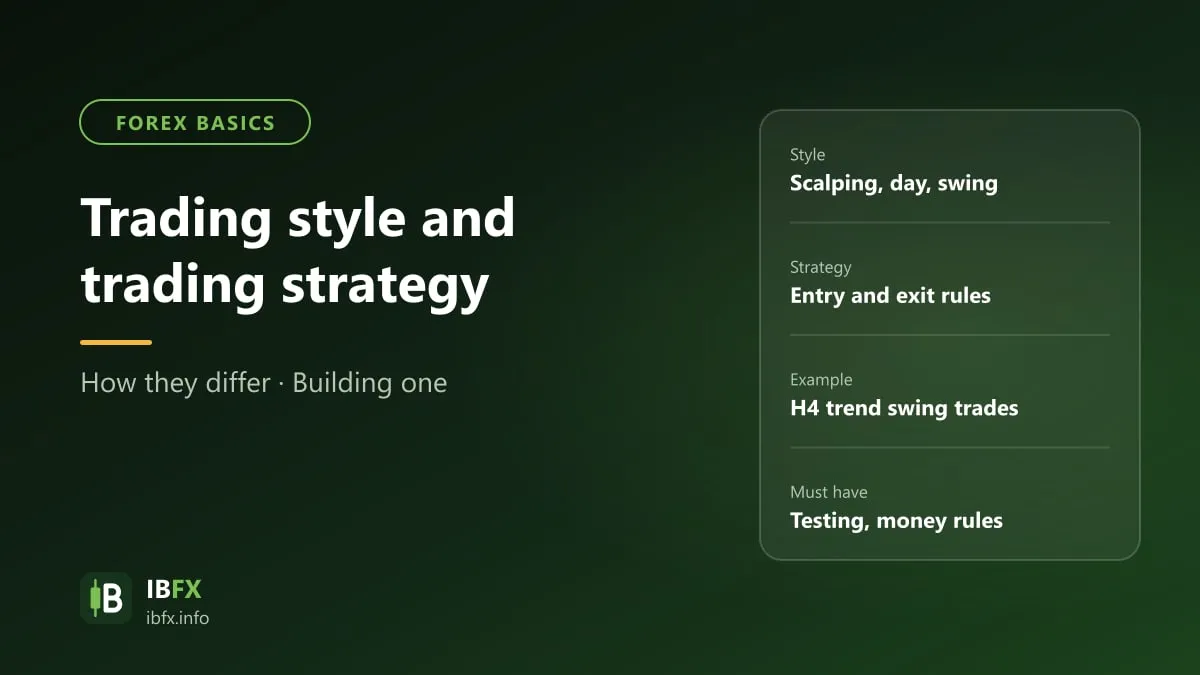
Trading style depends heavily on the preferences, the temperament and the purpose of the investor in the Forex market. A trading strategy, meanwhile, is what follows on from whichever trading style you have.
A great many people, however, have no notion of settling on a style at all; they cast about for a good trading strategy and end up having to change it constantly because it does not work.
So in this article we will help you draw a clear line between style and strategy and work out which style suits you. At the same time, we will put together the common groups of Forex trading strategies.
What is a trading style? Which one should you choose?
What is a trading style?
In music, styles get sorted into pop, ballad, rock, R&B… and Forex trading is the same: it has different styles too.
Settling on a style means a trader has to work out which kind they are, and how they like to trade in the market. One trader likes to strike fast and win fast, likes to see the profit or the loss immediately, while another likes to hold a position for a long time and wait for a big wave… those are 2 different styles. And trading style depends entirely on each person’s character.
There are 4 common trading styles in Forex, sorted by how long a position is held in the market.
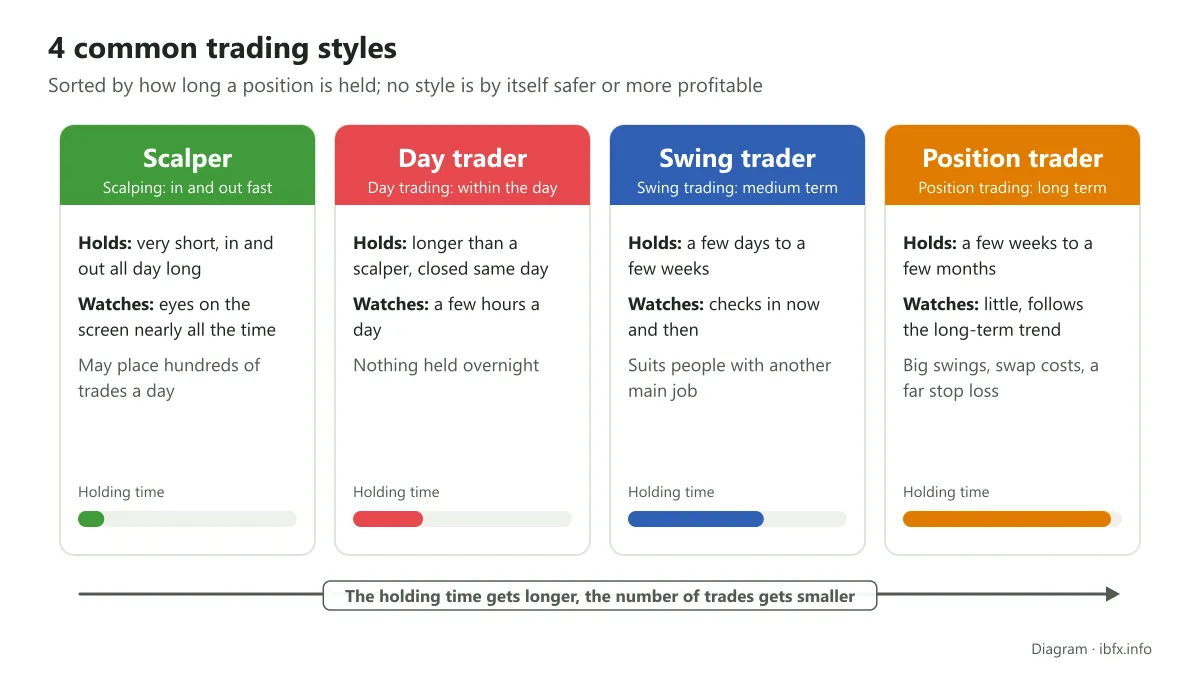
Scalping trading: traders who pursue this style are called scalpers. This is the style of people who like things fast, who want to see the profit or the loss the moment they put money down and do not like waiting too long. Scalping only suits traders with plenty of time for the job, because it demands that you keep your “eyes glued to the screen” to follow the market and look for a place to enter. Scalpers may place hundreds of trades a day.
Day trading: traders with this style also want to book the profit or the loss within the day, but they hold a position longer than a scalper does. If you have a few hours a day to follow the market and do not want to hold a position overnight, this style may suit you.
Swing trading: this style suits traders who do not have a great deal of time for trading because they have another fixed job to concentrate on. They usually hold a position for a few days to a few weeks, turning the computer on now and then to see whether anything unusual has happened against their expectation; if not, they keep holding and get on with other things in peace. Do you like trading this way?
Position trading: this is the style for people who are very patient. Position traders usually pay no attention to short-term price swings; what they want is the general long-term trend. A position can be held for a few weeks to a few months, so there is less screen watching, but you have to withstand large moves against you, accumulated overnight fees (swap), and you need a far stop loss.
Which trading style should you choose?
Of the 4 trading styles we set out above, which one do you like? If you have not settled on one, answer the following questions:
- What return do you expect?: What is your goal in entering the Forex market, and how much are you prepared to lose? Do not set a goal of making a fixed sum every day or every month (“10 USD a day”, “enough to buy a car in 6 months”): the market does not pay a regular wage, and the pressure of hitting a target makes a trader take too many positions and use too much leverage. Start from the level of risk you can accept on each trade, then choose the style that fits the time you have.
- How many hours a day can you give to Forex? If you trade full time, then all 4 of the styles above can work (although you should not treat Forex as your main source of income until you have had steady results over a long period). But if you have another main job and not much time for trading, then scalping and day trading will not suit you.
- How much risk can you accept? With Forex, a high return always comes with high risk. And if you are someone who likes safety, then Forex is certainly not for you; a bank savings account or bonds would suit you better. Get this right: the level of risk is set mainly by position size and by where the stop loss goes, not by the style. Scalping means many trades, high costs and quick reflexes; position trading means few trades but large swings to sit through over a long period. No style is by itself safer or more profitable.
What is a trading strategy?
A trading strategy is really a trading plan. It means listing out the work to be done, the tools to be used and the right time to trade, so as to reach the profit you are after. And what matters is setting the rules that let you stay with that strategy over the long run and get good results from it.
What makes a trading strategy effective?
An effective trading strategy has to be one that fits the style the trader settled on from the start. If it does not fit the trading style, if it does not match your own character, then there will be no rule you can hold to in order to follow that strategy through in the most effective way.
To build an effective trading strategy you need to pick an answer to each of the following questions, and do not forget that the answer has to fit your trading style.
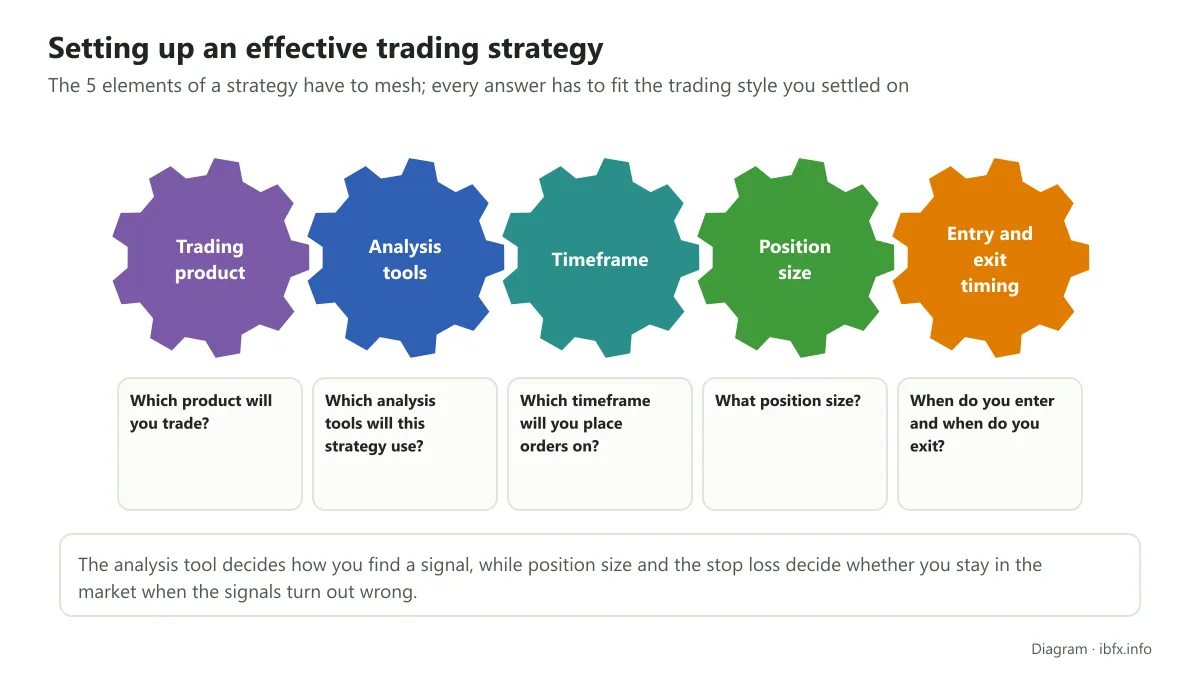
Which product will you trade?
Building a Forex strategy requires you to settle on the kind of asset to trade. It could be the major currency pairs, the cross pairs, gold, indices, shares… or a combination of several products together. If you are someone who likes studying gold and the market news that moves the gold price, then gold may be the product that fits, because working with something you understand and enjoy usually works out better. Note that gold moves far more than many major currency pairs, so it calls for a smaller position size.
Which analysis tools will this strategy use?
This is a fairly important part of building a trading strategy. Choosing the analysis tool is no longer a matter of preference; it bears on how well each tool works.
There are 2 methods of analysis in Forex: technical analysis and fundamental analysis. Each method has its own set of analysis tools. Finding one or several tools that work well depends on a whole process of practice and experience in the market. With every tool you come across, you should practice using it many times on many different kinds of asset.
One analysis tool may work well on one kind of asset and be “useless” on another, or it may give more accurate signals on one timeframe and a great deal of noise on another… Little by little you will build up a list of the analysis tools that fit each particular strategy.
We will set out the tools used in the 2 schools of analysis in more detail later in this article.
Which timeframe will you place orders on?
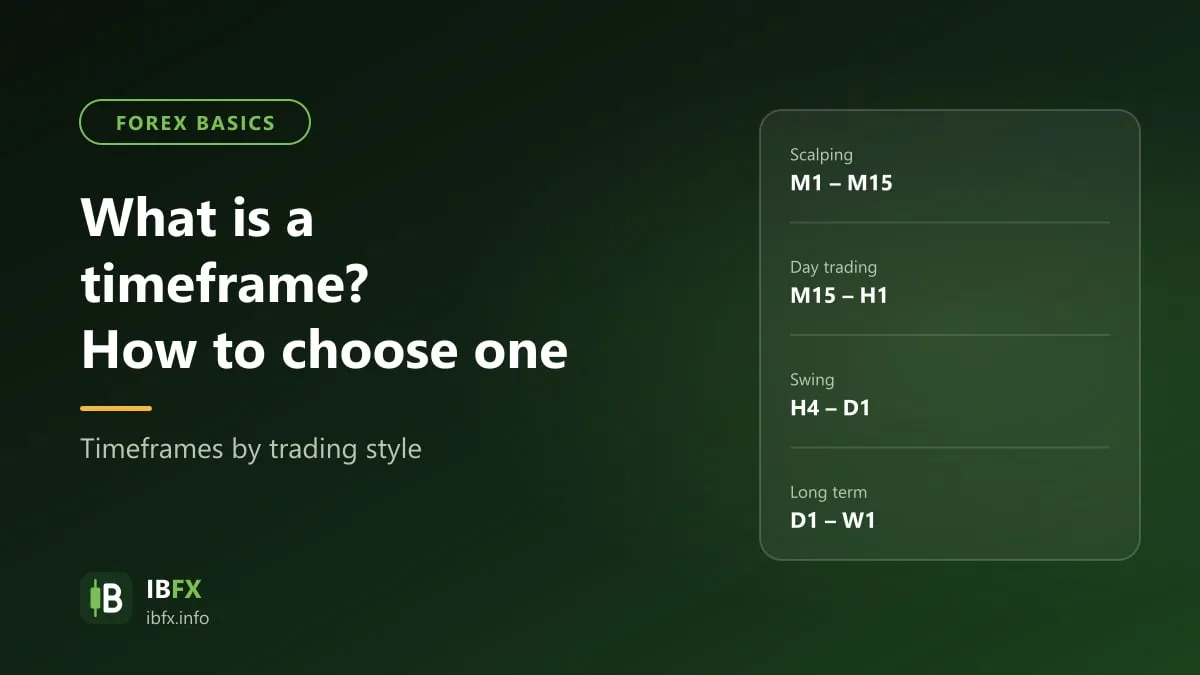
Each trading style has timeframes that fit it. Scalping traders usually trade on short timeframes such as M1 or M5. Day traders use M15, M30 or H1. Swing traders trade on timeframes such as H4 and D1, and position traders place their orders on long timeframes such as D1 or W1.
As said above, the choice of trading timeframe also depends on the analysis tool being used. For example, you pursue the Swing trading style, and the timeframe you intend to use is H4 or D1. Your trading product is XAUUSD and you use RSI as the analysis tool for this strategy. After practicing with RSI you find that this indicator gives good trading signals on D1, so you decide on D1 to place your orders.
What position size?
For each trade you use your analysis tool to set the stop loss and the take profit. The distance to those two points sets the reward-to-risk ratio (it should be at least about 2:1, and the profit has to be enough to cover the trading costs); position size does not change that ratio.
Position size is worked out from the amount you accept losing if the stop loss is hit — for instance under the rule “risk no more than 2% of the account balance on each trade” — divided by the stop loss distance.
So position size also depends on the trading style: a position trading order has a far wider stop loss than a day trading order, so at the same 2% risk, the position trading order has to use a smaller position size.
When do you enter and when do you exit?
Each analysis tool gives a trader a different entry signal. Sometimes we have to combine several tools to find the best entry.
Every trading signal tells a trader the profit that could be reached or the risk that could be run. From that you set the stop loss and take profit levels, so that positions close automatically when the trade reaches the profit you expected or the loss reaches the level you allow.
Putting effective trading strategies together. The two schools of analysis in Forex.
Every trading strategy is made up of the 5 main elements we set out above. The analysis tool decides how you find a signal, while risk management (position size, stop loss) decides whether you stay in the market when the signals turn out wrong.
A good trading strategy needs analysis tools that fit, combined sensibly and tested over enough trades.
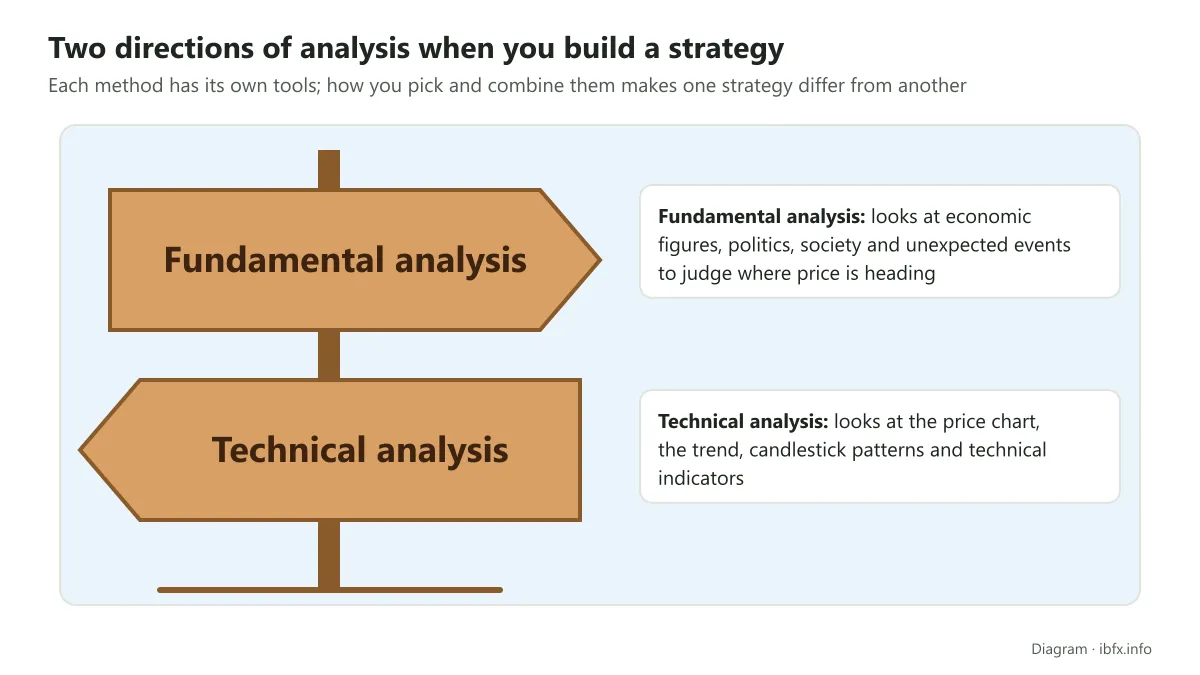
There are 2 methods of Forex analysis: fundamental analysis and technical analysis. Each method has its own analysis tools. Each way of picking and combining those tools produces a different trading strategy.
A trading strategy that uses fundamental analysis tools alone.
The fundamental school holds that prices in the market are moved by many different factors, such as the economic, political and social figures and the sudden natural disasters of the world’s economies. Studying how strongly and in which direction those factors bear on the assets in the market helps a trader work out where price is heading.
When an economic figure is released, traders using this strategy compare it with the forecast value and with the previous period’s value, judge from that how strongly this figure affects the prices of the assets concerned, and make a trading decision.
In the same way, for a political or social event or a natural disaster happening in any country, traders following this strategy work out which way prices will move under the effect of those events, in order to find a trading opportunity. If the effect is large enough for the trade to reach the profit they expect, they make the trade; if not, they stay out of the market and keep watching for another opportunity.
The fundamental analysis tools commonly used in Forex:
The fundamental method of Forex analysis has a great many different tools. Those tools are precisely the factors that bear on the price of an asset. Among them, a number of factors move prices in the market strongly and are chosen by a great many traders to build effective trading strategies, including:
- Interest rates
- Inflation
- The consumer price index, CPI
- Gross domestic product, GDP
- The unemployment rate
- Political unrest and demonstrations
- The results of state elections
- Statements by influential figures
- Floods, earthquakes, epidemics
- …
A trading strategy that uses technical analysis tools alone
Technical analysts, for their part, hold that prices in the market always move in trends, that price reflects every factor bearing on it, and that the history of how price behaved in the past repeats itself. So instead of analyzing the factors that bear on price, as fundamental analysis does, this method uses past price and volume data to work out where price is heading in the future.
Technical analysis has 3 main groups of tools:
Technical indicators: the result of calculations on past price and volume data. The results are numbers, and they are plotted as a chart that helps a trader judge the trend and the momentum of price.
Some technical indicators widely used in Forex trading are RSI, Bollinger Bands, MA, MACD, Momentum, CCI, Fibonacci…
Japanese candlestick patterns: each candle has a particular shape and shows what happened during one trading session. Using candlestick patterns in technical analysis means a trader watches the signal candles that appear within a particular trend in order to work out what the market will do next.
Some basic candlestick patterns in Forex are: Hammer, Doji, Pin bar, Inside bar, Engulfing Bullish/Bearish, Morning/Evening Star, Shooting Star… and a great many others.
Price patterns: when candles move within a certain period and form particular shapes, they give a trader trading signals. Behind those particular shapes lies the story of the battle between the buyers and the sellers. Some battles end with one side winning outright, and some end with no clear winner. From those outcomes, technical analysts work out where price will go next.
Some important price patterns are: the Wedge, the Triangle, Head and shoulders, Double top, Double bottom, the Flag, Cup and handle…
Candlestick patterns and price patterns are 2 powerful technical analysis tools, favored by a great many traders, who set them apart as a school of their own called Price action.
A trading strategy that combines both fundamental and technical analysis tools
Combining both technical and fundamental tools gives a broader view of the whole market picture. The technical tools help a trader find sensible entries and exits, while the economic and political factors show where prices are heading over the long run.
Usually scalpers and day traders use mainly technical analysis tools; position traders favor fundamental analysis, and swing traders prefer a strategy that combines the 2.
Each trading method has its own strengths and weaknesses, and which method to trade by depends entirely on each trader’s style and strategy.
When should you change your trading strategy?
Clearly, everyone who builds a trading strategy hopes that strategy will make money. No trading system is perfect; at each stage of the market the strategy performs differently, and sometimes a trader needs to adjust it.
But the opposite common mistake has to be avoided too: changing strategy after only a few losing trades. Every strategy has losing streaks; judge it on enough trades (say a few dozen or more, fully recorded) taken according to the rules.
Some signs that a trading strategy is not working:
- After enough trades, the total result is still negative once costs are counted in (a low win rate is not necessarily bad if each winning trade is much larger than the losing ones).
- The profit made is not enough to cover the trading costs.
- A strategy does not give you the confidence you need. After every trade the worry weighs on you again, you do not trust the signals the strategy gives, and that keeps you from following your rules.
- The drawdown on the account is larger than you can bear.
To change a trading strategy you can change one, several or all of the elements it is built from. What matters is not how many elements you change but that, with every decision to change the strategy, you work out which element was not working or did not fit within it. From there you plan which other element to put in its place.
If you find yourself having to change trading strategy constantly because it does not work, then look again at how you approach each element and each tool you use: is it right? Is the knowledge you have learned and researched correct, do the analysis tools fit the kind of asset you are trading? Were you thorough and careful in the process of building the strategy? And above all, does the strategy you are building really fit the style you are pursuing?
Many people take a very long time to settle on a trading style, and a great many others do not know what they like or want, so they cannot pick a trading style that fits. Building an effective trading strategy that fits a trader’s style and character matters enormously; it weighs heavily on your results in this market. For traders still casting about for a trading style and a strategy that fits, we hope this article gives you a clearer direction.