On this page
Foreign exchange is a familiar enough term for anyone who works in economics or finance or follows the field, but a new investor can find the idea vague. Whether you understand it well or not, one thing everybody knows is that the foreign exchange market is a giant of the financial world — although size does not mean money is easy to make there. To step into this market and get anywhere in it, you first have to understand what it really is and how it works.
This article is meant to give you, and above all new traders, the most basic picture of the foreign exchange market, and to answer some of the questions that come up most often when people take part in it.
What is foreign exchange?
When foreign exchange comes up, everyone thinks straight away of trading foreign currency (the money of another country), but that is only a small part of it: foreign exchange in fact covers a great deal more.
Foreign exchange is an economic term for every instrument of value used in international transactions. Put another way, foreign exchange is what pays for the goods and services bought, sold and exchanged between countries, and it covers:
- Foreign currency: the money of another country circulating inside a country
- Foreign exchange payment instruments: checks, bills of exchange, promissory notes, bank cards… instruments that are settled in foreign money when they fall due
- Other papers denominated in foreign currency: government bonds, corporate bonds, shares, notes…
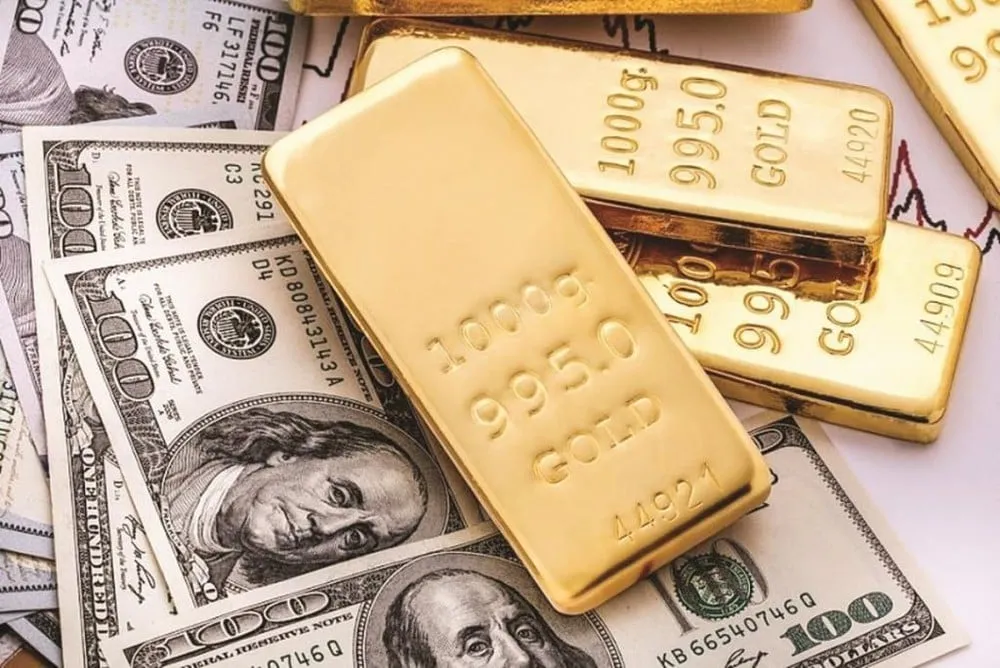
- Gold held in the state’s foreign exchange reserves, gold in a resident’s account abroad, and gold in bars, pieces or grains carried into or out of a country’s territory.
- A country’s own currency (the domestic currency) when it is moved into or out of that country’s territory, or used in international settlement.
What is foreign exchange trading?
Foreign exchange trading (Foreign Exchange, FX, Forex) is the buying, selling and exchanging of foreign currency and of papers settled in foreign currency on the international market.
That definition comes from economics textbooks. It is general rather than concrete, and it makes it hard for you to picture how foreign exchange trading actually happens.
To simplify, picture it like this:
- In securities, buying and selling shares, bonds and other securities is called securities trading.
- In real estate, buying and selling houses, land and so on is called a real estate transaction.
- With savings deposits, term deposits or an ATM card, depositing, withdrawing or transferring money to someone else is all called a banking transaction.
So with foreign exchange, foreign exchange trading is simply buying and selling one kind of product, and that product is currency. But because currencies are traded in pairs, buying one currency means you are also selling another.
What is the foreign exchange market?
From those two definitions you can see that the foreign exchange market (Foreign Exchange Market, FX Market, Forex Market) is a decentralized market where currencies are traded and exchanged.
This activity exists because the first thing any company or business, or even an individual traveling or studying abroad, has to do in order to trade in another country is CONVERT CURRENCY. You cannot use the money of the country you live in to pay in another country. That is how currency exchange came about, and out of it grew the foreign exchange market as it stands today.
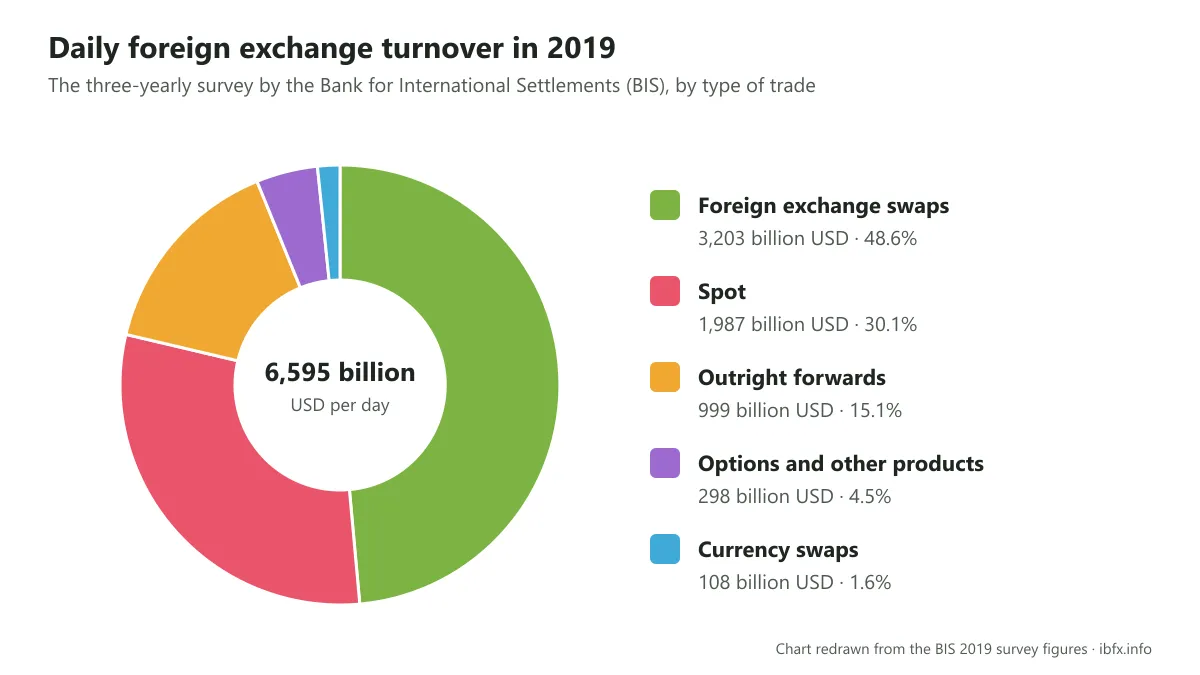
It is the largest financial market in the world, with average turnover of 6,595 billion USD a day in the 2019 survey by BIS, about 7,500 billion USD in the 2022 survey and about 9,600 billion USD in the survey of April 2025.
To understand the foreign exchange market better, read this article of ours:
Who takes part in the foreign exchange market?
At first the foreign exchange market existed mainly to serve the foreign currency needs of banks, companies and large financial institutions with very large amounts of capital. As technology developed, though, online trading systems and brokerage firms appeared, and they opened the market to small individuals like us.
The participants in the foreign exchange market include commercial banks, central banks, brokers, financial institutions, insurance companies, pension funds, hedge funds… and above all small individuals with capital to invest.
The center of it all is the interbank market (commercial banks trading foreign exchange directly with each other or through brokers), which carries the largest volume and is where the big boys who set the price of currencies operate. Retail traders like you and me are only a small share of this market, so in practice we are “small fish” and do not carry anything like the weight of central banks or of the other providers of foreign exchange services.
Central banks
These are the bodies with the largest influence on the value of a country’s currency. By intervening, a central bank can raise or lower the value of the domestic currency in order to keep the economy in balance. A central bank also buys and sells foreign exchange to keep its own customers, the commercial banks, running.
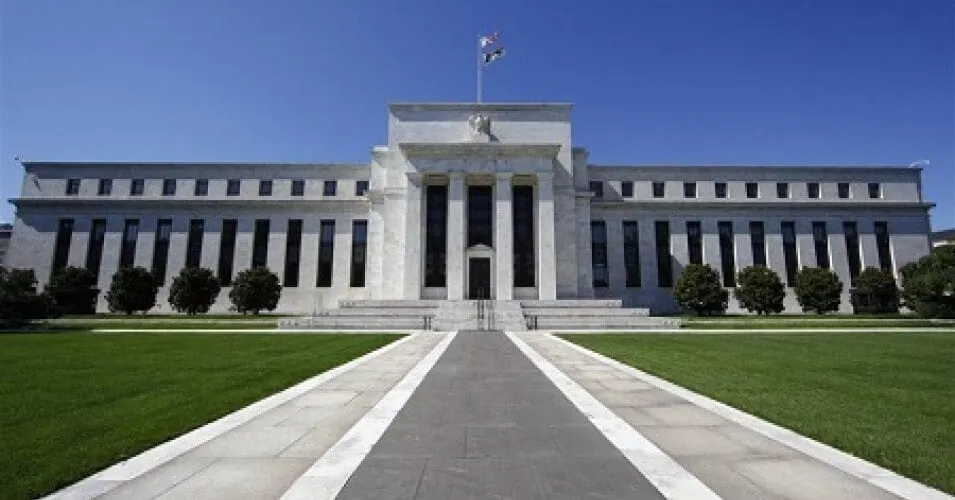
The Fed, or the US Federal Reserve, is not fundamentally a main participant in the market, but every decision the Fed makes has no small effect on the foreign exchange market.
Commercial banks
Commercial banks are the center of the foreign exchange market, since most of the trading comes from this part of it.
A commercial bank trades foreign exchange to meet demand for foreign currency and to make money for the bank itself or for its customers.
Forex brokers
These are the firms that give institutions and individuals around the world access to the global foreign exchange market through online trading platforms.
As we said above, central banks and liquidity providers are the main participants in the market. But a forex broker is also one of the parties with the strongest effect on a trader. So if you are going to take part in the forex market or invest in foreign exchange, pay attention and pick a broker with a real reputation, to save yourself a lot of grief.
We say that because, as we have explained in a great many articles, a forex broker is the trader’s treasurer, the one who really holds the keys to the money box.
The money you deposit is held by the broker, and your orders have to go through the broker to be filled. When you want to withdraw, who carries out the request for you? The forex broker again, of course.
That is why, if you pick a forex broker without a good reputation, you can lose not only money but your peace of mind.
So if you have not yet found a broker you can really trust, read how to check a forex broker before you open an account.
Individual investors, or traders
These are individuals who need foreign currency to invest, to pay for something or to travel, and also individuals who trade foreign exchange in order to profit from the moves in currency prices.
Common questions about investing in foreign exchange
In this part we answer some of the questions that come up most often for an investor new to the foreign exchange market.
What is traded on the foreign exchange market?
MONEY is the main thing traded on the foreign exchange market.
As we said, in foreign exchange trading buying one currency means you are selling another, so foreign exchange has to be traded in pairs. Because of that, a trader can make money in both directions: not only when a currency rises, but even when a currency falls you can still trade it. Not every kind of investment allows that.
For example, trading the euro against the US dollar is written EUR.USD, EUR/USD or EURUSD.
The price on this market is the exchange rate between the 2 currencies. When you Sell EUR/USD you are selling EUR and buying USD, expecting EUR to fall against USD. An individual trader’s order is far too small to move the exchange rate.
See also: the kinds of currency pair in the article on what forex is
Alongside currency pairs, the foreign exchange market today also lets investors trade other assets: precious metals (gold, silver, platinum, palladium…), energy (crude oil, natural gas…), stock indices, shares, bonds, cryptocurrencies, agricultural products…
When does trading on the foreign exchange market take place?
The foreign exchange market runs 24 hours a day, 5 days a week, apart from holidays and the 2 days of the weekend. When one market closes another takes over, with the sessions following each other in turn, so an investor can trade at any hour of the day.
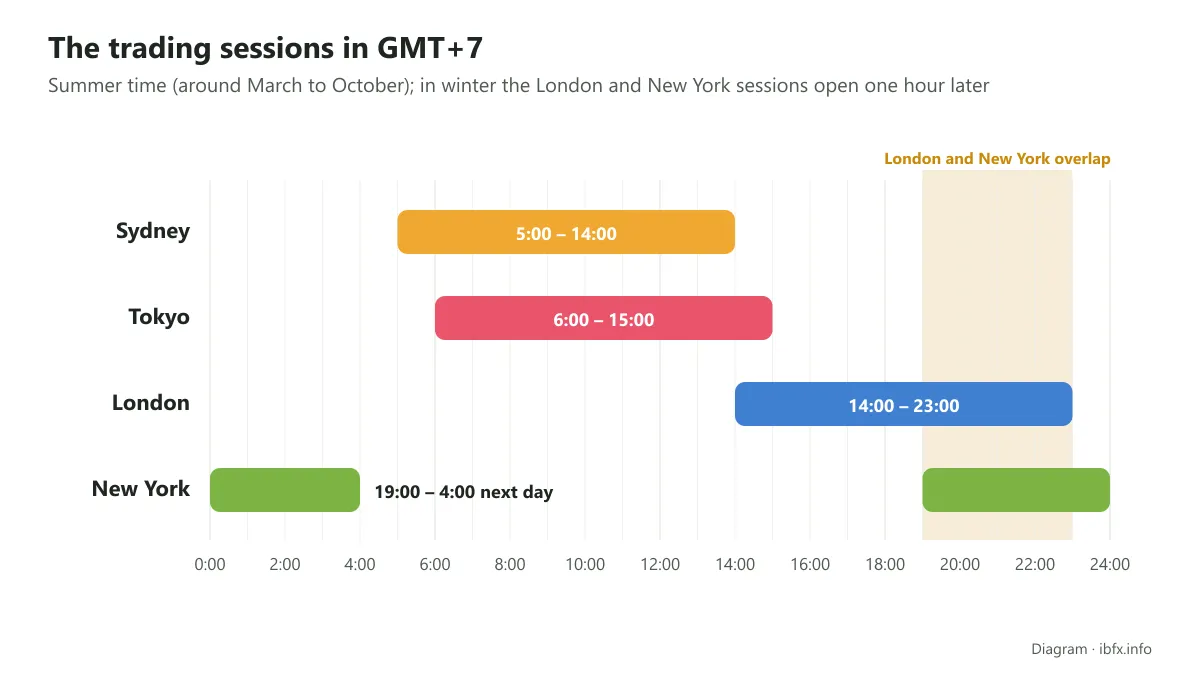
The four main trading sessions of the foreign exchange market.
Today some forex brokers have added cryptocurrency products to meet what traders ask for. That means those brokers are open 24/7 (foreign exchange, securities products, metals and oil trade 5 days a week, while the 2 weekend days stay open for traders to trade cryptocurrencies).
See also: The forex trading sessions and their hours.
Which bodies regulate forex brokers?
In each part of the world there are bodies responsible for supervising and regulating what forex brokers do.
Their job is to control what brokers do, to protect the interests of investors and to keep the market transparent, fair and efficient.
Some of the most respected forex regulators today are the FCA, ASIC, CySEC and the NFA….
Note: a license only protects the clients of the exact company that holds it; see how to check a broker.
What affects foreign exchange prices?
A great many factors decide and affect the foreign exchange market. Here are the 3 most basic ones:
- Central banks: as we said, a central bank runs monetary policy (interest rates, the money supply), so it bears directly on the value of the domestic currency and through that on the exchange rates of the pairs on the market.
- Economic and financial news: of 2 main kinds, positive and negative. News that comes in better than expected lifts the mood of investors around the world, who rush into that country’s currency and push its value up. In the other direction, negative news can reduce investment in a country’s currency and so bring the value of that country’s domestic currency down.
- Market sentiment: market sentiment is how the majority of investors on the market behave in the face of an event. When a large group of investors moves one way, it shapes the mood of the rest, who then tend to follow the crowd. That too bears directly on the price of a currency.
What does investing in foreign exchange actually involve?
This is probably the most awaited question. After all the background on foreign exchange and the foreign exchange market, the key point is still how you invest in this market.
Trading on the foreign exchange market is buying and selling the products offered on it. Those products are the currency pairs or the other assets explained in the question above.
That said, buying and selling on this market is only a relative idea.
For example: buying the EUR/USD pair means buying the euro and selling the US dollar; the other way round, selling the EUR/USD pair means selling the euro and buying the US dollar.
So when should you buy and when should you sell foreign exchange?
When an investor expects the EUR/USD rate to rise in the future, they place a buy order; when they expect the opposite, they place a sell order. The difference between the rate at which the trade is opened and the rate at which it is closed is the profit or loss on that trade.
The foreign exchange market differs from the stock market in one respect, and that difference is seen as an advantage which makes many foreign exchange investors prefer trading currencies to trading stocks.
On the stock market an investor only profits when a share rises. On the forex market, as long as the price of an asset moves at all, up or down, an investor has a chance at a profit — and can just as well take a loss in either direction. If you expect the market to go up you enter a Buy; if you expect the market to go down you enter a Sell.
To learn more about exactly how trading on the foreign exchange market works, read: What trading forex means. A guide for beginners.
Can you trade foreign exchange with only a few dozen dollars?
The answer is that you can: thanks to leverage, many brokers let you open an account with only a few dollars. But leverage is not a “magic fix”: the smaller the account and the higher the leverage, the smaller the move it takes to blow up the account. With a few dozen dollars of capital, treat the money as tuition and trade the smallest position size.
Read more: What is leverage? How much leverage should you use?
What are the benefits of investing in foreign exchange?
There are a great many reasons why forex draws individual investors.
- You can trade at any hour of the day
- You can make a profit whether the market goes up or down
- You can start with a small amount of capital
- Liquidity is very deep, so it is hard for one individual to manipulate (although in 2014-2015 several large banks were fined for colluding to manipulate benchmark exchange rates)
- Liquidity is high on the major pairs, so the spread is usually low
Large risks come with all of that: leverage magnifies a loss, prices can move sharply when the news lands, and trading through a broker abroad carries no protection under Vietnamese law.
What do you need in order to invest in foreign exchange?
Some capital and a phone or a computer with an internet connection are the first things you need in order to trade on the foreign exchange market.
Next, choose a broker with a good reputation that suits your investment needs best.
How to check a forex broker before you open an account.
And the most important thing of all is to prepare thoroughly on what you need to know about the foreign exchange market, so as not to blow up an account. Investing in knowledge is always the investment that pays best. So get yourself properly equipped before you invest in foreign exchange. Read the whole series on forex that we have put together below, so as to steer clear of the risks you may run into later:
See also: the Forex basics section
You should also read the articles on financial investment, to give yourself more options, because the more you spread across different kinds of investment, the more the risk is reduced:
See also: the Trading practice section.
We hope this article has given you the most basic grounding in investing in foreign exchange, so that you can draw up a concrete plan for taking part in this market. This market is open almost without a break, so there is no need to rush. But as we said, equip yourself properly before you go into battle.