Once you are a trader the list of things you fear is probably a long one, and slippage is on it. Slippage, being filled at a different price than you asked for when you place an order, is a nagging problem that investors and traders on the forex market face every day and every hour.
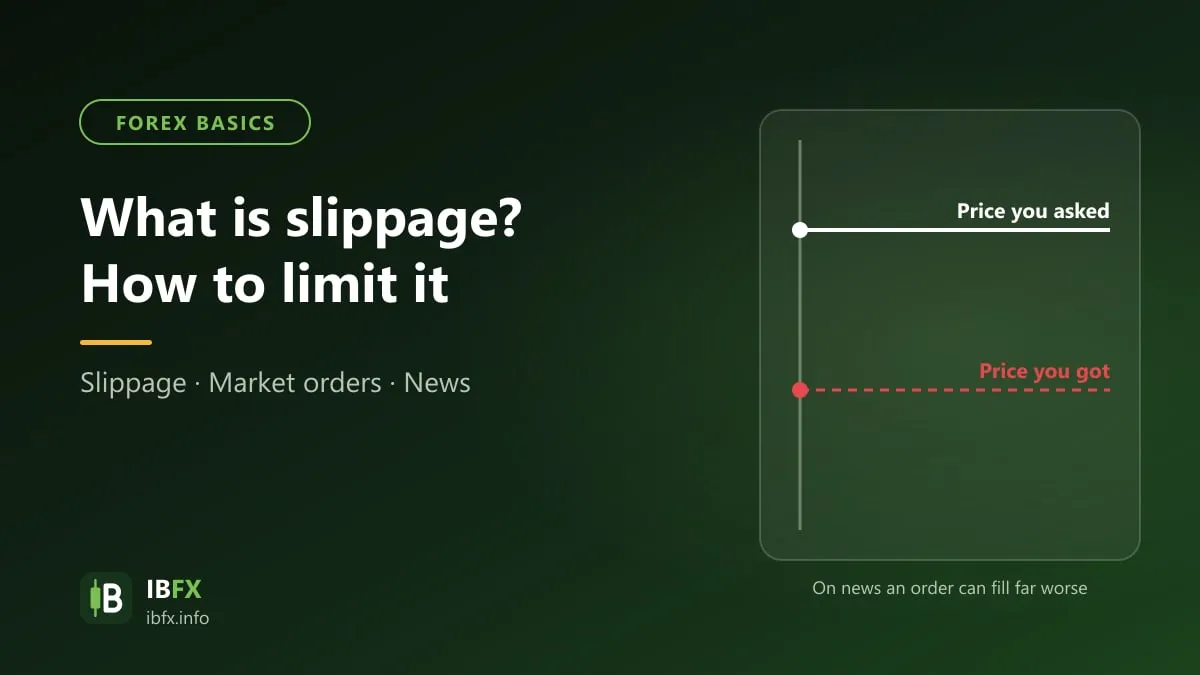
It is also described as the phenomenon in which there is a difference between the expected price and the price actually paid, a gap between the current market price and the price the order is filled at.
What is slippage?
Slippage is the difference between the price you wanted to be filled at and the price the order was actually filled at. Large slippage usually happens when the market opens at the start of the week with a price gap, or when news makes price run very fast.
Slippage tends to form when the market has strong price moves and thin liquidity. For example, when an unexpected political or economic event happens over the weekend, liquidity is still low as the market opens on Monday morning, and combined with the pressure of big news that creates a price gap.
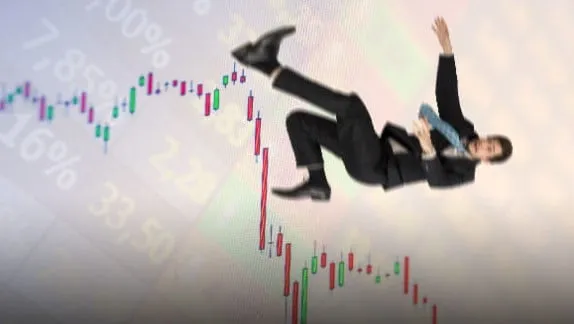
Slippage is an inseparable part of trading.
Slippage can work for you and it can work against you. If it goes in your favor you are filled at a better price than expected; if it goes the other way you can lose more than the stop loss you set, and even blow up the account if you use high leverage. Slippage spares nobody. The classic example is Jan 15, 2015, when the Swiss National Bank suddenly dropped its EUR/CHF floor: price jumped thousands of pips in a few minutes, many stop loss orders were filled a long way from where they were set, many traders were left with negative balances, and some brokerage firms went bankrupt or had to take rescue funding.
Slippage happens in every market, forex included. On major currency pairs when liquidity is high, slippage is usually very small; but around news releases, at the start-of-week open, or on exotic pairs, it can be large. Brokers advertising “no slippage” usually come with requotes or rejected orders; no broker can remove slippage when the market gaps.
Can slippage be avoided?
You cannot avoid slippage completely, just as you cannot know for certain how events around the world will turn out — what a politician will say, or whether a central bank will unexpectedly change policy.
You can, however, reduce the risk, and that is how you protect yourself when you trade at times when market price is moving on news or swinging hard, when the chance of slippage is higher than in normal conditions: by limiting trades held over the weekend and following the economic calendar regularly.
As said above, you can run into both positive and negative slippage. It can work for you and it can work against you: when slippage goes in your favor the order is filled at a better price, and when it goes the other way the loss is bigger than planned.
For example, suppose you have a sell order of 10 lots of gold at a price of $1290. To protect your account, you plan to set a stop loss at $1300 to cap the loss. But suppose there is a very strong move at that moment, and the value of gold goes up, and up hard, in a very short space of time.
And instead of your gold order hitting the stop loss at $1300, slippage means the price you are closed out at can be a long way above $1300 — $1310, $1320 or even more than that. That is slippage working against you. With 10 lots of gold (1,000 ounces), the loss you planned for on reaching $1300 is $10,000; if the order is filled at $1320, the loss becomes $30,000.
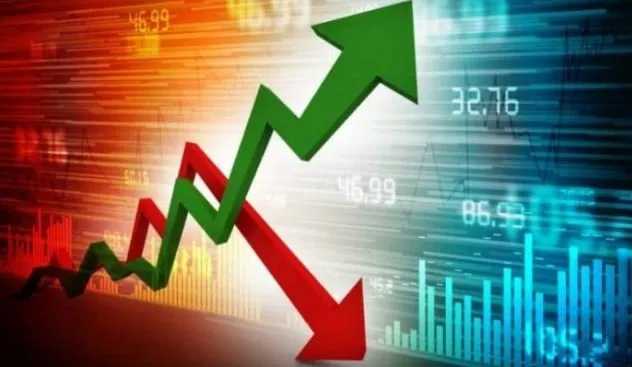
Slippage can work for you, and it can work against you.
The reverse works the same way for slippage in your favor: you have a sell order of 10 lots of gold at a price of $1290, and your planned take profit is $1270. But suppose there is a very strong move at that moment, and the value of gold goes down as you expected, and down hard, in a very short space of time.
And instead of your gold order taking profit at $1270 as planned, slippage means the price you are closed out at can be a long way below the $1270 take profit you set — $1260, $1250 or even lower than that. That is slippage working in your favor.
How do you avoid slippage?
Leverage does not cause slippage, but it makes the consequences of slippage a great deal heavier. So the first thing is to limit trading with high leverage. Many brokers now let you use extremely large leverage, which can be 1:500, 1:1000 or 1:2000, even 1:5000.
High leverage goes with large risk and large returns, and traders come to the market believing that the larger the risk, the larger the return. A trading goal cannot rest on luck: you may win big today, but tomorrow is far from certain. On top of that, if you trade with high leverage you will find it very hard to control risk while trading, which does you no good at all.
Lowering leverage is part of money management. Trading without knowing money management is as good as pouring the money in your account down the drain.
The next thing is to keep up with market news constantly and to limit holding trades over the weekend. Many traders take the view that they do not rely on news when they trade and work mainly off the chart.
Following the economic calendar is never wasted effort for a trader.
You may not care about the news itself, but you do need to know when news is due, and better still to know what that news is and how it could affect the market. A trader who works the market without paying attention to news is like playing football without knowing who the referee is. You can see the news release schedule on ForexFactory or investing.com, and the IBFX economic calendar guide covers it as well. Following the news is never wasted effort.
Beyond that, you need to avoid holding trades over the weekend. The 2 days the market is closed at the weekend are never 2 quiet days. At a time when political instability keeps coming round, you need to be more careful than ever, because the risk from those weekend days is very large.
There are also a few other ways to reduce slippage:
- Use Limit orders (Buy Limit, Sell Limit) where you can: a Limit order is only filled at the price you set or better, while market orders and Stop orders can be filled at a worse price.
- Trade the major pairs in sessions with high liquidity, and avoid the few minutes around news releases and the end of the trading day (the swap time) when the spread widens.
- Keep your position size and leverage moderate, so that one instance of slippage does not hurt the account badly.
Those are the things to know about slippage and how to limit it. I hope they help you take more control when you trade.