On this page
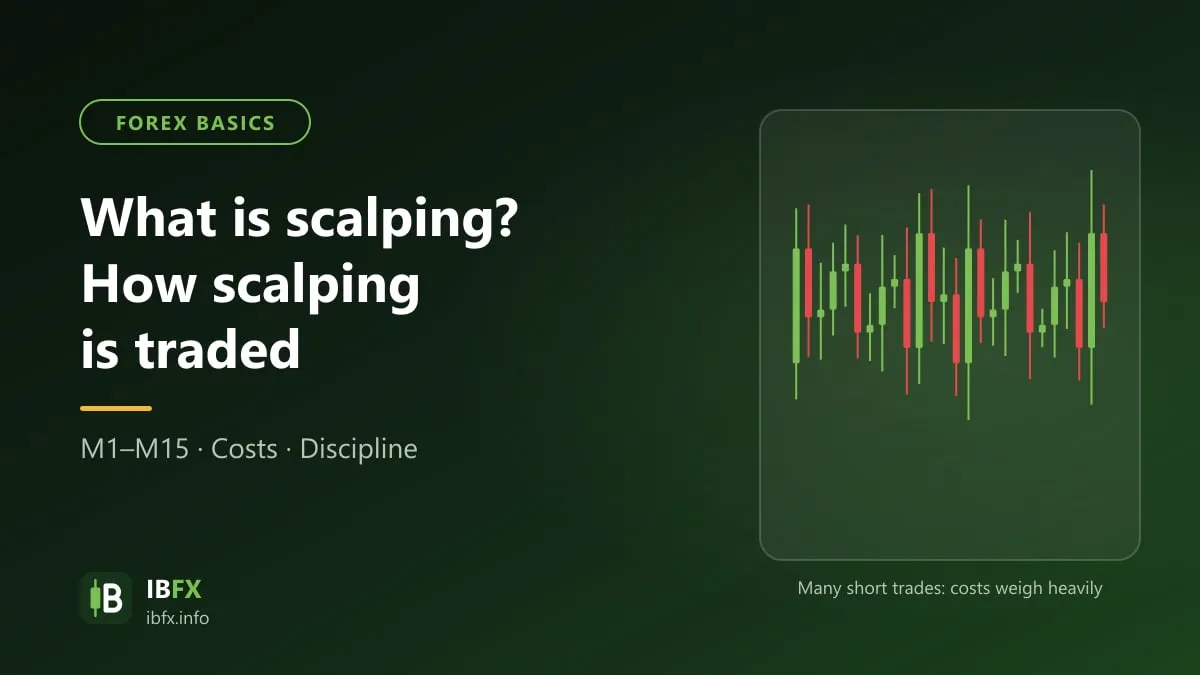
Scalping is a trading method for traders who like a “strike fast, get out” style: the time from opening a position to closing it is very short, and the profit target on each trade is usually only 5-10 pips, sometimes as little as 3 pips. So what is scalping? And how is a scalping strategy traded?
What is scalping?
Scalping is a form of forex trading carried out over an extremely short span of time, from opening a position to closing it, in search of a gain. Compared with other forms of trading, scalping is an action repeated over and over through the day, and a position is never held overnight, because the trader usually does not set their hopes on reaching 20 or 30 pips or more before closing; they are after small gains that add up, so the time from opening a position to closing it is sometimes as brief as a few minutes. That is why scalpers can still find opportunities even when the market is going sideways: a small move of 3–10 pips is enough for one scalping trade. But precisely because the target is that small, the spread and the costs take a very large share of the profit on each trade.
Why do so many traders like scalping?
Many people like scalping because they know the result quickly, they do not have to worry about holding a position overnight, and there are plenty of trading opportunities during the day. In exchange, the profit on each trade is small, and the trader has to concentrate hard, decide quickly and take a lot of trades. One dangerous temptation is to raise the position size in lots a long way so that “even a few pips is a lot of money”: at that size, a few pips against you is a large loss.
The MetaTrader 4 (MT4) and MetaTrader 5 (MT5) platforms let you run a robot (an EA) to enter, cut losses and take profit automatically. Scalping EAs, however, are very sensitive to the spread, to execution speed and to each broker’s conditions; a test run on past data usually looks far better than the live result, and EAs advertised as making steady profits are usually a scam. Even with an EA you still have to watch it regularly.

The advantages of trading with scalping
The idea is easy to understand
The idea behind scalping is fairly easy to grasp, even for someone who has only just stepped into the forex market: enter on a short-term signal, then take profit or cut the loss quickly. But easy to understand is not the same as easy to do: doing it consistently and coming out ahead after costs is very hard.
No overnight or weekend exposure
Because scalping is mostly done on short timeframes such as M1, M5 or M15 and positions are not held overnight, the trader avoids swap and avoids the risk of the week opening at a price far away (a gap). Even so, news released during the day — an interest rate decision, non-farm payrolls, or a speech by the FED chair — can still jolt price sharply within a few seconds, so scalpers usually stay out of the market around news times.
It can raise your win rate
Scalping mostly aims at a handful of pips, so if you catch the right moment you can close the trade in under 5 minutes and take the profit you were after. A high win rate is not enough, though: the profit on each trade is small, so a few large losing trades, or the cost of the spread and the commission, is enough to wipe out what you have made.
The hidden risks of trading with scalping
High leverage and large position size
Many scalpers use high leverage and a large position size to make up for the small profit target. That cuts both ways: one unexpected jolt in price, or a few pips of slippage, can wipe out the profit from dozens of winning trades before it. Work out your position size from the risk you allow yourself on each trade, not from the leverage the broker gives you.
Naturally, this style will not suit everyone. A scalper has to be someone who concentrates hard, who is happy to watch the chart through every trading session, and above all who has the fast reflexes to make a decision in time, particularly when price may reverse and run the other way. Trading this way is therefore quite stressful, and if you are not someone who can react quickly to the market changing, you will lose money very easily.
Too much paid in trading costs
Because the number of trades in a day is very large, the total commission and spread add up to a lot. For example, with a target of 5 pips per trade and a total cost of 1–1.5 pips, you have already given up 20–30% of the profit. Many scalpers choose an ECN/Raw account, which has a very low spread but charges commission; compare the real total cost rather than looking only at the spread.
Slippage and the broker’s conditions
Scalping needs fast fills; even 1 pip of slippage has a large effect on the result. Some brokers restrict scalping (for example by requiring a position to be held for a few minutes) or have terms covering positions held too briefly, so read the trading conditions carefully first.
Price reverses and runs the other way very easily
On small timeframes, price swings around with a great deal of noise; an inexperienced trader loses money very easily when price runs the other way, or when they are too slow to cut the loss.
Is scalping suitable for beginners?
Usually not. Scalping demands discipline, fast reflexes, control over costs and a very steady head. A beginner is better off starting on a larger timeframe (H1 and above) to have time to think; and if you do want to try scalping, practice on a demo account and write down the results after costs.
Basic scalping methods
Using moving averages (MA)
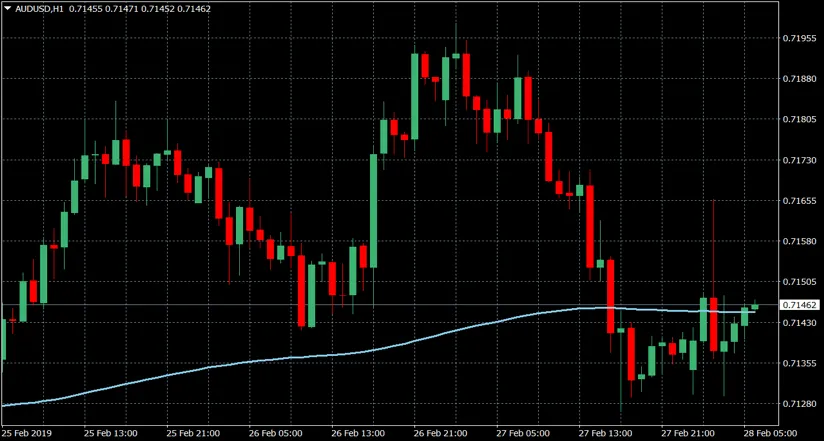
Scalpers rely mainly on technical analysis to find their entries and exits. One of the common indicators for this strategy is the moving average, and the exponential moving average (EMA) in particular, because it reacts faster. Scalpers use them to work out the short-term trend and only enter in that direction. Below is an example of the 200 EMA, the blue line, on AUD/USD.
Ichimoku
The Ichimoku Kinko Hyo indicator (roughly, “a balanced look at a glance”) lays price action out on the chart visually, so that a trader can see the trend, the support and resistance areas and the possible moments to enter or exit at a glance. The indicator is made up of 5 different lines.
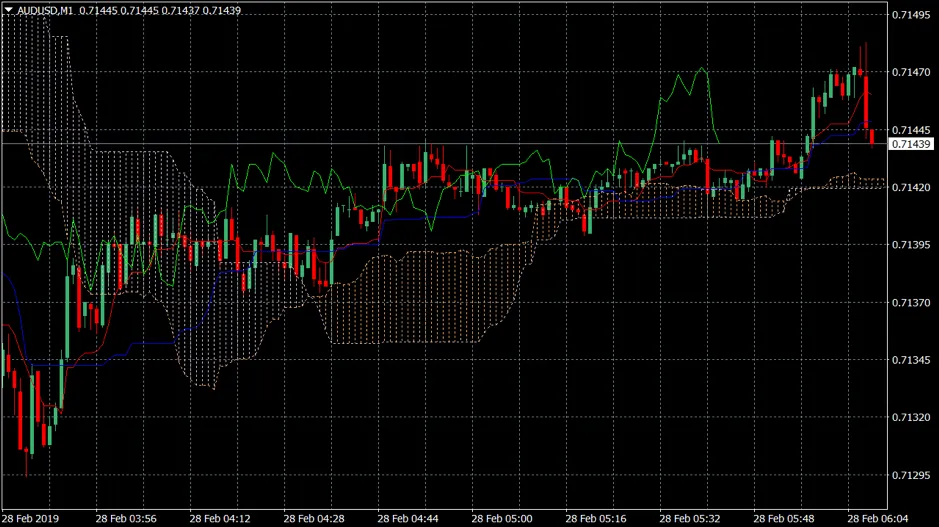
Of those, the blue line (Kijun-sen) is the average of the highest and the lowest price over the last 26 sessions. The red line (Tenkan-sen) is the average of the highest and the lowest price over the last 9 sessions. The green line (Chikou Span) is the current closing price plotted 26 sessions back. The other two (Senkou Span A and Senkou Span B) are plotted 26 sessions forward and form the Kumo “cloud”. (The colors of the lines can differ from one platform to another.)
The RSI indicator
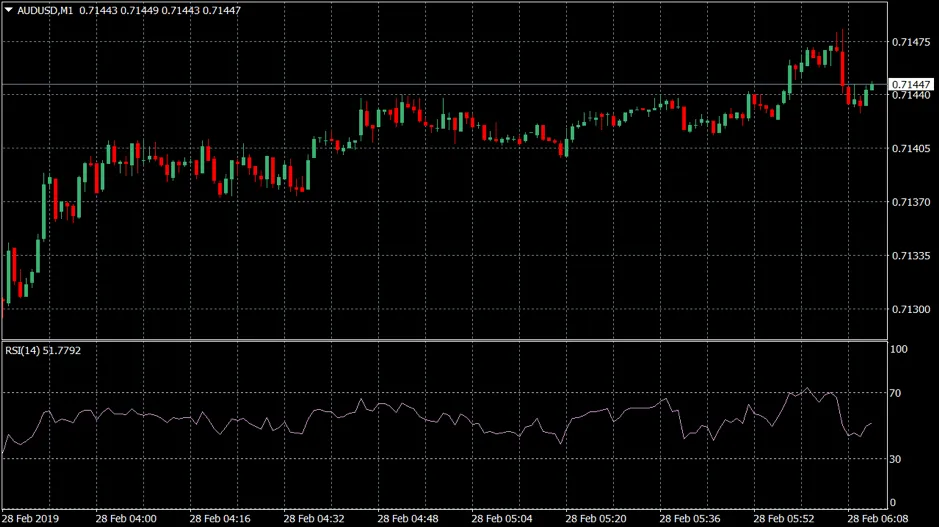
The RSI measures the speed and the size of recent price changes: if the RSI is above 70, the currency pair is considered overbought, and when the RSI is below 30 it is oversold. In a strong trend, the RSI can sit in those areas for quite a while. The RSI is drawn as the purple line below the candles.
The Stochastic indicator
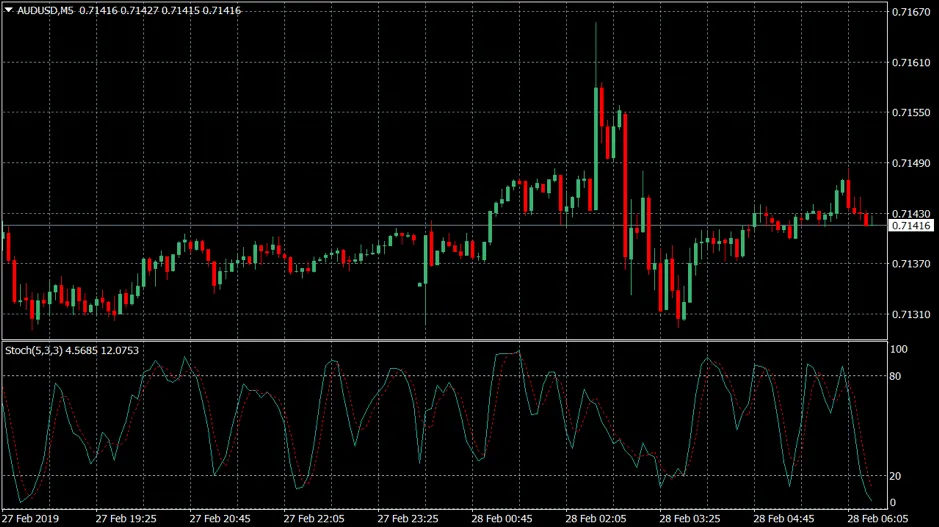
The Stochastic oscillator is used to identify potential reversals in the market. The 80 and 20 levels mark the overbought and the oversold areas, as with the RSI. A common way to use it is to wait for the indicator to go into the overbought area and then cross back below 80 (a sell signal), or to go into the oversold area and then cross back above 20 (a buy signal), and to favor the signals that go with the trend. The Stochastic simply rising above 80 or falling below 20 is not an entry signal by itself.
How to use a scalping strategy well
For a scalping strategy to work as well as it can, a trader needs to keep a few things in mind.
Risk management
When you trade the scalping way you are making use of small changes in price across a great many trades, so the most important thing is not to let one large losing trade wipe out the profit from many winning ones. That is why you always have to set your stop loss as you enter, and set a limit on the maximum loss for the day (for example, stop after 3 losing trades in a row).
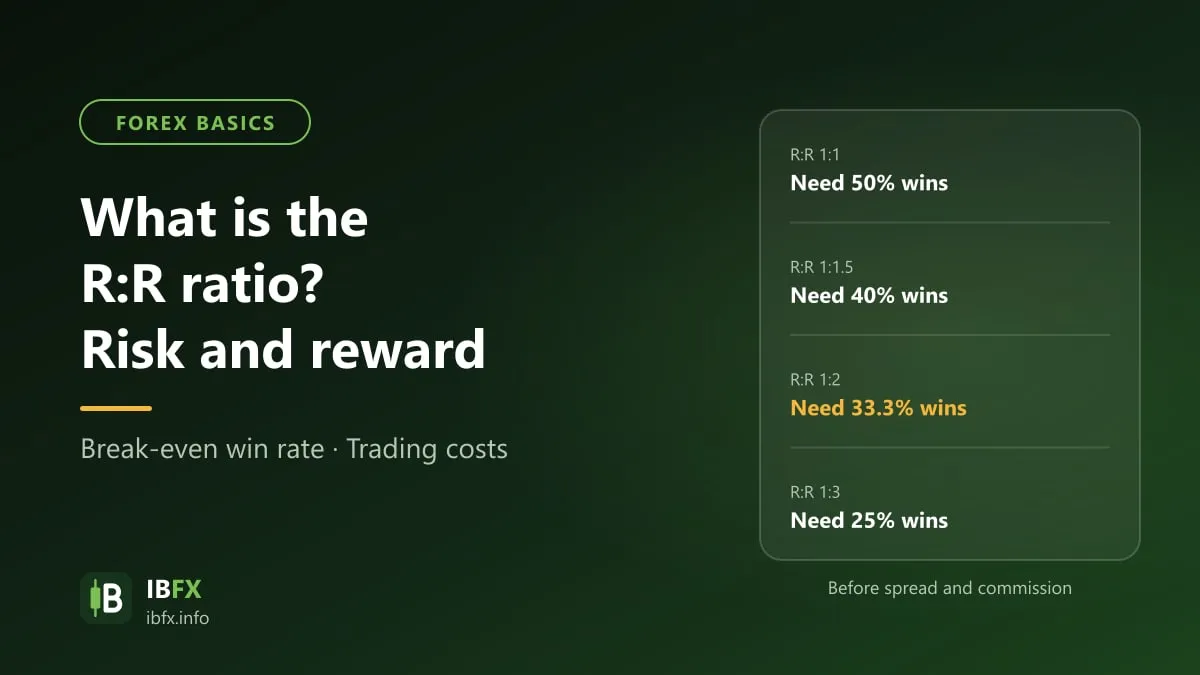
Set a sensible R:R ratio (Risk : Reward — the ratio of risk to reward)
This also counts as part of risk management, and a trader should work the ratio out very carefully. For example, if you set R:R at 1:2 and the loss you are risking is 50 USD, then the profit target is 100 USD. With scalping, remember to count the spread and the costs as well: a 4-pip target with a 2-pip stop loss sounds like 1:2, but if the cost is 1 pip the real ratio is only about 1:1.
Combining trading strategies
Besides the indicators above, here is about the simplest scalping method you can look at:
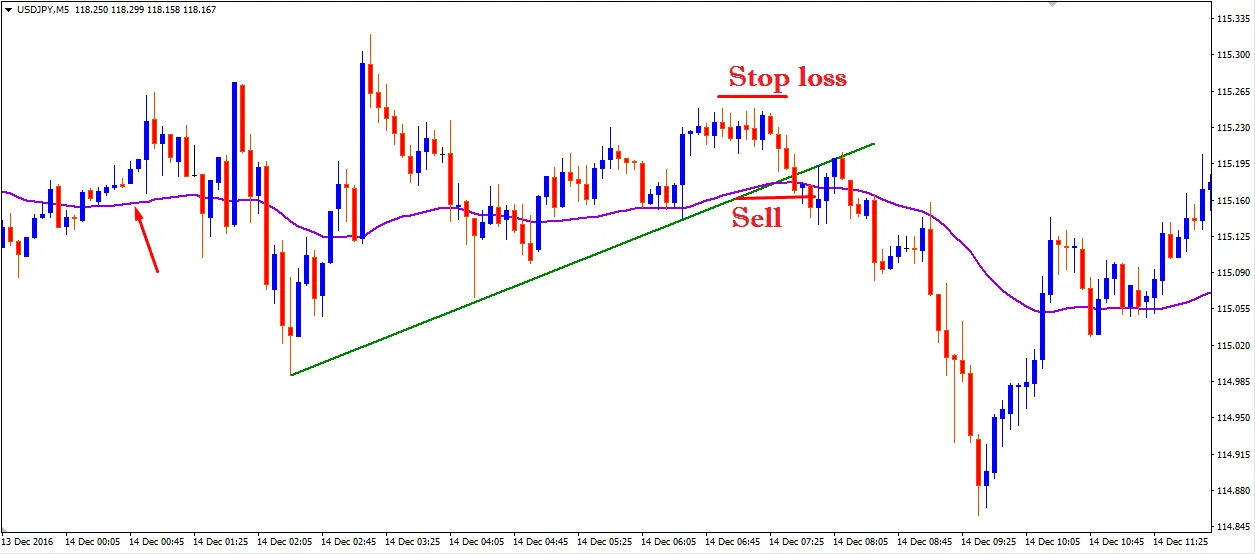
Step 1: Draw a trend line or a price channel to find the strong support areas.
Step 2: Use Japanese candlestick patterns to find a confirming signal, and combine the trend line from step 1 with the indicators given above to find the most precise entry point.
Step 3: Once you have a signal, place the order and set the Stop Loss and Take Profit straight away, as in the example below.
Whether you combine technical analysis with watching the news calendar (to stay out of news times) is up to each person. Whatever trading style you prefer, the important thing to remember is that the loss must always stay within what you can accept, and that the result has to be judged after every cost has been taken out.